Quick answer: A same-day garage floor is laid in a single day using a fast-curing polyaspartic or polyurea coating instead of a standard epoxy build. You can usually walk on it within a few hours and park on it the next day, but it still takes about a week to reach full hardness. It suits dry, sound slabs. Damp, freshly poured or heavily repaired slabs, and metallic finishes, are better done over two days.
| Same-day (fast-cure polyaspartic) | Standard epoxy build | |
|---|---|---|
| Days on site | 1 | 1–2 |
| Walk on it | Typically 2–4 hours after the last coat | About 24 hours |
| Park on it | Typically the next day (about 24 hours) | 48–72 hours |
| Full cure | About 7 days | About 7 days |
| Best for | Dry, sound slabs; flake or solid colour; a car that needs to go back in quickly | Damp or new slabs, lots of repairs, metallic finishes, workshops |
| Resin Masters price (garage) | Polyaspartic $75–$110 per m² | Flake $65–$90 per m²; solid colour $50–$75 per m² |
Times are typical figures from manufacturer data sheets at about 21–27 °C. They change with temperature, humidity and the product used.
What “same-day” actually means
“Same-day” describes the installation, not when you can use the floor fully. On a same-day job, the grinding, repairs, base coat, flake and topcoat all go down in one visit. The floor then needs time to cure:
- Light foot traffic: fast-cure polyaspartic and polyurea coatings are typically rated for light foot traffic about 2–4 hours after application at 21–27 °C.
- Vehicles: about 24 hours is the usual figure for parking a car. Some data sheets add 36–48 hours in cold conditions.
- Full cure: about 7 days for full chemical and hot-tyre resistance.
So “installed today, park tomorrow” is the honest version. If anyone promises you can drive on a freshly coated floor the same evening, ask which product they’re using and what its data sheet says.
How same-day floors cure so fast
Standard garage epoxy is a two-part resin that cures slowly. That slow cure gives it time to soak into the ground concrete and build a thick base, but it means a 1–2 day job and a longer wait before you park.
Same-day systems use polyaspartic (a type of aliphatic polyurea) for some or all of the layers. It reacts much faster, and it doesn’t yellow in sunlight, which is why it’s also the usual topcoat over epoxy. The trade-off is working time. One polyaspartic data sheet allows about 20 minutes to spread and roll each batch before it starts to set. Humidity speeds that up further, because the coating also reacts with moisture in the air.
In practice, a same-day crew mixes small batches, works in sections and needs a good-sized team. There’s little time to fix a mistake once a batch is down.
When a same-day floor makes sense
A same-day floor is a good choice when:
- The slab is dry and sound. It tests within the coating’s moisture limit, has few cracks and has no old coating that needs heavy removal.
- You want flake or a solid colour. These suit fast-cure application.
- You need the garage back quickly. That might be a car that lives in the garage, a rental between tenants, or a townhouse with a tight body corporate access window.
- The garage can be kept out of direct afternoon sun while the coating goes down, for example by closing the door or starting early.
When a slower epoxy build is the better floor
Speed isn’t free. A standard 1–2 day epoxy build is the better choice when:
- The slab is new or damp. Most coating makers want concrete to cure at least 28 days and to test within a set moisture limit before coating. New estate slabs across the Gold Coast often need longer than 28 days in humid weather. Coating a damp slab, fast or slow, can lead to blistering and lifting. See how we test concrete moisture before epoxy and garage floors for new builds.
- The slab needs a lot of repair. Wide cracks, spalling or oil-soaked patches need filling and curing time before the coating goes on.
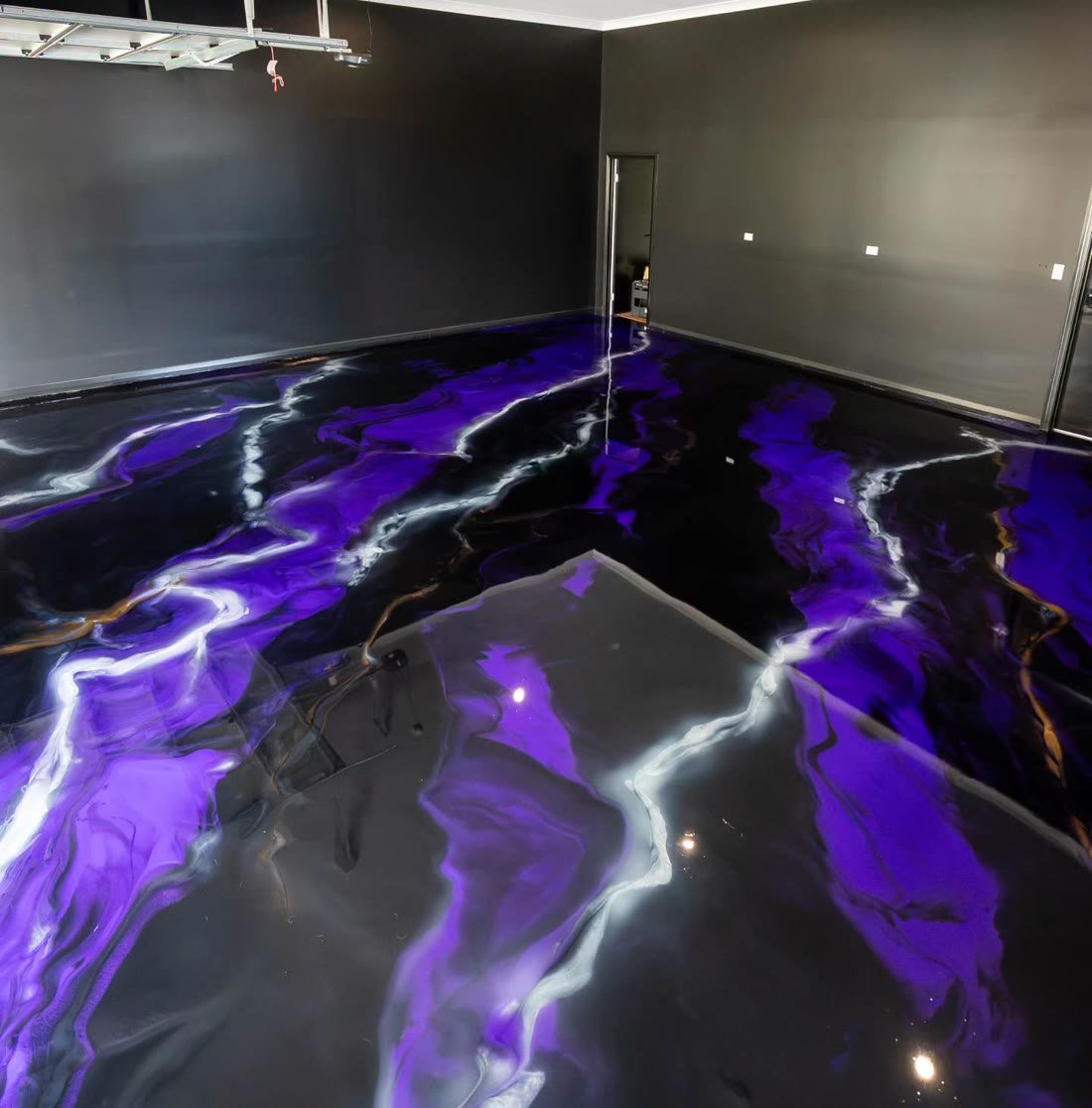
- You want a metallic or marble-effect floor. These are worked by hand in the wet resin, and a 20-minute working window doesn’t allow it.
- It’s a workshop or shed with heavy chemical use. A thicker epoxy base gives more build and chemical resistance underneath the topcoat.
Gold Coast conditions that affect a same-day job
Fast-cure coatings come with tight application limits, and Gold Coast weather tests them:
- Hot slabs. One polyaspartic data sheet sets the floor temperature at 18–32 °C, and a polyurea primer sheet says not to apply it in direct sunlight or while the temperature is rising. A west-facing garage with the roller door open on a summer afternoon can exceed that, so good installers start early and keep the door down.
- Humidity and dew. The same data sheets cap relative humidity at about 80–85% and require the slab to be at least 3 °C above the dew point. Muggy summer mornings and canal-side blocks can fail that test until later in the day.
- Beach sand and salt. These don’t stop a same-day job, but the floor must be ground and cleaned thoroughly first, whichever system is used.
When these limits can’t be met on the day, a good installer will reschedule or switch to a standard build rather than rush the coating.
What does a same-day garage floor cost on the Gold Coast?
Fast-cure polyaspartic materials cost more than standard epoxy, so same-day floors usually sit above a standard flake floor.
| System | Resin Masters price per m² | Double garage (36 m²) |
|---|---|---|
| Solid colour epoxy | $50–$75 | $1,800–$2,700 |
| Flake epoxy with polyaspartic topcoat | $65–$90 | $2,340–$3,240 |
| Polyaspartic system | $75–$110 | $2,700–$3,960 |
Prices include diamond grinding, a moisture test, the full coating system and GST. A damp slab that needs a moisture-blocking primer adds about $20–$30 per m². For the full breakdown, see our Gold Coast epoxy flooring cost guide.
Seven questions to ask an installer offering a same-day floor
- Which product is it, and can I see the data sheet? It should list walk-on, drive-on and full cure times.
- When exactly can I walk on it, park on it, and put heavy things back?
- Will you test the slab for moisture first, and what happens if it fails?
- Is the whole slab diamond-ground, or just cleaned? A fast-curing coating is still only as good as the bond underneath.
- How thick is the finished floor, and how many coats?
- What will you do if the slab is too hot or the humidity is too high on the day?
- What does the warranty cover, and is it in writing?
For a wider checklist, read how to choose an epoxy flooring contractor on the Gold Coast.
How Resin Masters approaches it
Most of our garage floors are a 1–2 day job: walk on it after about 24 hours, park after 48–72 hours. We use a polyaspartic topcoat for UV and hot-tyre resistance, over an epoxy base that has time to bond into the ground slab. If timing is tight, tell us at the quote visit and we’ll plan around it.
Every Resin Masters floor is diamond-ground and moisture-tested first, and comes with a written 7-year workmanship warranty. We’re based in Pimpama and lay floors right across the Gold Coast. See epoxy flooring on the Gold Coast or garage floor epoxy on the Gold Coast.
Same-day garage floor FAQs
Can I park on my garage floor the same day it’s coated?
Usually not. Even fast-cure polyaspartic floors are normally rated for vehicles after about 24 hours, and full cure takes around a week. Parking too early can leave tyre marks in the topcoat.
Is a same-day floor as durable as a standard epoxy floor?
It can be, if the slab is ground properly, dry and sound, and the coating is applied at the right thickness. Most same-day failures trace back to rushed preparation or coating a damp slab, not to the chemistry itself.
Can a metallic epoxy floor be done in one day?
Generally no. Metallic finishes are worked by hand in the wet resin and need more working time than fast-cure coatings allow. Plan on a standard multi-day build. See metallic epoxy flooring on the Gold Coast.
Is polyaspartic better than epoxy for a Gold Coast garage?
They do different jobs. Polyaspartic is fast and UV-stable, so it’s the better topcoat. Epoxy builds a thicker, well-bonded base. Many Gold Coast garages get both. Our polyaspartic vs epoxy comparison goes into detail.
Want to know if your garage suits a fast install? Send us a photo of the slab and roughly how big it is. We’ll tell you which system fits and what it costs. Get a free quote.
Sources: manufacturer technical data sheets for a polyaspartic floor coating (Rio-Coat UPA 85) and a polyurea floor primer (Citadel Polyurea-350). Times and limits vary by product. Always follow the data sheet for the system used.