Servicing : Gold CoastBrisbaneSunshine CoastToowoomba

Menu
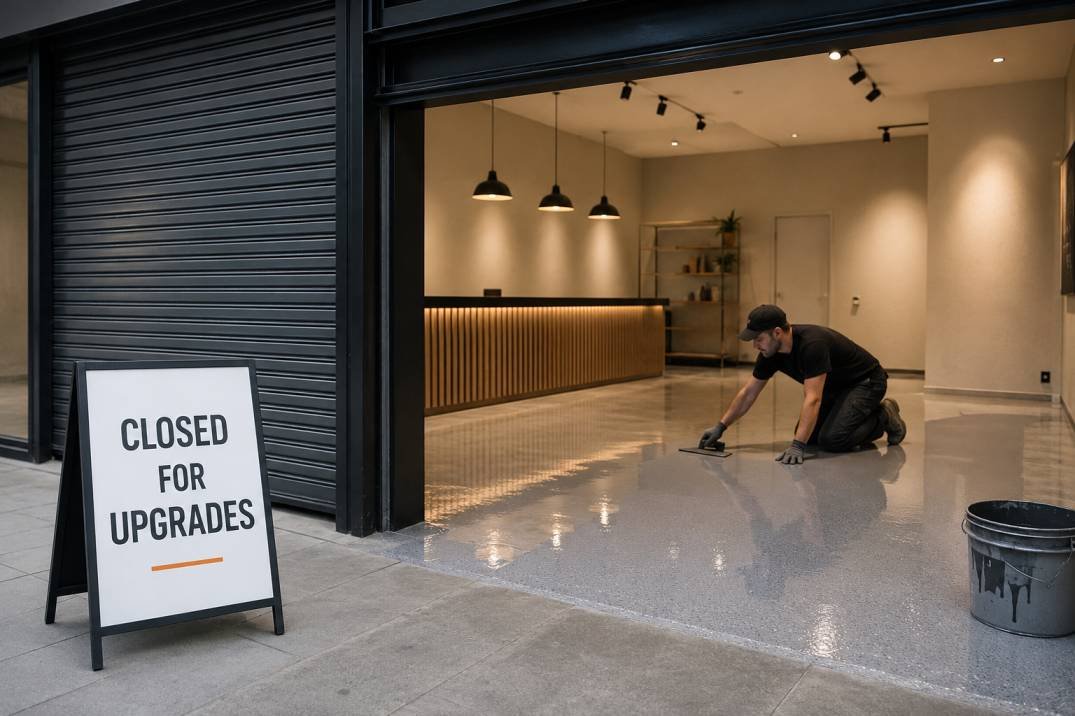
How Long Will Your Business Be Closed? Scheduling Epoxy Around Trading
November 3, 2026
Team
Epoxy flooring commercial downtime is usually 2 to 4 days of work, then staged access. On Resin Masters’ published figures, standard systems take foot traffic within 24 hours and vehicles within 48 to 72 hours. Full chemical cure is 7 days. Fast-cure polyaspartic systems bring foot traffic back in 4 to 6 hours.
Every day shut costs you sales or output, so a range isn’t much use. What you need is a schedule. Which parts of the floor have to be out of use, for how long, and what has to happen first?
How long will a business be closed for epoxy flooring?
Most jobs run 2 to 4 days, but you won’t lose the whole site for the whole time. Standard systems allow foot traffic after about 24 hours and heavier traffic after 48 to 72 hours. Fast-cure systems cut those times sharply. The table sets out the published figures and where each one comes from.
|
Stage |
Typical time |
Where it applies |
|---|---|---|
|
Whole installation |
2 to 4 days |
Most Resin Masters jobs |
|
Foot traffic, standard system |
Within 24 hours |
Retail page and garage timing |
|
Trolleys, carts, vehicles |
48 to 72 hours |
Standard systems |
|
Foot traffic, fast-cure |
4 to 6 hours |
Resin Masters retail page |
|
Vehicle-ready, fast-cure |
12 to 24 hours |
Resin Masters warehouse page |
|
Full chemical cure |
7 days |
Resin Masters garage and retail pages |
Full chemical cure means you can open long before the floor reaches its final hardness. Keep harsh cleaners and heavy spills off it until day 7. The retail store flooring and warehouse flooring pages carry the detail.
What decides how much downtime you will have?
Downtime depends on floor area, slab condition, the system you choose and how much of the site can stay open. A large floor with old coating to remove takes longer than a clean, sound slab. Weather and slab moisture can add hours. Staging usually saves more time than any product choice.
- Area. More metres means more grinding and more coats.
- Existing surface. Resin Masters’ retail page says it removes vinyl, carpet adhesive and previous coatings during preparation, which adds time.
- Moisture. A test result can change the primer or add a barrier before coating.
- System. Standard and fast-cure systems differ by days, not hours, on heavy traffic.
Can epoxy flooring be installed overnight or on a weekend?
Yes, for many sites. Resin Masters’ retail page says it regularly installs retail floors overnight and over weekend trading breaks. Fast-cure polyaspartic systems take foot traffic in 4 to 6 hours. Grinding and coating must fit inside your closed hours, so share trading times at the first visit.
Noise and dust are the constraint. Grinding is the loud stage. One Sydney installer’s guide to fast installation says council restrictions on commercial sites can force night work into two sessions. Check your lease and local rules.
What does fast-cure cost you in trade-offs?
Fast-cure buys speed and costs working time. One installer guide says polyaspartic cures in under 4 hours but can gel in under 20 minutes, so the crew must work quickly and precisely. Resin Masters’ commercial pages also price fast-cure systems above standard ones. Ask for it as its own line.
Ask what the fast time covers. An Epoxy Brisbane cure-time guide says polyaspartic and polyurethane topcoats can take light foot traffic in one to two hours. Those are finish layers over slower epoxy base coats. A quote should state the time for the whole system.
How does zone-by-zone staging work?
Staging splits the floor into sections and coats them in sequence, so part of the site keeps operating. Resin Masters’ industrial and warehouse pages both describe sectioning larger floors around your operational calendar. You trade a longer overall project for less lost trading on any single day.
- Mark the zones and the safe routes between them, including exits.
- Clear and coat the first zone, then hold traffic off it.
- Move fixtures, stock or machinery into the finished zone once it’s cleared for traffic.
- Repeat for the next zone until the floor is done.
Ask how the joins between zones are handled. Staged floors have edges where one day’s work meets the next, and a good installer plans those lines around traffic and fixtures.
What about smell, fumes and reopening?
Ask which products are going down and read their safety data sheets before install day. Resin Masters says its low-VOC to near-zero-VOC chemistry minimises odour on reopening, and its industrial and warehouse pages say facilities don’t need forced evacuation. Follow the data sheet, and check with the regulator for workplace health questions.
We’re not giving medical or workplace safety advice here. The Safe Work Australia safety data sheet page says the sheets carry important safety information about hazardous chemicals, so ask for them for every product used.
What do you need to do before install day?
Clear the zone, confirm access, and tell everyone who is affected. Most delays come from a floor that isn’t empty or a door that’s locked at the wrong time. Agree the plan in writing with the installer, including who moves what and when the floor is handed back.
- Move stock, fixtures and equipment out of the zone, or agree who will.
- Confirm access, power, water and loading arrangements for the crew.
- Tell your landlord, neighbours and alarm company about the hours.
- Get the slab tested early. Our guide to testing concrete moisture explains why.
What can delay your reopening?
Weather, slab moisture and hidden surface problems are the usual causes. Humid days slow cure, a moisture test can call for a barrier, and old adhesive or coating can add preparation time. Rushing the floor back into use is the most costly delay of all, because it can damage a floor that’s still curing.
The Epoxy Brisbane guide recommends installing during a shutdown, holiday or quiet window to avoid pressure to return the floor to service too soon. Build a buffer day into the plan for the same reason. Contact Us!
How do you schedule the work with an installer?
Start with a site visit, then get a written schedule that names each zone, stage and access date. Resin Masters offers a free on-site quote with an itemised written quote within 48 hours. Give trading hours and any hard deadlines at that visit, so the schedule is built around them.
- Book the site visit and list your trading hours and closures.
- Ask for options: standard, fast-cure, and staged or after-hours.
- Get the schedule in writing, with a fallback date for weather.
- Confirm the moisture test and any preparation work before the date is locked in.
For system choices by site type, see our industrial epoxy flooring page and the commercial epoxy flooring Brisbane guide.
Who is this plan not for?
This plan isn’t for sites that can’t lose access to any zone, even for hours, or for floors that need heavy vehicles on them within hours of coating. Staging and fast-cure help a lot, but every zone still goes out of use for some time. Those sites need a specific plan from the installer.
- Operations that run 24 hours with no quiet window at all.
- Sites that need forklifts on the floor straight after the last coat.
- Buyers who want a fixed reopening time before the slab has been tested.
Frequently asked questions
Can you walk on epoxy flooring the same day?
With a fast-cure polyaspartic system, yes. Resin Masters’ retail page says foot traffic is possible in 4 to 6 hours. Standard systems need about 24 hours. Either way, keep heavy loads, trolleys and harsh cleaning off the floor until the installer says it’s ready.
How soon can forklifts or trucks use a new epoxy floor?
Resin Masters says fast-cure warehouse sections can be vehicle-ready within 12 to 24 hours of topcoat application, while standard systems need 48 to 72 hours for heavier traffic. Full chemical cure takes 7 days. Confirm the exact release time in your written schedule.
Will my shop smell after an epoxy install?
Resin Masters says its low-VOC to near-zero-VOC chemistry minimises odour on reopening. Products differ, so ask for the safety data sheet for each one and follow its advice. For workplace health questions, check with your regulator rather than relying on a sales claim.
Is staging the floor better than closing completely?
Staging keeps part of the site trading, but the project runs longer and leaves joins between zones. A full closure is quicker and gives one continuous finish. Choose staging if lost trading costs more than the extra days, and ask how joins are handled.
Does night or weekend epoxy work cost more?
Resin Masters’ published rates don’t state an after-hours figure. Fast-cure systems are priced above standard ones on its commercial pages. Ask for after-hours work and any fast-cure upgrade as separate lines on the itemised written quote, so you can compare options fairly.