Servicing : Gold CoastBrisbaneSunshine CoastToowoomba

Metallic Epoxy vs Flake Flooring
A showroom-style floor and a hard-working floor are not always the same thing. That is why metallic epoxy vs flake flooring is such a common question from homeowners upgrading a garage, and from businesses that need a surface that looks sharp but also performs under pressure.
Both systems are resin-based, seamless, and far more durable than bare concrete. But they create very different results once installed. The right choice depends on how the space is used, how much traffic it takes, how much visual impact you want, and how much surface texture makes sense for that environment.
Metallic epoxy vs flake flooring: the core difference
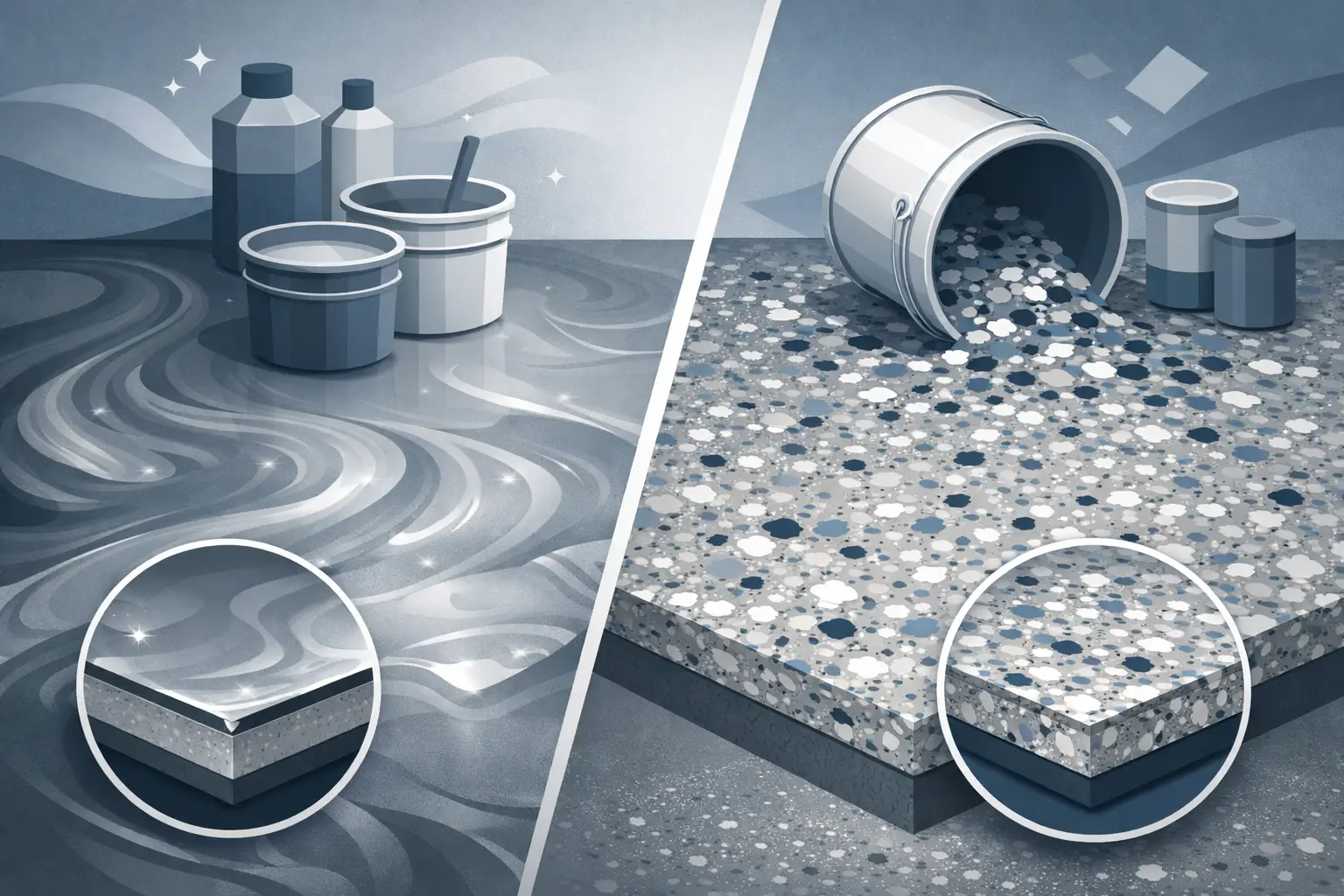
Metallic epoxy is a decorative resin floor designed to create movement, depth, and a high-end visual finish. Metallic pigments are blended through the coating to produce a marbled, reflective effect that feels custom and dramatic. No two floors look exactly the same, which is part of the appeal.
Flake flooring uses a broadcast of decorative vinyl flakes over an epoxy or polyaspartic base coat, then seals the surface with a clear topcoat. The finished look is more uniform and more practical in appearance. It hides dust, minor debris, and everyday wear better than a highly reflective floor, which is one reason it performs so well in garages, workshops, and commercial spaces.
If you want a floor that becomes a design feature, metallic epoxy usually leads. If you want a floor that balances appearance with everyday function, flake flooring is often the stronger option.
Appearance and style
This is where the gap is most obvious. Metallic epoxy is chosen for visual impact. It has depth, movement, and a custom finish that can make a garage, showroom, retail space, or interior room feel more premium. Depending on the pigments and application style, it can look sleek and modern or bold and artistic.
That same uniqueness can be a drawback if you prefer predictability. Metallic epoxy has natural variation, and the final floor depends heavily on installer skill, site conditions, and how the material moves during application. For clients who want a one-of-a-kind result, that is a strength. For clients who want the sample to match the finished floor as closely as possible, flake flooring is usually easier to control.
Flake systems look cleaner and more structured. You can choose blends that feel subtle and professional or combinations with more contrast and character, but the overall finish remains consistent. In practical spaces, that consistency matters. It gives the floor a polished look without drawing attention to every footprint or speck of dust.
Durability in real-world use
Both systems can deliver strong long-term performance when the concrete is properly prepared and moisture is managed correctly. That part matters more than many buyers realize. Even premium materials will fail early if the slab is not ground properly, repaired where needed, and tested for moisture issues before coating begins.
With that foundation in place, both metallic epoxy and flake flooring offer excellent resistance to stains, chemicals, impacts, and abrasion compared with untreated concrete. The difference is less about whether one is “strong” and more about how each finish handles visible wear.
Flake flooring has an advantage in busy environments because the flake layer helps disguise minor scratches, dust, tire marks, and day-to-day use. In a garage with vehicles, tools, foot traffic, and occasional mess, that makes a real difference over time. The floor keeps its cleaner look longer between washes.
Metallic epoxy is durable, but it is more visually exposed. Because the finish is smoother and often more reflective, imperfections and surface dirt can show faster. In a low-traffic or design-led space, that is less of an issue. In a heavy-use garage or commercial setting, it can mean more regular cleaning if appearance is a priority.
Slip resistance and surface feel
Slip resistance is one of the biggest practical differences in the metallic epoxy vs flake flooring decision.
Metallic epoxy typically has a smoother, glossier finish. It can be adjusted with anti-slip additives, but the overall look is often geared toward shine and visual depth. That makes it a popular option in spaces where aesthetics lead the brief, but it may not be ideal for every work area or wet zone.
Flake flooring naturally lends itself to a more textured finish. The system can be sealed to create a surface with better traction underfoot, which is especially useful in garages, service areas, entry zones, and commercial settings where safety matters as much as appearance. You still want a floor that is easy to clean, but you do not want it feeling overly slick when moisture or dust is present.
The best balance depends on the space. A home garage used mainly for parking and storage may work well with either system. A workshop, warehouse, or frequently washed area usually benefits from the extra grip that a flake system can provide.
Maintenance and day-to-day upkeep
Neither floor is high-maintenance compared with raw concrete, tile grout lines, or failing painted surfaces. Both are seamless, hygienic, and easy to clean. That said, they do not age in exactly the same way.
Metallic epoxy asks a bit more from the owner if the goal is to keep that showpiece finish looking sharp. Because the floor reflects light and has a more dramatic visual profile, dirt and light scratching can be more noticeable. Regular sweeping and prompt cleanup help preserve the effect.
Flake flooring is more forgiving. It does a better job of masking dust, road grit, and everyday marks, which makes it particularly well suited to garages and business spaces that need to look good without constant attention. For many property owners, that lower-visibility wear is a major advantage.
Best spaces for each system
Metallic epoxy fits best in spaces where appearance carries real value. That might be a premium residential garage, a retail environment, a showroom, a finished basement, or a modern interior feature area. It works when the floor is part of the overall design and not just a surface to walk on.
Flake flooring is the stronger all-rounder for practical use. It is an excellent fit for garages, workshops, warehouses, commercial back-of-house areas, and light industrial spaces. It gives you a professional finish, dependable traction, and strong resistance to daily abuse without demanding too much upkeep.
For many garage owners, this is the key distinction. If you want your garage floor to make a statement, metallic epoxy can deliver that. If you want it to handle vehicles, tools, spills, and constant use while still looking clean, flake flooring is often the smarter investment.
Cost and value over time
Pricing varies based on slab condition, repair needs, system build, and the size of the project. In many cases, metallic epoxy can carry a higher price because the installation is more decorative and technique-sensitive. Achieving the right visual effect takes experience, and the margin for error is smaller.
Flake flooring is also a premium installed system when done correctly, but it often provides stronger long-term value in high-use spaces because it hides wear better and serves a broader range of practical needs. That does not mean metallic epoxy is poor value. It simply means the value is tied more closely to appearance and custom finish than to everyday camouflage of wear.
A reliable quote should never be based on resin alone. Surface preparation, crack repair, moisture control, topcoat selection, and installation quality all affect how long the floor lasts. That is where specialist workmanship matters most.
What matters more than the product name
Clients sometimes compare systems as if the brand of coating is the whole story. It is not. The floor you live with for years depends on how the concrete is assessed, how the slab is prepared, and whether the system is matched to the demands of the space.
A decorative metallic floor installed over a poorly prepared slab will not outperform a professionally installed flake system. The same goes in reverse. Good results come from proper grinding, sound repairs, moisture awareness, and a resin build that suits the environment. That is why experienced installers focus on performance first, then finish selection.
At Resin Masters, that is exactly how projects should be approached – not as a one-size-fits-all coating, but as a floor system chosen for the way the space will actually be used.
So which one should you choose?
Choose metallic epoxy if your priority is visual impact, a premium custom look, and a floor that acts as a design feature. It is best for spaces where presentation matters and traffic demands are moderate or well managed.
Choose flake flooring if you want a floor that still looks polished but performs better in busy, messy, and hard-working environments. It is usually the safer bet for garages, commercial spaces, and anyone who values durability with less visible day-to-day wear.
The right floor is the one that fits the way you use the space, not just the way you want it to look on day one. If you start there, the best option becomes much easier to see.
One Response