Servicing : Gold CoastBrisbaneSunshine CoastToowoomba

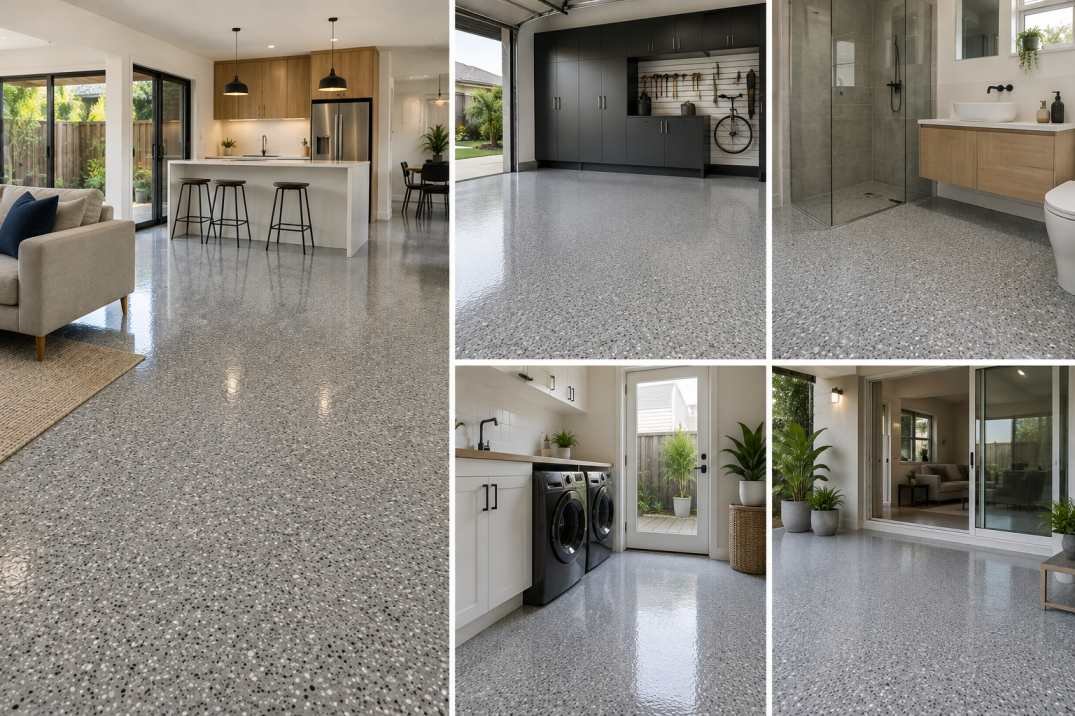
Epoxy Flooring for Queensland Homes: A Room-by-Room Guide
Epoxy flooring works in most rooms of a Queensland home that have a concrete slab, including the garage, laundry, kitchen, living areas and alfresco. It gives a joint-free, easy-clean floor that suits heat and humidity. It needs a dry, sound slab, and wet areas or sun-exposed rooms need a specific system. Resin Masters coats homes across Queensland and Northern NSW.
Most homeowners meet epoxy in the garage first. The same coating now shows up in laundries, kitchens and open-plan living rooms, because there are no grout lines and it wipes clean. Below is what works room by room, and what to watch for.
Which rooms in a house suit epoxy flooring?
Rooms on a concrete slab suit epoxy best: garages, laundries, kitchens, living areas, studios and covered outdoor areas. Bathrooms and pool surrounds also work when slip resistance and waterproofing are handled. Bedrooms are possible but less common, because most people want a softer, warmer surface.
| Room | Suits epoxy? | What to watch | Suggested finish |
|---|---|---|---|
| Garage | Yes | Hot tyres, moisture, oil; see the garage guide | Flake or solid; anti-slip near the door |
| Laundry | Yes | Water splashes, slip resistance | Flake or solid with anti-slip |
| Kitchen | Yes | Slip when wet; dropped glass will break | Solid, or fine flake for texture |
| Living and open plan | Yes | Sun through glass; hard and cool underfoot | Metallic or solid with UV-stable topcoat |
| Bedroom and studio | Possible | Hard surface; rugs help | Solid or metallic |
| Bathroom | Yes, with care | Waterproofing and slip resistance | See the bathroom guide |
| Alfresco and patio | Yes | UV, rain, heat, slip | Flake with UV-stable topcoat and anti-slip |
| Hallway and entry | Yes | Scuffs from footwear and furniture | Flake or solid |
Is epoxy flooring good for a garage?
Yes. The garage is the most common home epoxy job because it gives an easy-clean, oil-resistant surface that handles vehicle traffic. Preparation, moisture testing and a suitable topcoat matter more here than anywhere else in the house. The full method is in the garage guide, so this post keeps it short.
Read the garage floor epoxy guide for finishes, prep and costs.
Can you use epoxy in a kitchen or laundry?
Yes. Epoxy in a kitchen or laundry gives a floor with no grout lines to stain, and spills wipe off. The trade-offs are slip risk when wet and the hardness underfoot. Choose a finish with some texture, such as fine flake or an anti-slip additive, and use rugs where you stand for long periods.
Dropped glass and ceramics will break on a hard epoxy floor. That surprises some owners, so it’s worth knowing before you pick it over a softer surface.
Does epoxy work in living areas and bedrooms?
It works well in modern open-plan living areas where owners want a polished, joint-free look, especially in metallic or solid finishes. Sun through large windows can yellow a topcoat that isn’t UV-stable, so ask for one that is. In bedrooms, most owners add rugs for warmth and comfort.
Epoxy feels cool underfoot, which many Queenslanders like in summer. In winter, some people find it too cold.
Can epoxy go over tiles or existing floors?
Epoxy is designed for concrete. It can go over sound tiles after grinding and filling the grout lines, but the result depends on the tile condition. It should not go over carpet, floating floors or most timber. A site inspection confirms what your floor can take.
If you’re thinking of coating tiles, tell the installer about hollow or cracked tiles. Loose tiles under a coating will telegraph through and eventually crack it. Resin Masters advises that epoxy over tiles adds about 5 to 8 mm to the floor height, that hollow or loose tiles must come out first, and that adhesion is checked before agreeing to coat.
Can you use epoxy in a bathroom?
Yes, but with care. A coating gives a joint-free, easy-clean floor, though it does not replace the waterproofing membrane under it. The surface needs to be slip resistant and installed by someone who understands wet-area requirements. Resin Masters covers this in a dedicated bathroom guide.
Resin Masters specifies a 2 to 3 mm build with AS 4586-rated anti-slip aggregate for residential bathrooms. See bathroom epoxy flooring for details.
Is epoxy flooring good for Queensland heat and humidity?
Epoxy handles humid conditions well because it doesn’t swell or absorb water like timber, and it has no joints for moisture and mould to collect. The two Queensland risks are slab moisture rising from below and UV yellowing on sun-exposed floors. Both are managed with testing and the right topcoat.
Coastal homes also face salt in the air, which is easier to wipe from an epoxy floor than to clean out of grout.
What is it like living through an epoxy install?
Expect noise and dust from grinding, strong fumes during application and a few days of restricted access. Rooms must be emptied, and pets and children should stay away until the floor is cured. Most Resin Masters jobs take 2 to 4 days, and garage floors are walkable within 24 hours. Ask when furniture can go back.
- Move furniture out of the room, or agree who will do it.
- Keep windows open where possible, and plan for the fumes.
- Arrange somewhere for pets to stay.
- Ask when you can walk on the floor and when furniture can go back.
How much does epoxy flooring cost for a home?
Cost depends on the area, the finish and the slab condition. Resin Masters’ published ranges are $50 to $90 per m2 for solid colour, $60 to $110 for flake and $100 to $160 or more for metallic. Small spaces may carry a flat minimum project fee.
Start with epoxy flooring cost, then try the epoxy flooring cost calculator for a range.
Who is epoxy flooring not for?
Epoxy is a poor fit for a damp slab that hasn’t been treated. It’s also wrong for owners who want a soft, warm floor, and for rooms with timber or carpet over joists rather than concrete. It doesn’t replace waterproofing in wet areas.
If any of those apply, talk to an installer before you spend money. Sometimes the right answer is a different floor.
Frequently asked questions
Is epoxy flooring safe to use in the home?
Yes, once cured. Fumes during application are strong, so rooms need ventilation and people and pets stay out. After curing, epoxy is inert and easy to clean. Ask the installer for the product safety data sheet if you have sensitivities.
Is epoxy flooring slippery in a kitchen or laundry?
Smooth gloss epoxy can be slippery when wet. Flake finishes have texture, and an anti-slip additive can go into any finish. Ask for a slip-resistance rating tested to AS 4586 if the floor will get wet regularly.
Can you put epoxy over existing tiles?
Sometimes. Sound tiles can be ground and the grout lines filled before coating. Loose, hollow or cracked tiles need to be fixed or removed first. An installer should inspect the floor before agreeing to coat it.
How long does a home epoxy floor last?
It depends on preparation, traffic and sun exposure. A well-prepared floor can last many years under normal home use. Resin Masters gives a written 7-year workmanship warranty. Ask for it in writing before you commit.
Does epoxy make a room feel cold?
Epoxy feels cool underfoot, which many Queensland homeowners like in summer. In winter it can feel cold and hard. Rugs, or a softer finish elsewhere, help. It’s a good reason to see a sample in your own room first.