Servicing : Gold CoastBrisbaneSunshine CoastToowoomba

How to Choose Slip Resistant Epoxy Floors
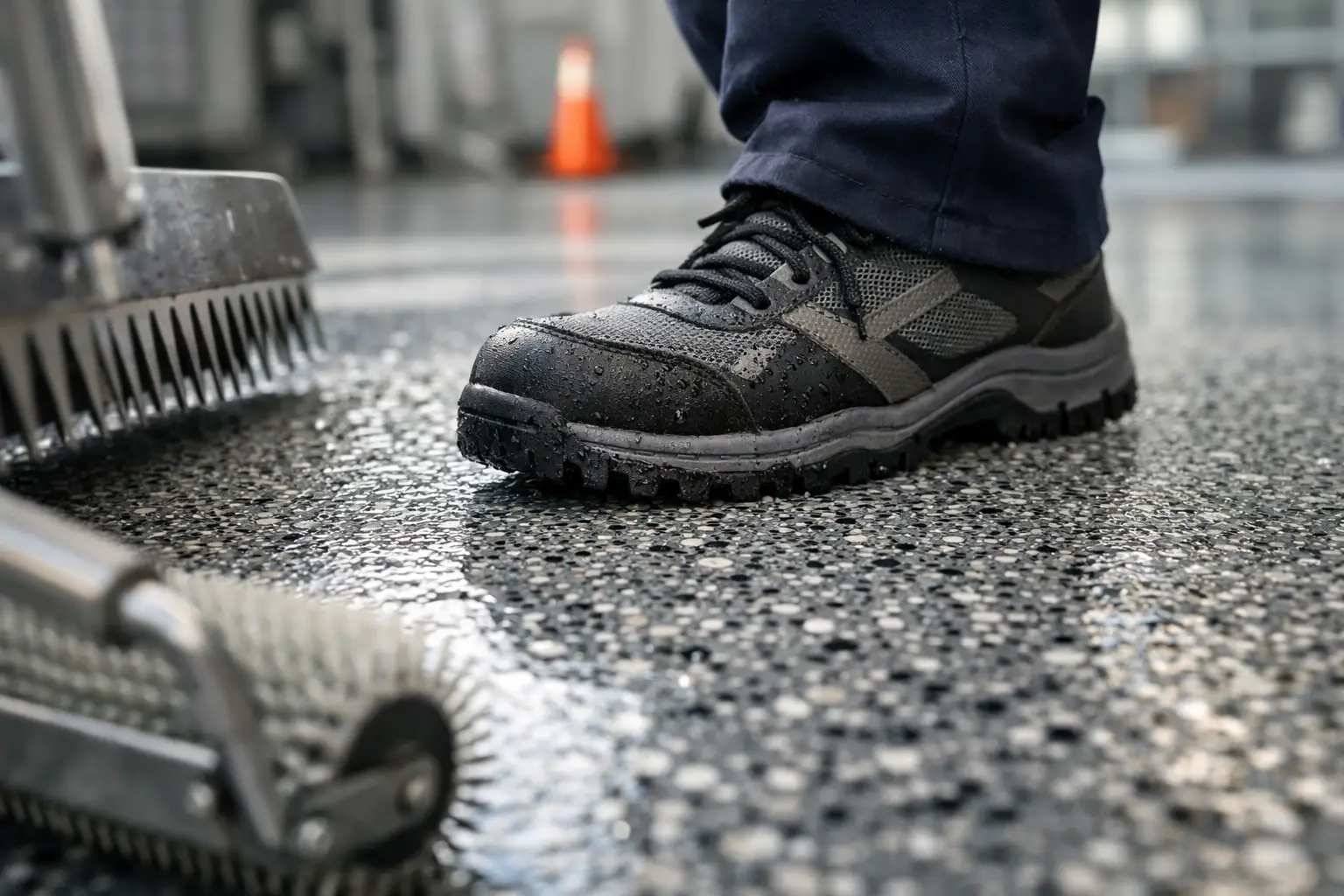
A glossy epoxy floor can look exceptional, but a high-gloss finish is not automatically the right choice for every space. Knowing how to choose slip resistant epoxy means looking beyond colour and sheen to the real conditions underfoot: water, oil, tyre traffic, cleaning methods, footwear and the people using the area every day.
For a Queensland garage, workshop, commercial kitchen entry or warehouse, the best result is usually a tailored system. It needs enough texture to improve footing when the floor is wet, without becoming so rough that it traps dirt, wears out tyres or makes cleaning unnecessarily difficult.
Start with the actual slip risk
Slip resistance is not a single feature that can be added as an afterthought. It is the combined performance of the epoxy system, the aggregate used for texture, the coating build, site conditions and ongoing maintenance.
Start by identifying what is likely to land on the floor. A residential garage may see rainwater dripping from a car, muddy shoes, detergent and the occasional oil spill. A warehouse may have pallet jacks, forklifts, dust and occasional wash-downs. A commercial area may have customers in smooth-soled shoes, staff moving quickly and a duty to manage foreseeable hazards.
The higher the likelihood of water, grease, oil or other contaminants, the more deliberate the slip-resistant finish needs to be. Entrances exposed to rain, pool surrounds, food preparation areas and wash bays generally need more grip than a dry internal storage room.
Just as importantly, consider whether the floor is usually wet or only occasionally wet. A coating with a moderate texture may be an excellent fit for a garage that gets damp during storms. The same finish may not provide enough traction for a regularly hosed-down work area.
Understand the trade-off between grip and cleanability
More texture does not always mean a better floor. Heavy aggregate creates stronger traction, but it also creates small recesses that can hold grime, tyre residue and cleaning chemicals. In a facility that must be kept hygienic or presentable, an overly aggressive profile can become a maintenance problem.
A professionally specified epoxy floor balances these competing requirements. Fine traction additives can provide a subtle, practical grip for garages, showrooms and light-commercial spaces while retaining a comfortable, easy-clean finish. Broadcast quartz or flake systems can offer more texture and visual depth, making them well suited to workshops, retail back-of-house areas and busy garage floors. For demanding industrial or wet-process environments, a heavier-duty aggregate profile may be appropriate.
There is also a comfort consideration. Bare feet, hard wheels and trolleys react differently to a textured surface. A finish suitable for a plant room may feel too abrasive around a residential entertaining area. Discuss how the space will be used rather than selecting a texture from a sample board alone.
Match the finish to the environment
For most residential garages, a light-to-medium slip-resistant texture is the sensible starting point. It helps when wet shoes, rain and vehicle drips are present, yet remains easy to sweep and mop. The coating also needs to resist hot tyre pickup during Queensland summers, which depends on proper preparation and a quality resin system as much as the topcoat itself.
In warehouses and workshops, assess traffic before choosing the aggregate. Pedestrian-only zones can often take a more textured finish. Areas used by forklifts, pallet jacks or wheeled equipment need a system that delivers grip without creating excessive rolling resistance or premature wear on wheels.
For commercial entries, kitchens, amenities and other wet areas, surface safety may be governed by a higher level of risk. The right finish should be selected alongside drainage, cleaning routines, footwear and transition points where people step from outside to inside. No coating can compensate for pooling water caused by poor falls or blocked drainage.
Check Australian slip-resistance requirements early
If the floor is part of a commercial, industrial or public-facing project, slip resistance should be addressed before the coating is specified and installed. Australian Standard AS 4586 sets out methods for classifying the slip resistance of new pedestrian surface materials. The relevant test method and result will depend on the application, whether the area is dry or wet, and the project’s compliance requirements.
This is where broad claims can be misleading. A product described as “non-slip” is not necessarily suitable for every workplace or wet area. The finished system should be assessed against the required standard and use case, not chosen solely because an epoxy product includes an anti-slip additive.
For builders and facility managers, clarify the required performance level with the project designer, certifier or safety adviser before work begins. Ask the flooring contractor what system is proposed, what texture it will achieve and how it relates to the required testing or specification. This avoids a costly situation where a floor looks right but does not meet the project brief.
Residential projects are not normally approached in the same formal compliance process, but the principle still applies: select the texture for the risk, not just the appearance.
Choose the right epoxy system, not only the additive
A slip-resistant floor is only as dependable as the coating underneath it. If an epoxy loses bond, blisters from moisture or wears prematurely, its textured surface will not deliver long-term safety.
Surface preparation is therefore non-negotiable. Concrete needs to be mechanically prepared to remove weak material, contaminants and previous coatings, while creating the correct profile for adhesion. Oil-stained garage slabs and heavily trafficked warehouse floors often require additional treatment before resin is applied.
Moisture is particularly relevant across Brisbane, the Gold Coast and the Sunshine Coast. Humidity, coastal conditions and moisture moving through concrete can affect epoxy adhesion if they are not properly assessed and controlled. A quality installation may require moisture testing and a suitable moisture-mitigation primer before the main epoxy and slip-resistant topcoat are applied.
The aggregate itself also matters. Fine polymer beads, aluminium oxide, silica-based products, quartz and decorative flakes each create a different feel and level of durability. The appropriate option depends on the desired finish, expected traffic and chemical exposure. A premium garage floor may use a decorative flake broadcast with a clear protective coat, while a hard-working industrial floor may need a more technical resin and aggregate combination.
Ask to see samples in realistic conditions
A dry showroom sample rarely tells the whole story. Ask to handle samples with the actual footwear used on site and, where practical, assess their feel when lightly wet. Compare a smooth gloss, a subtle traction finish and a more heavily textured option. This makes the grip-versus-cleaning trade-off much easier to understand.
It is also worth viewing completed floors that have been in service, not only fresh installations. A well-built epoxy system should retain its appearance and texture after regular traffic and cleaning. Look closely at edges, joins, drains and high-wear paths, as these areas reveal the standard of preparation and application.
Plan for cleaning and maintenance
Even the best slip-resistant epoxy needs a sensible cleaning routine. Grease, dust, soap residue and certain cleaning products can reduce traction by forming a film over the textured surface. Use cleaning methods suited to the coating, remove spills promptly and avoid leaving detergent residue behind.
For commercial sites, match the finish to the available maintenance resources. A heavily profiled floor may be justified in a high-risk wet zone, but it should be paired with equipment and procedures that can clean the texture effectively. In a garage or showroom, a lighter texture may offer the safer long-term balance because it stays cleaner with routine care.
Do not overlook repairs either. If a floor is damaged by impact, chemical exposure or substrate movement, repair it promptly so the texture and protective coating remain consistent across the surface.
How to choose slip resistant epoxy with confidence
The most reliable approach is to treat slip resistance as part of the entire flooring specification. Define the wet and dry conditions, traffic type, required standard, cleaning routine and appearance you want before choosing a finish. Then make sure the concrete is properly prepared, moisture is managed and the resin system is built for the environment.
Resin Masters specifies and installs epoxy flooring systems around the practical demands of each site, from premium garages to commercial and industrial spaces. The aim is not to make every floor as rough as possible. It is to create a durable, seamless surface with the right level of traction for the way you actually use it.
A floor should feel dependable in the moments that matter most: wet shoes at the garage door, a rushed staff member crossing a work area, or a busy warehouse shift after a spill has been cleaned. Choose the finish for those conditions, and the result will look sharp while working hard for years.