Servicing : Gold CoastBrisbaneSunshine CoastToowoomba

Chemical Resistant Warehouse Floor Coating
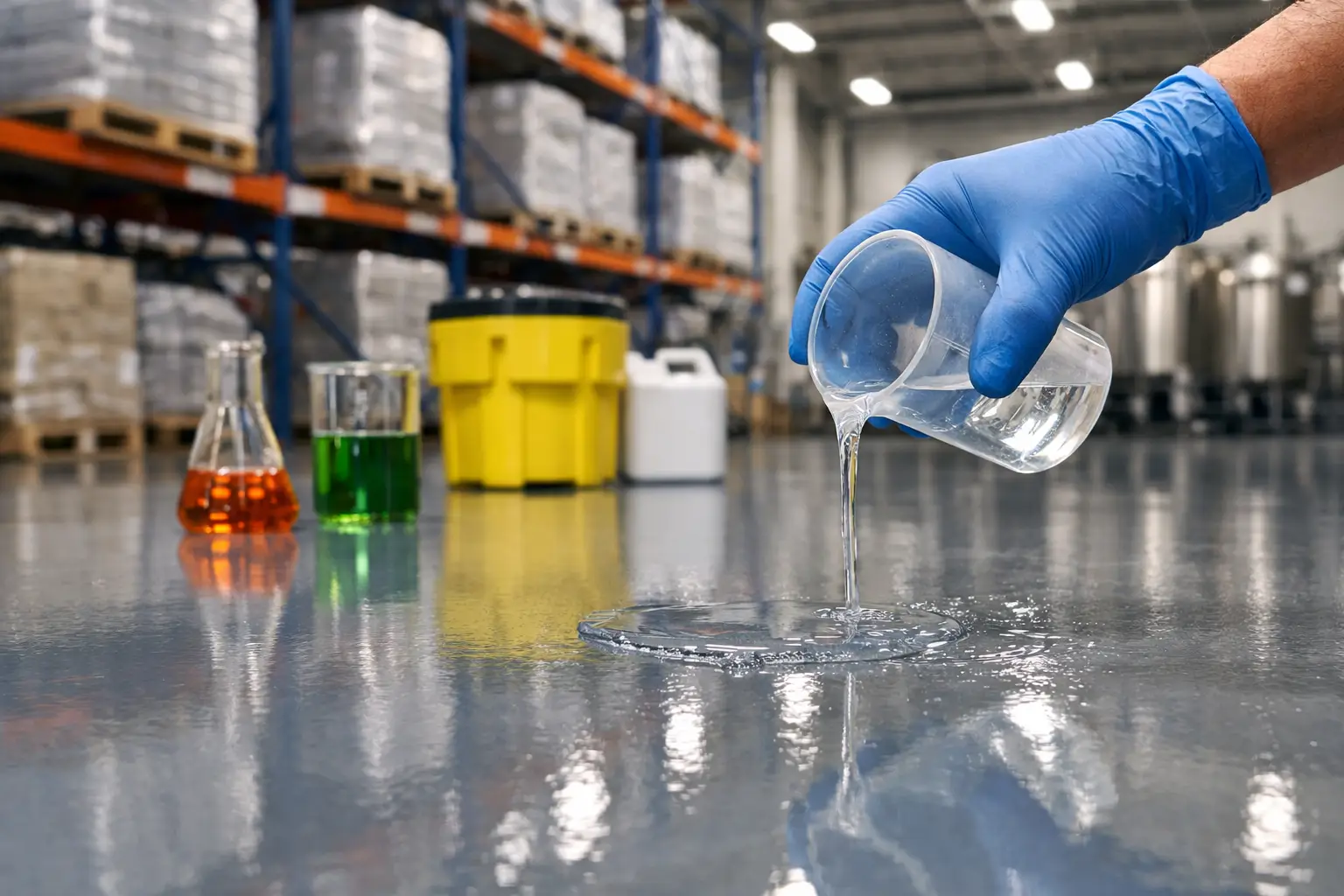
A leaking drum, a forklift turning sharply and Queensland humidity can expose weak concrete faster than most warehouse operators expect. A chemical resistant warehouse floor coating is not simply a cleaner-looking surface. It is a protective system designed to stop spills soaking into concrete, reduce dust, support safer movement and keep a hard-working facility operational for longer.
The right coating needs to suit what happens on your floor every shift. That means considering the chemicals in use, vehicle traffic, loading patterns, cleaning methods, moisture in the slab and the slip-resistance requirements of the space. A premium resin floor can deliver outstanding performance, but only when the coating system and preparation work match the site.
Why bare warehouse concrete fails under chemical exposure
Concrete looks solid, but it is naturally porous. Oils, fuels, acids, alkalis, coolants, detergents and solvents can penetrate its surface, leaving stains and gradually weakening the concrete. Once contamination gets below the surface, standard cleaning becomes harder and a future coating may require more extensive preparation.
In warehouses, the issue is rarely one major spill. It is the repeated small exposures around workstations, battery charging areas, maintenance bays, wash-down zones and loading docks. Add forklift tyres, pallet jacks and dropped stock, and unprotected concrete begins to dust, chip and wear unevenly.
A professionally installed resin coating creates a continuous barrier over the slab. With no grout lines or joins to trap contaminants, the floor is easier to clean and easier to inspect. It also gives facility managers a defined, finished surface rather than a patchwork of old stains and temporary repairs.
What makes a floor coating chemically resistant?
Chemical resistance is not a single rating that applies to every product. A coating that handles oil and mild detergents well may not be the correct choice for frequent acid exposure, strong solvents or aggressive cleaning agents. The chemical itself, its concentration, temperature and the time it sits on the floor all affect performance.
For many warehouses, a high-build epoxy system provides excellent resistance to common industrial contaminants, including oils, grease, fuels, many cleaning products and light chemical spills. Where exposure is more demanding, a chemical-resistant epoxy, novolac epoxy or polyurethane topcoat may be specified to improve resistance to particular substances and provide added wear or UV stability.
The best system also needs enough film build. A thin roll-on paint may change the colour of the slab, but it is less able to tolerate impacts, abrasion and repeated chemical contact. A commercial-grade resin system is built in layers, beginning with a properly bonded primer and continuing with body coats and protective topcoats chosen for the environment.
Match the system to the actual chemical risk
Before choosing a coating, identify what is stored, mixed, transported and cleaned in the warehouse. Safety data sheets are useful here, particularly where acids, caustics, solvents, brake fluids, hydraulic oils or battery electrolytes are involved.
A coating should be selected around credible exposure, not the best-case scenario. If a chemical is only occasionally present and spills are cleaned promptly, one system may be suitable. If it is used daily in a processing area, or can remain on the floor during a shift, a more specialised specification may be needed. The same principle applies to temperature. Hot liquids and hot tyres can place greater stress on a coating than room-temperature exposure.
Surface preparation determines the life of the coating
The coating is only as reliable as the concrete beneath it. This is where low-cost installations often fall short. Applying resin over dust, old sealers, tyre residue, weak concrete or hidden moisture may look acceptable at first, then lead to peeling, bubbling or delamination once the warehouse returns to service.
Professional preparation starts with a close inspection of the slab. Cracks, spalls, control joints, oil contamination and previous coatings need to be assessed before a system is specified. Mechanical diamond grinding is commonly used to open the concrete profile and remove weak surface material, giving the primer a clean, sound surface to bond to.
Moisture testing is particularly important across Brisbane, the Gold Coast and the Sunshine Coast, where humidity and slab moisture can affect resin installation. If moisture vapour is moving through the concrete, an appropriate moisture-control primer may be required. Skipping this step can compromise an otherwise premium coating system.
Preparation is not the glamorous part of a warehouse floor project, but it is the part that protects the investment. It creates the bond strength needed for a seamless floor to withstand traffic, cleaning and chemical exposure over the long term.
Chemical resistant warehouse floor coating and forklift traffic
Chemical resistance alone is not enough in a busy warehouse. A floor can resist a spill yet still fail under heavy forklift turns, point loading and constant abrasion. The system needs to be designed for both conditions.
Forklift tyres create high shear forces, especially at intersections, doorways, racking aisles and loading areas. These are often the first places to show wear when the coating is too thin or when the concrete was not prepared correctly. Heavier-duty epoxy systems can be built to better handle these demands, while a suitable topcoat helps protect against scuffing and makes routine cleaning more efficient.
There is a practical trade-off to consider. A highly textured floor can improve grip, but excessive texture can make it harder to sweep, wash and move wheeled equipment. The aim is not the roughest possible finish. It is a texture level that supports safe foot traffic and operational use without turning maintenance into a daily frustration.
For workplaces where slip resistance is required, the finish should be considered against the intended use and relevant Australian requirements, including AS 4586. Wet areas, wash bays and entrances may need a different profile from dry storage aisles. One texture does not suit every zone.
Plan the installation around warehouse operations
A quality coating project requires planning, particularly where downtime has a direct cost. The condition of the slab, repair scope, coating system and curing conditions all influence the programme. Rushing the process to reopen a floor too early can damage the finish before it has reached the required strength.
A staged installation can be a practical option for larger facilities. Dividing the warehouse into workable sections may allow stock and equipment to be moved progressively, reducing disruption while still maintaining proper preparation and cure times. Clear access planning also helps protect fresh coatings from foot traffic, forklifts and airborne dust.
Temperature and humidity should be monitored throughout application. Resin products have defined installation conditions, and experienced installers adjust the programme around site conditions rather than forcing a coating on during unsuitable weather. This matters in coastal Queensland, where changing humidity can affect both preparation and application.
How to protect the finished floor
Even a high-performance coating benefits from sensible housekeeping. Clean spills promptly, particularly chemicals not intended to remain on the surface. Use cleaning products recommended for resin floors, avoid harsh abrasive pads unless approved, and keep entrance areas clear of grit that can act like sandpaper under tyres.
Inspect high-traffic zones regularly. Small chips around joints, drains or door thresholds are easier and more cost-effective to repair before contamination reaches the concrete below. It is also worth reviewing traffic routes if forklift turning is concentrated in one location. Operational changes can extend the service life of the floor as effectively as any maintenance product.
A chemical-resistant resin floor should make a warehouse easier to run, not simply better to photograph. When the system is matched to the site, the slab is prepared properly and the finish is designed for real traffic conditions, it delivers a cleaner, safer and more dependable working surface. For warehouse operators who want that result without shortcuts, Resin Masters can assess the concrete, chemical exposure and operational demands before recommending a flooring system built for the job.