Servicing : Gold CoastBrisbaneSunshine CoastToowoomba

How to Maintain Epoxy Floors Properly
A well-installed epoxy floor should not look tired after a few months. If it does, the issue is usually not the coating itself – it is the way the floor is being cleaned, used or protected day to day. Knowing how to maintain epoxy floors properly helps you keep the finish looking sharp, preserve slip resistance and get the full service life from your investment.
Epoxy is popular because it is tough, low-porosity and easy to clean compared with bare concrete. That does not mean it is maintenance-free. Garages deal with hot tyres, grit and fluid drips. Commercial spaces see constant foot traffic, trolley wheels and regular washdowns. Warehouses add pallet movement, turning loads and impact wear. The right maintenance routine depends on how the floor is used, not just what it is made from.
Why epoxy floor maintenance matters
The biggest advantage of epoxy is that it creates a sealed, durable surface that resists dusting, staining and general wear far better than plain concrete. But even premium systems perform best when dirt, moisture and abrasion are managed properly.
Fine grit acts like sandpaper under shoes, tyres and wheels. Oil and chemical spills can leave marks if they are allowed to sit too long. Using the wrong cleaner can dull the finish or leave a residue that affects grip. In Queensland conditions, humidity and moisture also matter, especially in garages, workshops and coastal properties where condensation can build up.
Good maintenance is not complicated. It is consistent. A simple routine protects appearance, safety and long-term performance.
How to maintain epoxy floors day to day
For most residential and commercial settings, the best approach is regular dry cleaning followed by occasional wet cleaning. Dust, sand and debris should be removed before they are ground into the surface. A soft broom, microfibre dust mop or vacuum suitable for hard floors will handle most day-to-day cleaning without damaging the coating.
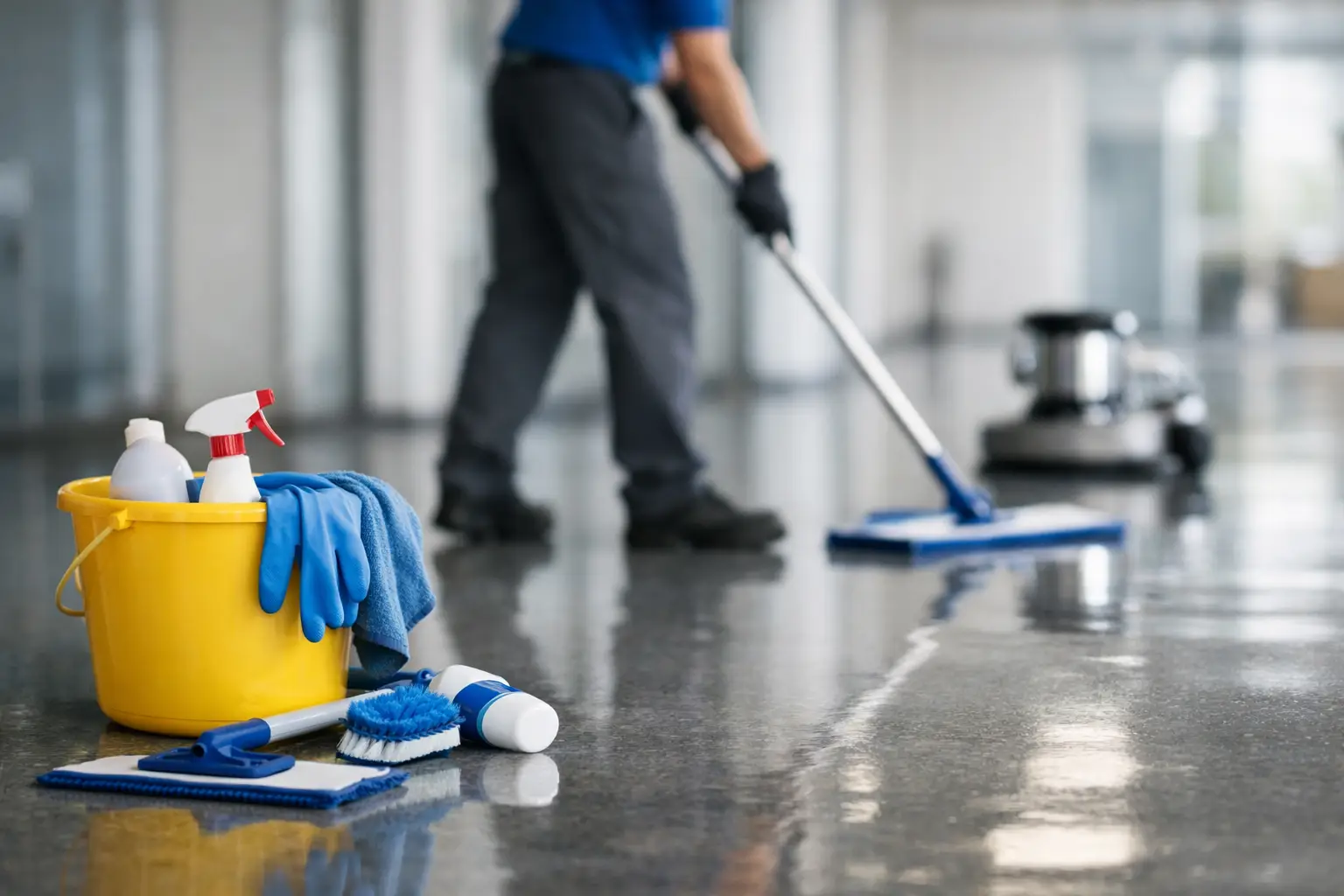
When the floor needs a proper wash, use warm water and a pH-neutral cleaner. Mop the area with a soft mop rather than anything overly abrasive. If there is built-up grime, scrub gently with a non-scratch pad or soft deck brush, then rinse clean. Leaving detergent residue behind is a common mistake because it can make the floor look dull and, in some environments, more slippery than it should be.
For garages, a quick sweep every week and a more thorough wash as needed is usually enough. In commercial or industrial spaces, the schedule should match traffic levels. A busy warehouse or food-adjacent work area may need daily attention, while a home garage may not.
The cleaners to use – and the ones to avoid
Not every floor cleaner is suitable for epoxy. Harsh acidic or highly alkaline products can attack the surface over time, especially if used repeatedly or left sitting on the floor. Soap-heavy cleaners can also leave a film that attracts dirt and reduces the clean, seamless look epoxy is known for.
The safest option is a pH-neutral cleaner diluted to the manufacturer’s instructions. For general marks, warm water and a microfibre mop often do more than people expect. For greasy spots, a mild degreaser may be appropriate, but it should be compatible with coated floors and rinsed thoroughly after use.
Avoid steel wool, harsh scouring powders and stiff abrasive brushes. These do not just remove dirt – they can scratch the surface and reduce gloss. Citrus, vinegar and strong solvent-based products are also worth treating carefully. Some may be acceptable in small, controlled applications, but repeated use is rarely the best maintenance plan for a premium floor.
Dealing with spills, tyre marks and stains
One of the benefits of epoxy is that spills tend to stay on the surface rather than soaking straight in. That gives you time to clean them up properly. It is still best to act quickly.
Oil, fuel, brake fluid, chemicals and food spills should be wiped up as soon as possible with an absorbent cloth or paper towel, then cleaned with a suitable mild cleaner. The longer a contaminant sits, the more likely it is to leave a stain or affect the finish. That is particularly true with harsher chemicals and heavily pigmented liquids.
Tyre marks are another common issue, especially in garages during hot Queensland weather. Hot tyre pickup and plasticiser migration can stress lower-grade coatings, but even quality systems benefit from good habits. Keep the floor clean, avoid prolonged buildup of road grime where tyres sit, and do not let degreasers or chemical residues linger in parking areas. If marks do appear, gentle cleaning is the better option than aggressive scrubbing.
Protecting the surface from wear
Epoxy floors are durable, but they are not indestructible. Heavy point loads, dragging metal equipment and repeated impact in the same area can cause premature wear. The better approach is to remove avoidable stress before it becomes damage.
In residential settings, use protective pads under tool chests, fridges, benches and heavy storage units. Avoid dragging machinery, shelving or sharp-edged items across the floor. In workshops and warehouses, make sure wheels on trolleys and equipment are suitable for resin-coated surfaces and in good condition. Damaged hard wheels can be rough on any coating system.
Entry points deserve attention as well. Dirt and grit are often carried in from driveways, loading areas and footpaths. Mats at access points can reduce abrasive debris before it reaches the floor. This matters even more in commercial spaces where steady traffic turns small particles into ongoing surface wear.
Moisture, humidity and slip resistance
In South East Queensland, floor maintenance is not just about appearance. Moisture management matters. Humid conditions, coastal air and slab moisture can all affect how a floor performs over time, particularly if the original installation did not include proper preparation and moisture control.
From a maintenance point of view, the key is to avoid allowing water to sit on the floor for long periods unless the system is specifically designed for those conditions. After washing, use as little excess water as practical and allow the floor to dry properly. If you notice persistent damp areas, condensation or reduced grip, it is worth assessing whether the issue is surface contamination, cleaning residue or a broader moisture problem.
Slip resistance also needs to be preserved, not just assumed. Some epoxy systems include texture or anti-slip additives to meet the needs of commercial and industrial spaces, especially where compliance matters. Over time, built-up grease, dust or detergent film can reduce that benefit. Regular correct cleaning helps the floor perform the way it was designed to.
How often should epoxy floors be maintained?
There is no single schedule that suits every site. A decorative garage floor in a private home will not need the same attention as a warehouse aisle or a busy commercial kitchen prep zone.
As a practical guide, light-use residential areas usually benefit from weekly sweeping and periodic mopping. Medium-use commercial areas may need spot cleaning daily and scheduled washing several times a week. Industrial environments often require a more structured maintenance plan tied to traffic, contamination risk and safety requirements.
If the floor starts losing its shine, feeling gritty underfoot or looking patchy after cleaning, that is usually a sign the routine needs adjustment. In many cases, the answer is not a stronger chemical. It is more frequent removal of debris and better rinsing after washing.
When maintenance is not enough
Sometimes a floor problem is not a cleaning issue. If you are seeing peeling, bubbling, persistent staining, tyre lifting, cracking or widespread wear, the cause may be installation quality, slab moisture, coating thickness or substrate movement. No amount of mopping will fix that.
That is where professional advice matters. A quality epoxy floor starts with proper concrete preparation, moisture testing and the right system for the environment. Maintenance then protects that standard. If the original floor was not built correctly, ongoing problems tend to show up under pressure.
For property owners and facility managers, this is the real difference between a cheap coating and a properly installed flooring system. The better the installation, the easier the maintenance and the more predictable the long-term result. That is why experienced contractors focus so heavily on prep, product selection and site conditions before the coating ever goes down.
If you want your epoxy floor to keep doing its job year after year, treat maintenance as part of the system, not an afterthought. A clean floor wears better, looks better and stays safer – and that is exactly what a premium surface is meant to deliver.