Servicing : Gold CoastBrisbaneSunshine CoastToowoomba

Commercial Epoxy Flooring Brisbane Guide
A worn concrete floor tells customers and staff something before your business does. Dusting, tyre marks, oil stains and cracked surfaces make a site look harder to maintain and more expensive to run. That is why commercial epoxy flooring Brisbane businesses choose is usually less about appearance alone and more about safety, durability and day-to-day performance.
For commercial sites, the floor is not background. It takes traffic, spills, cleaning, stock movement and constant use without a break. If the coating fails, operations suffer. If the finish is too slippery, risk rises. If the slab is not prepared correctly for local moisture and humidity conditions, even a premium product can let go early. Good epoxy flooring is not just about what goes on top. It starts with how the concrete is assessed, repaired and prepared.
Why commercial epoxy flooring in Brisbane needs a different approach
Brisbane conditions are hard on concrete coatings. Heat, humidity and moisture movement through slabs can all affect adhesion and long-term wear. That matters even more in warehouses, workshops, showrooms, kitchens and high-traffic back-of-house areas where the floor cannot afford to become a maintenance problem.
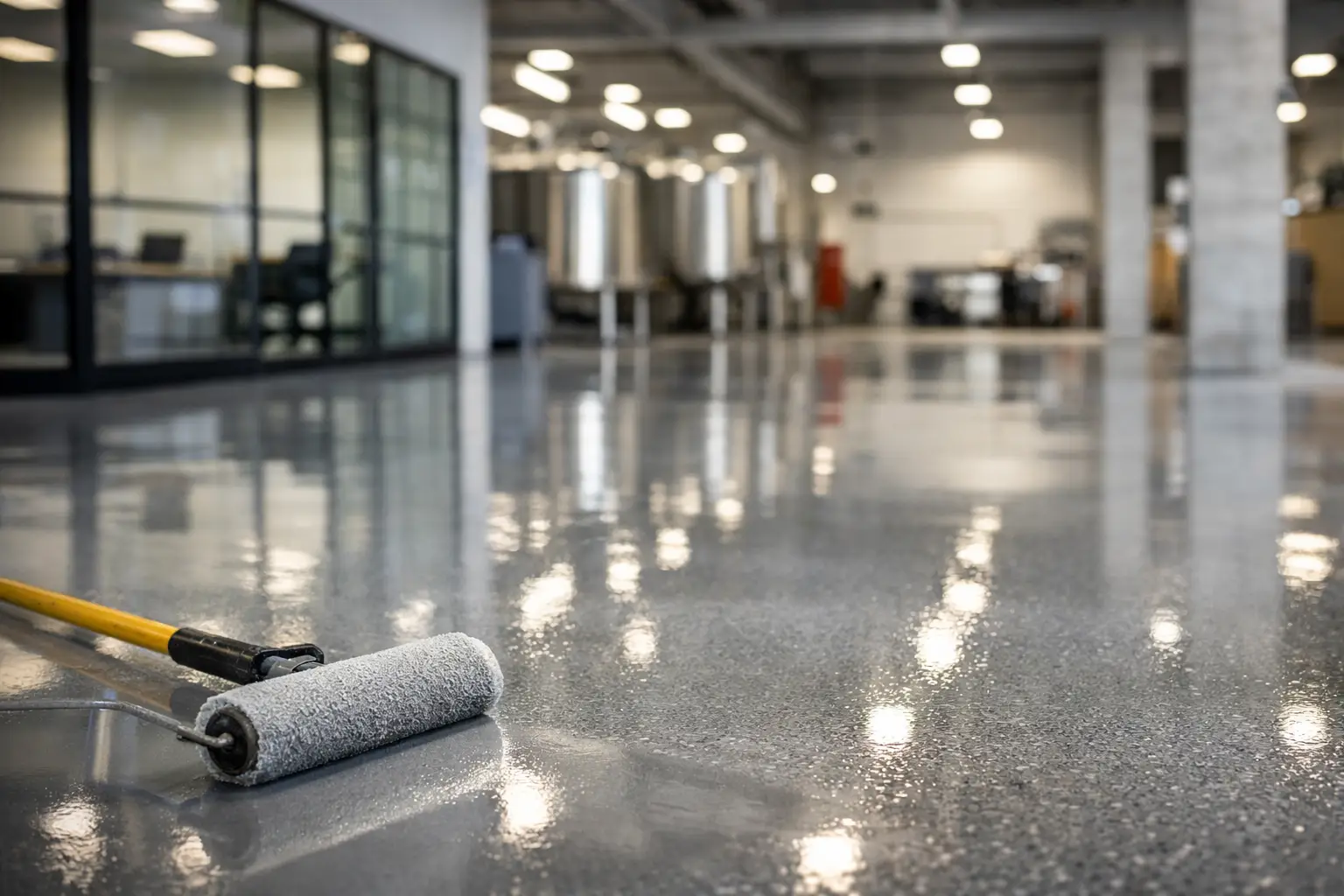
A proper commercial epoxy system creates a dense, sealed surface that is easier to clean, more resistant to chemicals and abrasion, and far more presentable than bare concrete. In customer-facing environments, that polished, consistent finish improves the overall standard of the space. In operational areas, it reduces dust, helps define work zones and supports safer movement.
That said, not every commercial site needs the same system. A retail fitout has different demands from a warehouse loading zone. A food prep space has different hygiene priorities from an automotive workshop. The right result depends on matching the coating build, slip rating and finish to the way the site actually operates.
What a quality epoxy floor should deliver
The best commercial floors earn their value over time. They hold up under traffic, stay easier to maintain and keep the site looking professional with less effort. That is the practical side of epoxy – it is not there just to look sharp on handover day.
For most commercial clients, the key benefits are straightforward. A seamless surface means fewer places for dirt and contaminants to collect. Better chemical and stain resistance helps protect the slab. A well-installed coating can also improve light reflectivity, which makes work areas brighter and cleaner in appearance. In spaces where presentation matters, that can influence how customers, tenants and staff perceive the business.
Safety is another major factor. Slip resistance must be considered early, not added as an afterthought. The floor needs to suit the environment, whether that means a smoother finish for easy cleaning or a more textured surface for wet or spill-prone areas. There is always a trade-off here – more texture can improve grip, but it can also make cleaning slightly more involved. The right balance depends on the site.
Where commercial epoxy flooring Brisbane businesses use most
Commercial epoxy is used across a wide mix of spaces because it can be tailored to different operational needs. Warehouses often need hard-wearing coatings that stand up to pallet jacks, forklifts and steady tyre traffic. Workshops and service areas need protection from oils, fluids and impact. Retail stores, medical spaces and showrooms usually want a cleaner decorative finish that still handles regular foot traffic.
Hospitality and food-related environments often need a hygienic, easy-clean surface with slip resistance built in. Storage areas, plant rooms and service corridors also benefit because epoxy reduces concrete dusting and gives the floor a more controlled, maintainable finish.
This is where a quote based on the real site matters. The floor area, slab condition, existing coatings, moisture levels and usage all shape what system is appropriate. Cheap square-metre pricing can sound attractive until it skips the work that determines whether the floor lasts.
Surface preparation is where the job is won or lost
If there is one part of the process that should never be rushed, it is preparation. Commercial clients often focus on the final appearance, which is understandable, but the bond between the coating and the concrete is what determines long-term performance.
Professional preparation usually involves mechanical grinding, crack and surface repairs, cleaning and moisture testing. If the slab has contamination from grease, tyre residue or previous coatings, that must be addressed properly. If there is rising moisture in the slab, the system may need a moisture-control primer or a different specification altogether.
In South East Queensland, humidity and slab moisture are not minor details. They are some of the most common reasons coatings fail when the installer cuts corners. Bubbling, peeling and patchy adhesion usually start below the surface. A premium finish means very little if the base was not prepared to suit the site conditions.
Choosing the right finish for your commercial space
Not all epoxy floors look or perform the same. Some projects need a plain, practical finish in a neutral tone. Others need line marking, zoning, decorative flake or a finish that complements a polished commercial fitout. What matters is that the floor still performs as well as it presents.
For heavy-duty spaces, a build designed for impact and abrasion resistance is often the priority. For customer-facing environments, appearance and consistency usually matter more, but durability still counts. If the site needs compliance with slip-resistance requirements, the coating system should be selected accordingly rather than improvised on the day.
A good contractor will also talk honestly about curing times and access. Some systems can return to light foot traffic relatively quickly, while heavier traffic may need longer. If your business cannot tolerate extended downtime, staging the project or scheduling around operations may be the smarter approach.
What to look for in a commercial epoxy contractor
Commercial flooring is not a product-only purchase. It is an installation service, and the quality of that service affects everything from finish consistency to how long the floor stays in service. Experience with local conditions matters, but so does the discipline to prepare properly, manage moisture risk and apply the system to specification.
Look for a contractor who asks practical questions about your site. They should want to know what traffic the floor takes, what spills are likely, how often it is cleaned and whether slip resistance is required. If the conversation starts and ends with colour choices and a fast price, that is a warning sign.
It also helps to work with a team that stands behind its workmanship. A clear warranty, strong communication and realistic advice are signs of a contractor who expects the floor to perform, not just pass the handover inspection. For many Brisbane businesses, that reliability is worth more than saving a small amount upfront.
The long-term value of doing it once and doing it properly
Commercial flooring decisions are rarely just about installation cost. They affect cleaning time, maintenance frequency, operational disruption and how often the floor needs repair or replacement. A professionally installed epoxy system can lower those headaches significantly, especially when the slab is prepared correctly from the start.
There is no single best coating for every site. Some businesses need a decorative finish that lifts presentation. Others need a hard-working system built for traffic and wear. The common factor is this: the floor should suit the environment, comply where required and last under real conditions.
That is the standard quality-focused contractors work to. Teams such as Resin Masters build commercial floors with the preparation, moisture control and application detail needed for Queensland conditions, not just ideal showroom conditions.
If you are planning a fitout, upgrading a warehouse or replacing a failing coating, start with the real demands of the site rather than the cheapest quote. A commercial floor should work hard, stay safe and keep looking sharp long after the job is signed off.