Servicing : Gold CoastBrisbaneSunshine CoastToowoomba

Menu
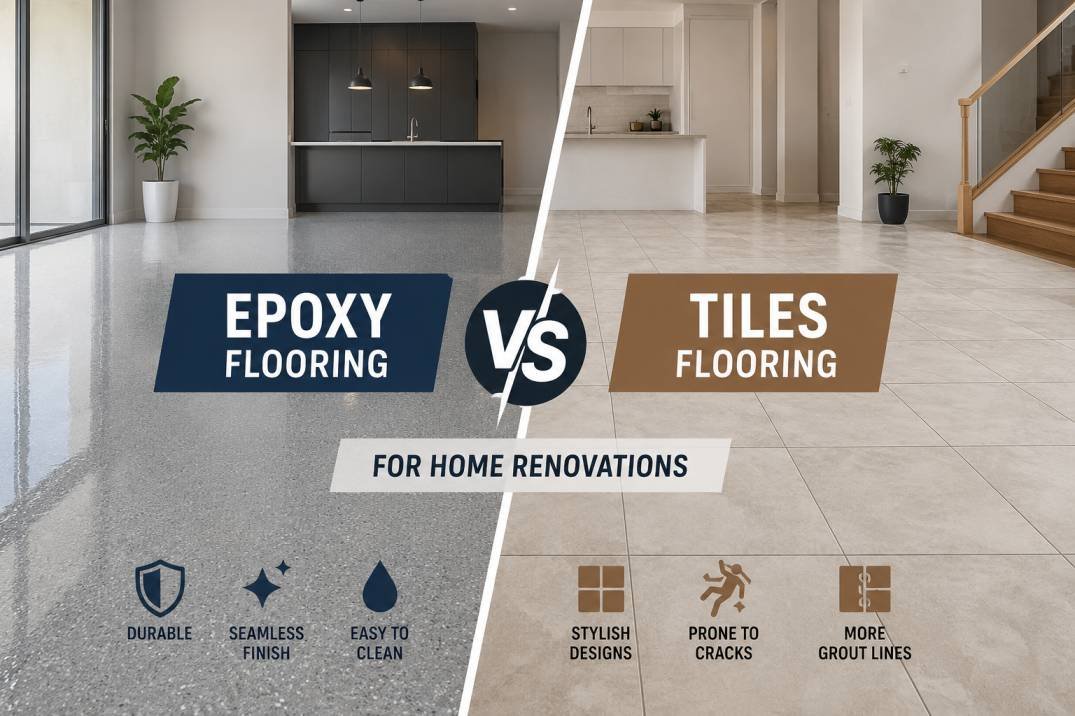
Epoxy vs Tiles for Sunshine Coast Home Renovations: Honest Comparison
July 23, 2026
Team
Quick Answer: Epoxy flooring typically costs less than tiling once you factor in waterproofing, adhesive, and grout, and offers a seamless, low-maintenance surface ideal for garages, living areas, and wet zones. Tiles offer a more traditional aesthetic and a wider range of textured, natural-look finishes. The right choice depends on your space, budget, and design priorities — this guide compares both honestly.
Sunshine Coast renovators frequently weigh up epoxy flooring against tiles for garages, living spaces, alfresco areas, and even kitchens. Both are excellent, durable options — but they suit different priorities. Here’s an honest, side-by-side comparison to help you decide for your specific renovation.
Cost Comparison: Epoxy vs Tiles
When comparing sticker prices, tiles can sometimes look competitive — but the full installed cost tells a different story. Tiling requires waterproofing membrane, adhesive, grout, and skilled trade labour, all of which add up. By the time a quality tile installation is complete, the total cost frequently exceeds $150 per square metre — well above the $65–$90 per m² typical for a quality epoxy flake system.
|
Cost Factor |
Epoxy Flooring |
Tiles |
|
Base material cost |
Included in system price |
Tile cost: $40–$150+/m² before installation |
|
Waterproofing |
Not required (seamless coating) |
Required in wet areas — adds $15–$30/m² |
|
Adhesive & grout |
Not applicable |
Required — adds material and labour cost |
|
Labour |
2–4 days, included in quote |
Often longer, especially for complex layouts |
|
Typical total installed cost |
$65–$90/m² |
$120–$180+/m² |
Durability and Maintenance
Epoxy Flooring
A seamless, monolithic surface with no grout lines to crack, stain, or harbour mould — a genuine advantage in the Sunshine Coast’s humid subtropical climate. Properly installed epoxy resists chips and cracks well and requires only regular mopping with a neutral cleaner to maintain its appearance over 10–20 years.
Tiles
Individual tiles are extremely hard-wearing and resistant to scratching, but grout lines are the genuine weak point — particularly in Sunshine Coast’s humidity, where grout can develop mould or mildew without regular cleaning and resealing. Cracked or chipped individual tiles can usually be replaced without redoing the whole floor, which is a practical advantage epoxy doesn’t offer in the same way.
Coastal Climate Performance
For Sunshine Coast renovations specifically, both systems can perform well — but require the right specification. Epoxy needs a UV-stable topcoat for any sun-exposed area, and polyaspartic for genuinely outdoor applications exposed to sea spray and storms. Tiles need proper waterproofing membrane beneath them in wet areas, and grout needs to be sealed and well-maintained to resist the coastal humidity that promotes mould growth.
Aesthetic and Design Options
Where Epoxy Wins
- Truly seamless look — no visible joints or pattern repetition
- Unlimited custom colour and metallic finish options
- Can be applied directly over many existing concrete slabs without removal
Where Tiles Win
- Wider range of natural-look finishes — stone, timber-look, textured options
- Easier to create varied patterns, borders, and feature areas using different tile types
- Some homeowners prefer the traditional tactile feel of individual tiles underfoot
Which Spaces Suit Each Option Best
Best for Epoxy
- Garages and workshops — chemical and oil resistance is unmatched by tiles
- Open-plan living areas wanting a seamless, modern aesthetic
- Commercial kitchens and food preparation areas (HACCP compliance favours seamless surfaces)
- Covered or semi-covered outdoor entertaining areas with the right topcoat
Best for Tiles
- Bathrooms wanting a specific natural stone or textured aesthetic
- Spaces where individual tile replacement flexibility matters
- Heritage-style or traditional Sunshine Coast home renovations prioritising a classic look
Installation Time and Disruption
Epoxy installation is typically faster overall — most residential garage or living area projects take 2–4 days from preparation through to final cure. Tiling, particularly for larger or more complex layouts, often takes longer due to the sequential nature of laying, grouting, and sealing. Get a free Quote!
Our Honest Recommendation
For garages, workshops, and any space prioritising durability, chemical resistance, and minimal long-term maintenance, epoxy is generally the stronger choice for Sunshine Coast homes — and often the more cost-effective one once full tiling costs are accounted for. For bathrooms and spaces where a specific natural tile aesthetic is the design priority, tiles remain an excellent, time-tested choice.
Also Read:- Epoxy Flooring Cost Sunshine Coast (2026 Complete Price Guide)
Frequently Asked Questions
Is epoxy cheaper than tiles for a Sunshine Coast renovation?
Generally yes, once you factor in waterproofing, adhesive, and grout costs for tiling. Epoxy delivers a comparable or superior result for less total cost in most applications.
Can epoxy be applied over existing tiles?
In many cases, yes — subject to an on-site inspection to confirm the existing tiles are structurally sound and properly prepared. This can save significant cost compared to full tile removal.
Which is better for a humid Sunshine Coast bathroom — epoxy or tiles?
Both can work well with proper specification. Epoxy’s seamless surface eliminates grout-related mould concerns, while tiles offer more aesthetic variety. The right choice depends on your design priorities.
Renovating your Sunshine Coast home and weighing up epoxy vs tiles? Resin Masters can assess your space and give you an honest recommendation — not just a sales pitch. Get a FREE consultation: +61 433 733 956 or resinmasters.com.au.