Servicing : Gold CoastBrisbaneSunshine CoastToowoomba

Menu
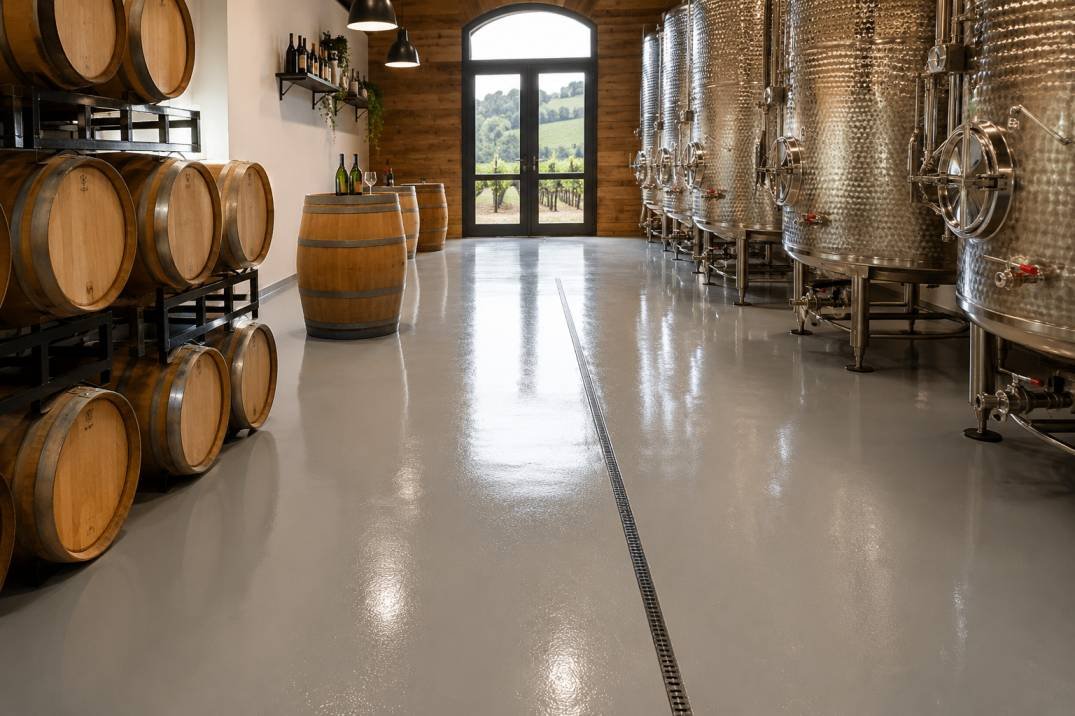
Epoxy Flooring for Breweries, Wineries and Cellar Doors
October 24, 2026
Team
Epoxy flooring suits most brewery, winery and cellar door floors if the system is chemical-resistant, slip-textured and laid with falls to drains. Hot caustic washdowns and steam can outrun epoxy, and that’s where polyurethane cement is often specified. Choose by cleaning routine and room, not by the word brewery.
Wort, wine, yeast and hot water each attack a floor differently. A tasting room needs looks and grip. A cellar needs drains and chemistry. Most sites in Northern NSW and South-East Queensland mix both under one roof, so you’re really choosing three or four floors.
What does a brewery or winery floor have to survive?
Acidic beer and wine, sugary wort, yeast, caustic cleaners and hot water, plus the weight of tanks, kegs and forklifts. Australian installers list the same exposures: tartaric and other wine acids, caustic cleaning agents, yeast, alcohol, malts, enzymes and brewing sugars. The floor has to resist all of them and still grip when wet.
Resin Masters’ chemical resistant floor coatings guide says standard chemical-resistant epoxy resists organic acids such as citric, lactic and acetic at typical food-processing concentrations. It also resists caustic cleaners. It rates bleach and other oxidising agents as poor. Tartaric acid isn’t named in its table, so ask for a resistance chart that names your actual cleaning products.
Is epoxy or polyurethane cement better for a brewery?
It depends on the room. Epoxy suits tasting rooms, barrel halls, dry stores and most cellar floors. Polyurethane cement is usually pitched for production areas with hot washdowns, steam or cold rooms. Some Australian installers argue for it across the whole brewery, so weigh their claims against your own cleaning temperatures.
|
Area |
Sensible starting point |
Why |
Ask about |
|---|---|---|---|
|
Cellar door or tasting room |
Epoxy, flake or metallic |
Looks matter; traffic is light to moderate; spills wipe up |
Wet slip rating |
|
Barrel hall or wine cellar |
Epoxy with anti-slip aggregate |
Cool, mostly dry, occasional wet cleaning |
Slab moisture |
|
Tank hall or production floor |
Epoxy or polyurethane cement, by washdown temperature |
Caustic, acids and possible steam |
Data sheet limits |
|
Packaging and dry store |
Epoxy, mortar build for forklifts |
Dry; impact from pallets and trucks |
Build thickness |
|
Cold room |
Check the manufacturer rating |
Rapid hot and cold cycling |
Rated range at your thickness |
Safecoat and Ascoat both promote polyurethane cement for breweries. Ascoat cites better performance above 60 degrees Celsius. Those are installer claims. Our guide to polyurethane flooring for food processing and cold rooms covers the system itself.
What makes a tasting room or cellar door floor different?
Customers see and walk on it, so finish and grip both count. Flake hides marks and adds texture. Metallic gives a feature floor, but smooth finishes get slippery when wet, so ask for an anti-slip additive. Resin Masters’ bar page says spilled beer, wine and spirits don’t soak into cured epoxy.
Resin Masters offers multi-colour vinyl chip flake blends and metallic finishes such as midnight charcoal with silver, and it brings colour samples to the free consultation. See metallic epoxy flooring and the bar and pub epoxy flooring page. Its advice for spills is simple: wipe them promptly rather than letting them sit.
How much slip resistance and drainage does a wet cellar need?
Wet production areas need a stronger anti-slip texture than a tasting room, plus falls that send water to drains. Resin Masters’ industrial page lists AS 4586 R11 for light wet areas and R12 for heavy wet food processing zones. It says the class should be set for the actual application. Get the rating in writing.
If part of your site counts as a food premises, Standard 3.2.3 requires food handling floors to be unable to absorb grease, food particles or water. They must also be laid so water doesn’t pond. Public dining and drinking areas are exempt. Which side your winery or brewery falls on is a question for your council or state regulator. Read the clause in Safe Food Queensland’s copy of Standard 3.2.3.
What changes in Northern NSW and South-East Queensland?
Humidity and distance. Subtropical humidity pushes more moisture through slabs, and Resin Masters says it tests every Northern NSW slab for moisture vapour before priming. Northern NSW jobs are scheduled as planned visits from its South-East Queensland base, so book ahead.
The local map is busy. Australian Traveller lists Stone & Wood in Byron Bay, Common People Brewing in Bangalow, Wandana in Mullumbimby, Seven Mile in Ballina and Earth Beer Company at Cudgen. Visit Scenic Rim lists vineyards at Canungra and in the Fassifern Valley, plus distilleries on Tamborine Mountain. Resin Masters’ site names no brewery or winery job, so treat these as the local picture, not client references.
Resin Masters lists Byron Bay, Ballina, Bangalow, Lismore, Mullumbimby, Murwillumbah and Tweed Heads as Northern NSW service areas in its Northern NSW epoxy flooring guide. Its industrial page also names the Sunshine Coast’s Kawana and Kunda Park zones. Before any coating, read how to test concrete moisture before epoxy.
Sources: Australian Traveller’s Byron Bay brewery list and Visit Scenic Rim.
How do you fit a floor job around brewing or vintage?
Stage it. Resin Masters says it sections larger industrial floors and schedules stages around your operating calendar. Most jobs take 2 to 4 days, and full chemical cure takes 7 days. Book the work for your quietest weeks and ask when the first hot wash is safe.
Its restaurant page also offers fast-cure polyaspartic options for overnight or weekend installs. That’s aimed at kitchens, so ask whether the same approach suits a production floor with drains and coving.
What does a brewery or winery floor cost?
Resin Masters publishes rates for its standard systems, including GST. Solid colour is $50 to $90 per m2, decorative flake $60 to $110, and metallic or custom quartz $100 to $160 plus. Industrial floors are quoted per site. A brewery with drains, coving and heavy washdowns needs an assessed quote.
- Crack and defect repair: $5 to $20 per m2 for heavily damaged slabs.
- Moisture barrier: $3 to $8 per m2.
- Old coating removal: assessed at quote.
- Small areas may carry a flat minimum project fee.
A free on-site quote is the quickest way to get a real figure. Resin Masters itemises it in writing within 48 hours of the visit. Contact Us!
What should you ask an installer before you sign?
Ask which chemicals and temperatures the system is rated for, in writing, and how the slab is prepared and tested. Then ask about slip class, coving, drains and warranty. Clear written answers matter more than a brand name or a sector reference list.
- Which chemicals, at what concentration and temperature, is the system rated for?
- How is the slab ground, repaired and moisture tested?
- Which AS 4586 class applies to each zone?
- How are coving, drains and thresholds finished?
- What does the warranty cover on a wet production floor? Compare with the epoxy floor warranty guide.
Who is this guide not for?
It isn’t for sites running hot caustic or steam washdowns beyond what an epoxy data sheet allows, or for anyone hoping to coat over a failing slab. It’s also not a food safety ruling. Your council, state regulator and the product data sheet decide what suits your premises.
- Sites handling solvents: Resin Masters’ chemical guide rates standard epoxy as poor to moderate against solvents and says novolac or vinyl ester is needed.
- Slabs with active moisture that hasn’t been treated.
- Owners who want a polished concrete look: see epoxy vs polished concrete.
Frequently asked questions
Can epoxy flooring handle wine and beer spills?
Yes. Resin Masters says cured 100% solids epoxy is non-porous, so spilled beer, wine and spirits don’t penetrate it. Wipe spills promptly rather than letting them sit. Check the data sheet for the acid and cleaner exposure your site actually has, because wine acids aren’t named in its published chemical table.
Does epoxy flooring resist hot caustic washdowns?
Resin Masters says its epoxy with a polyaspartic topcoat handles hot water mopping and steam cleaning to about 70 to 80 degrees Celsius. Above that, or with constant steam, ask about polyurethane cement or another system. Get the rated temperature and thickness in writing before you commit.
How long is a brewery or winery closed for an epoxy floor?
Most Resin Masters jobs take 2 to 4 days, with full chemical cure at 7 days. Larger floors can be sectioned and staged around your operating calendar. Ask the installer when foot traffic, forklifts and the first hot wash are safe, and plan around your busiest weeks.
Does a brewery floor need AS 4586 slip testing?
Resin Masters’ industrial page lists R11 for light wet areas and R12 for heavy wet food processing zones, and says independent testing can be arranged where required. The right class depends on the application, so ask which class each zone needs and who tests it.
Can you epoxy an old winery concrete slab?
Often, if the slab is sound and dry. Resin Masters’ standard preparation is diamond grinding, crack repair, moisture testing, primer, coats and topcoat, with old coating removal assessed at quote. Slabs with active moisture or crumbling concrete need treatment first.
Also Read:- Polyurethane Flooring for Food Processing & Cold Rooms