Servicing : Gold CoastBrisbaneSunshine CoastToowoomba

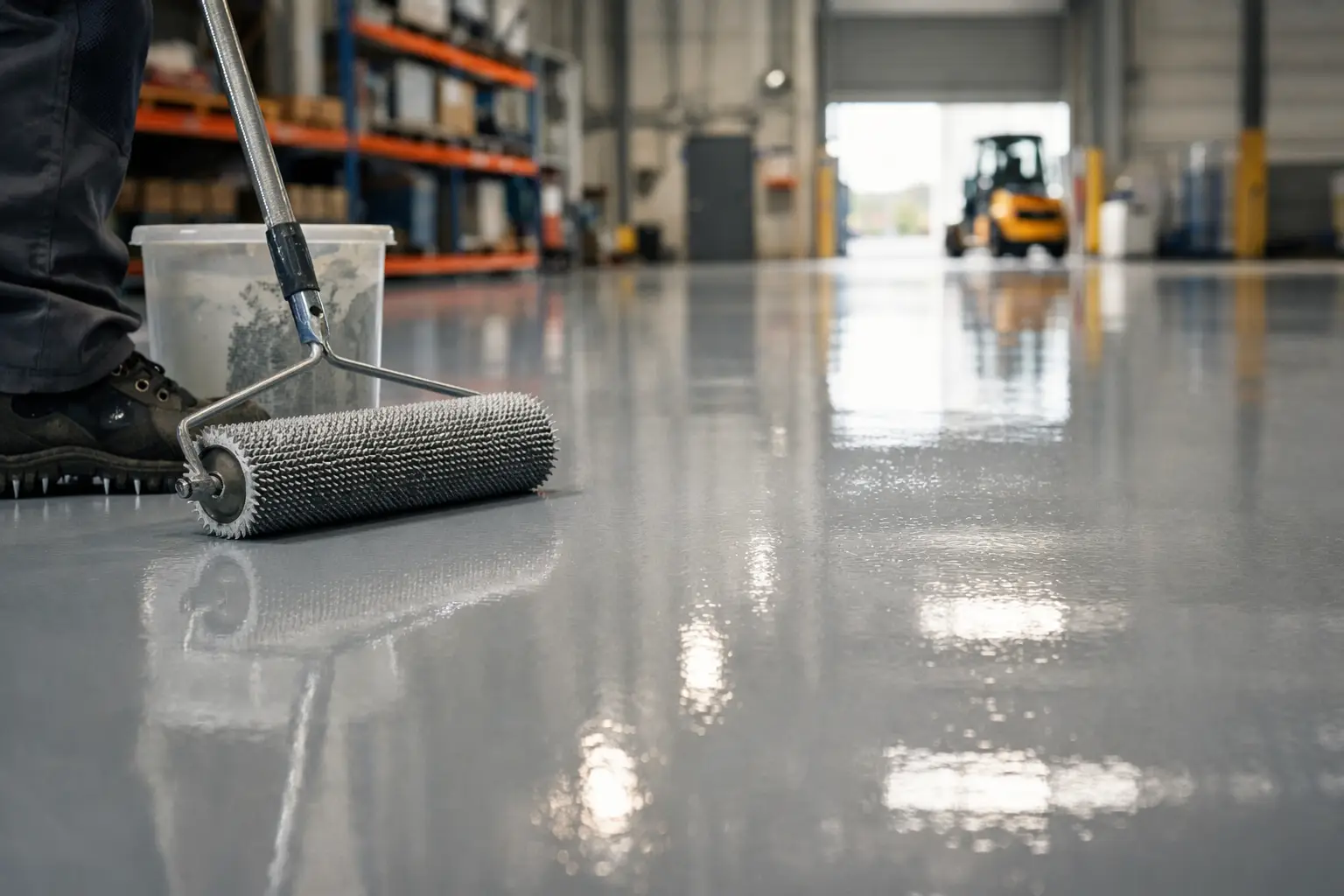
Industrial Floor Coatings Queensland That Last
A warehouse floor can look sound at handover and still fail within months. Tyre traffic lifts weak coatings, dropped stock chips poorly bonded areas, and Queensland humidity drives moisture through concrete when the system has not been specified or installed properly. Industrial floor coatings Queensland businesses choose need to do more than improve appearance. They need to protect the slab, support safe movement and keep operations running.
For warehouses, workshops, food-production areas, showrooms and plant rooms, the right resin floor is a practical asset. The wrong one becomes a recurring maintenance cost, with patch repairs, dusting concrete and avoidable downtime.
What an industrial coating needs to handle
Industrial floors face a different workload to a residential garage. Forklifts create repeated point loading and tyre friction. Pallet jacks put pressure on joints and turning zones. Oils, chemicals, water, grit and cleaning products can all affect the surface. In busy areas, the floor also has to remain safe for people on foot.
Epoxy and other resin systems can provide a hard-wearing, seamless finish that is easier to clean than bare concrete. They can also be built with different thicknesses, aggregate profiles and topcoats to suit the job. But no single product is right for every site.
A light-duty storeroom may suit a thinner seamless epoxy system, while a heavy workshop or warehouse aisle may require a thicker, more heavily built coating. Areas exposed to sunlight through roller doors or external access points may also need a UV-stable topcoat, as standard epoxy can amber or chalk with prolonged UV exposure. The coating should follow the environment, traffic pattern and maintenance requirements, not simply the lowest quote.
Surface preparation decides the result
The coating is only as strong as the concrete beneath it. This is where professional installation separates a durable floor from one that begins peeling at the edges.
Concrete often carries contaminants that are not obvious at first glance. Oil can sit deep in a workshop slab. Old sealers, curing compounds, paint residue and tyre marks can all interfere with adhesion. Even new concrete can present problems if it has not cured adequately or has a weak, dusty surface layer.
Mechanical grinding is generally the right starting point. It opens the concrete profile, removes weak material and gives the resin a clean, sound surface to bond to. Cracks, spalls and joints also need assessment before coating begins. A crack may need repairing, while a moving joint may need to remain flexible rather than being bridged with rigid resin.
Acid etching is not a substitute for thorough mechanical preparation on demanding industrial work. It may appear quicker, but it does not reliably remove contamination or create a consistent profile across a large operational floor. Saving time at this stage can cost far more when the floor needs to be stripped and recoated later.
Moisture is a Queensland-specific risk
Concrete is porous, and moisture vapour can move through it from below. In Brisbane, the Gold Coast and the Sunshine Coast, high humidity and coastal conditions make moisture assessment particularly important. Rain events, ground conditions, poor drainage and recently poured slabs can all affect the result.
If moisture pressure is present and the system is not designed for it, the coating can blister, delaminate or develop cloudy patches. Professional installers test the slab and assess the conditions before selecting a primer or moisture-control system. In some cases, this means allowing more drying time. In others, it means specifying a moisture-tolerant epoxy primer rather than rushing into application.
That discussion may feel like a delay, but it is protection for the project. A floor that looks finished on Friday is not a successful floor if it starts failing before the next wet season.
Selecting industrial floor coatings in Queensland
The best industrial floor coatings in Queensland are specified around how the area is actually used. Start with the traffic, then consider contaminants, cleaning routines, temperature changes and safety requirements.
For many warehouses and workshops, an epoxy build system delivers the required combination of adhesion, chemical resistance and abrasion resistance. It creates a sealed, non-porous surface that prevents dusting and makes spills easier to manage. It is particularly effective where forklifts, trolleys and regular foot traffic are part of daily operations.
Where higher impact resistance or faster return-to-service is required, alternative resin systems may be considered. Polyurethane coatings can offer flexibility and strong UV stability, while polyaspartic systems may cure faster in suitable conditions. These are not automatic upgrades. Faster-cure systems demand tight control over mixing, application timing and site conditions. The right choice depends on the concrete, the operational deadline and the performance required over years, not days.
Colour and finish matter too. A lighter floor can improve visibility in a warehouse or workshop, while line marking can define pedestrian routes, storage zones and exclusion areas. Decorative finishes may suit customer-facing commercial spaces, but a heavy-duty operational area usually benefits from a straightforward, serviceable finish that makes marks and hazards easy to identify.
Slip resistance must be designed, not assumed
A glossy resin floor is not automatically unsafe, and a heavily textured floor is not automatically compliant. Slip resistance depends on the finished surface, contaminants present, footwear, gradient, cleaning practices and whether the floor is wet or dry.
For commercial and industrial sites, the required level should be assessed against the actual risk and relevant Australian requirements, including AS 4586 where applicable. A professional coating system can incorporate aggregate to create a more slip-resistant profile in wet zones, loading areas, wash bays and entrances.
There is a trade-off. More texture can improve grip, but it can also make a floor harder to mop and may hold dirt in hygiene-sensitive environments. The goal is a finish that gives workers confident footing without creating an unnecessary cleaning burden. This is why a loading dock, commercial kitchen and dry warehouse aisle should not all receive the same surface profile.
Plan the installation around operations
Industrial flooring work affects access, so planning matters. Before work starts, identify which areas need to stay operational, where equipment can be moved, and how long the coating requires before foot traffic or forklift traffic resumes.
Good staging can reduce disruption. A large warehouse may be completed in sections, allowing stock and machinery to shift progressively. Smaller workshops may be best scheduled over a shutdown period. Site preparation also includes controlling dust, checking ventilation and confirming that other trades will not damage the new floor before it has cured.
Be cautious of quotes that only describe the topcoat. A proper scope should explain surface preparation, crack and joint treatment, primers, coating layers, slip-resistance treatment where required, line marking and expected cure times. It should also make clear what the client needs to provide, such as cleared access, power and protection from water ingress during installation.
The real cost is the floor’s working life
Cheap coatings are often cheap because they reduce preparation, coating thickness or material quality. That can be tempting when a facility needs a fast answer, but the financial comparison should include the cost of failure. Removing a failed coating, repairing damaged concrete and closing down a work area is more expensive than doing the job properly at the outset.
A professionally installed resin system can reduce concrete dust, simplify cleaning and protect the slab from stains and wear. It also presents a cleaner, more organised workplace to staff, contractors and customers. For facilities that rely on operational consistency, those benefits are not cosmetic.
Resin Masters approaches industrial projects with preparation, moisture control and long-term performance at the centre of the scope. Premium materials and experienced installation matter because the floor is expected to work hard every day, not simply look good at practical completion.
Keep the coating performing after handover
Even a high-quality coating benefits from sensible care. Sweep abrasive grit regularly, clean spills promptly and use cleaning products suitable for resin floors. Forklift operators should avoid prolonged tight turns in the same spot where possible, particularly with hard tyres and heavy loads. Damaged areas should be inspected early, before moisture or contaminants can reach the concrete beneath.
Your floor should make work safer, cleaning easier and maintenance more predictable. When the coating system is matched to the site and installed on properly prepared concrete, it becomes one less operational problem for your team to manage.