Servicing : Gold CoastBrisbaneSunshine CoastToowoomba

Menu
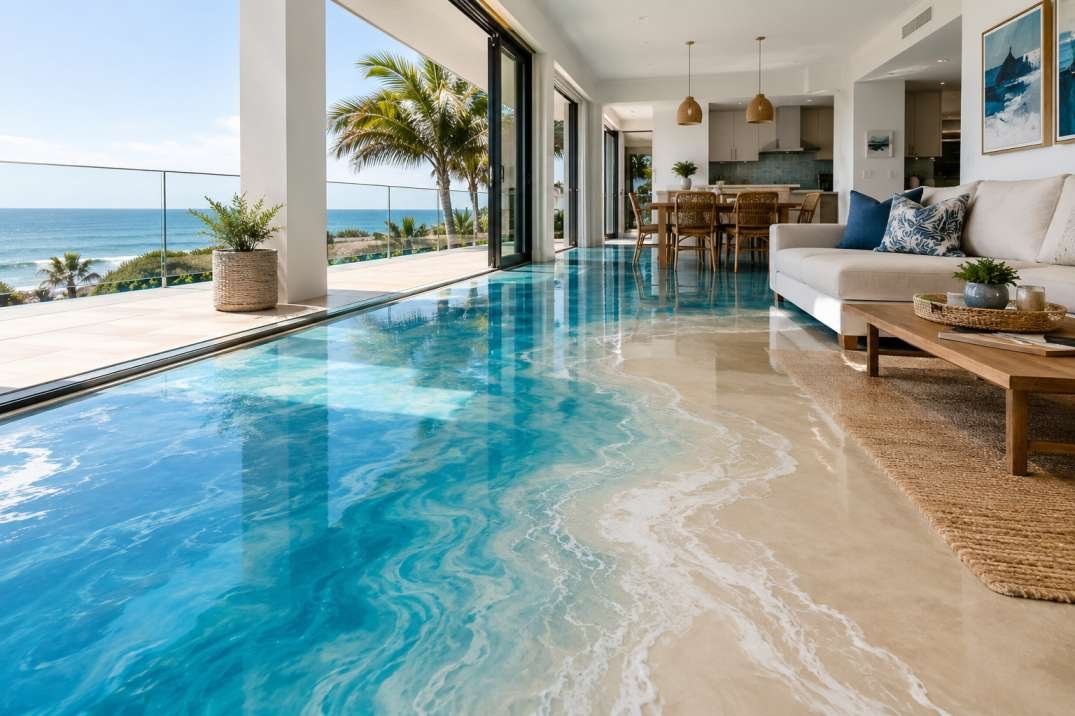
Is Epoxy Flooring Good for Beach or Coastal Homes? (Honest Guide)
July 24, 2026
Team
Quick Answer: Yes — epoxy flooring works well for coastal and beach homes when the right system is specified. Indoor areas can use standard epoxy with a UV-stable topcoat. Genuinely exposed outdoor areas facing sea spray and storms need a polyaspartic coating, which resists salt air corrosion and UV degradation far better than standard epoxy. The key is matching the system to actual exposure, not assuming one product suits every space in a coastal home.
Coastal and beachside Sunshine Coast homes face a genuinely different set of flooring challenges than inland properties — salt air, sand tracked in from the beach, higher humidity, and direct exposure to storms and sea spray in outdoor areas. Epoxy flooring can absolutely handle these conditions, but only with the right specification for each part of the home.
Why Coastal Conditions Are Different
Salt Air Exposure
Salt-laden coastal air is corrosive to many building materials, including standard floor finishes that aren’t specifically formulated to resist it. Over time, salt air exposure can degrade certain coatings faster than equivalent inland applications — making product selection genuinely important for beachside Sunshine Coast properties.
Sea Spray and Storm Exposure
For homes directly facing the coast, summer storms can blow rain and sea spray onto patios, alfresco areas, and entryways. This combination of moisture and salt accelerates wear on coatings not designed for full outdoor exposure.
Sand and Grit
Beach homes deal with sand tracked in constantly — which is abrasive to softer flooring surfaces over time. A durable, seamless epoxy surface handles this significantly better than alternatives like vinyl or carpet.
Higher Ambient Humidity
Coastal humidity levels often run higher than inland areas, which affects both indoor comfort and the moisture conditions any flooring installation needs to account for during installation. Explore Premium Metallic Epoxy Flooring
What Works Indoors in a Coastal Home
For indoor living areas, garages, and entryways in a coastal Sunshine Coast home, standard epoxy flooring with a quality UV-stable polyaspartic topcoat performs excellently. The seamless surface resists sand abrasion, doesn’t trap salt residue the way grouted surfaces can, and is easy to clean after a day at the beach.
What Works Outdoors in a Coastal Home
This is where the distinction matters most. Genuinely exposed outdoor areas — alfresco entertaining spaces, pool surrounds, and patios facing the ocean — should use a full polyaspartic coating system rather than standard epoxy. Polyaspartic offers superior UV stability, handles the thermal cycling of direct coastal sun exposure, and resists the combined moisture and salt exposure far better than standard epoxy with a topcoat.
Indoor vs Outdoor Coastal Flooring Comparison
Area Type | Recommended System | Why |
Indoor living areas | Standard epoxy + UV-stable topcoat | Protected from direct salt spray and storm exposure |
Garage (door often open) | Standard epoxy + UV-stable polyaspartic topcoat | Some UV/heat exposure but not direct salt spray |
Covered alfresco/patio | Epoxy with UV topcoat, or light polyaspartic | Partial protection reduces but doesn’t eliminate exposure |
Exposed patio/pool surround | Full polyaspartic coating | Direct sea spray, storms, and full UV exposure |
Entryway/mudroom | Standard epoxy with anti-slip additive | Handles sand and moisture tracked in from the beach |
Maintenance Tips for Coastal Epoxy Floors
- Sweep or vacuum regularly to remove sand before it can scratch the surface over time
- Rinse outdoor polyaspartic areas periodically to remove salt residue, particularly after storms
- Use a neutral pH cleaner for mopping — avoid harsh acidic or abrasive cleaning products
- Address any chips or wear points promptly with spot repairs to prevent expansion. Get a free Quote!
Common Mistakes in Coastal Flooring Decisions
- Using standard epoxy on a fully exposed outdoor coastal area — expect premature yellowing and degradation
- Assuming ‘marine grade’ or ‘outdoor epoxy’ products are all equivalent — always confirm the specific system is polyaspartic for genuine coastal exposure
- Underestimating how quickly sand and grit can wear unprotected or poorly sealed surfaces
- Skipping moisture testing due to assuming coastal humidity ‘isn’t that different’ — it genuinely is, and testing remains essential
Also Read:- Best Epoxy Flooring Contractors Sunshine Coast (2026 Buyer’s Guide)
Frequently Asked Questions
Can epoxy flooring handle salt air on the Sunshine Coast?
Yes, with the right specification. Indoor areas perform well with standard epoxy and a UV-stable topcoat. Directly exposed outdoor areas need a full polyaspartic system to properly resist salt air and storm exposure long-term.
Is epoxy flooring good for a beach house garage?
Yes — epoxy handles sand, salt residue, and coastal humidity very well indoors, particularly with a UV-stable topcoat for garages with regularly open doors.
Does sea spray damage epoxy flooring?
Standard epoxy can degrade faster under sustained sea spray exposure. Polyaspartic coatings are specifically formulated to resist this and are the correct choice for any directly exposed coastal outdoor area.
Have a coastal or beachside Sunshine Coast property? Resin Masters will assess your specific exposure — indoor, covered, or fully exposed — and recommend the right system for lasting results. Get a FREE quote: +61 433 733 956 or resinmasters.com.au.