Servicing : Gold CoastBrisbaneSunshine CoastToowoomba

Why Does Epoxy Floor Bubble?
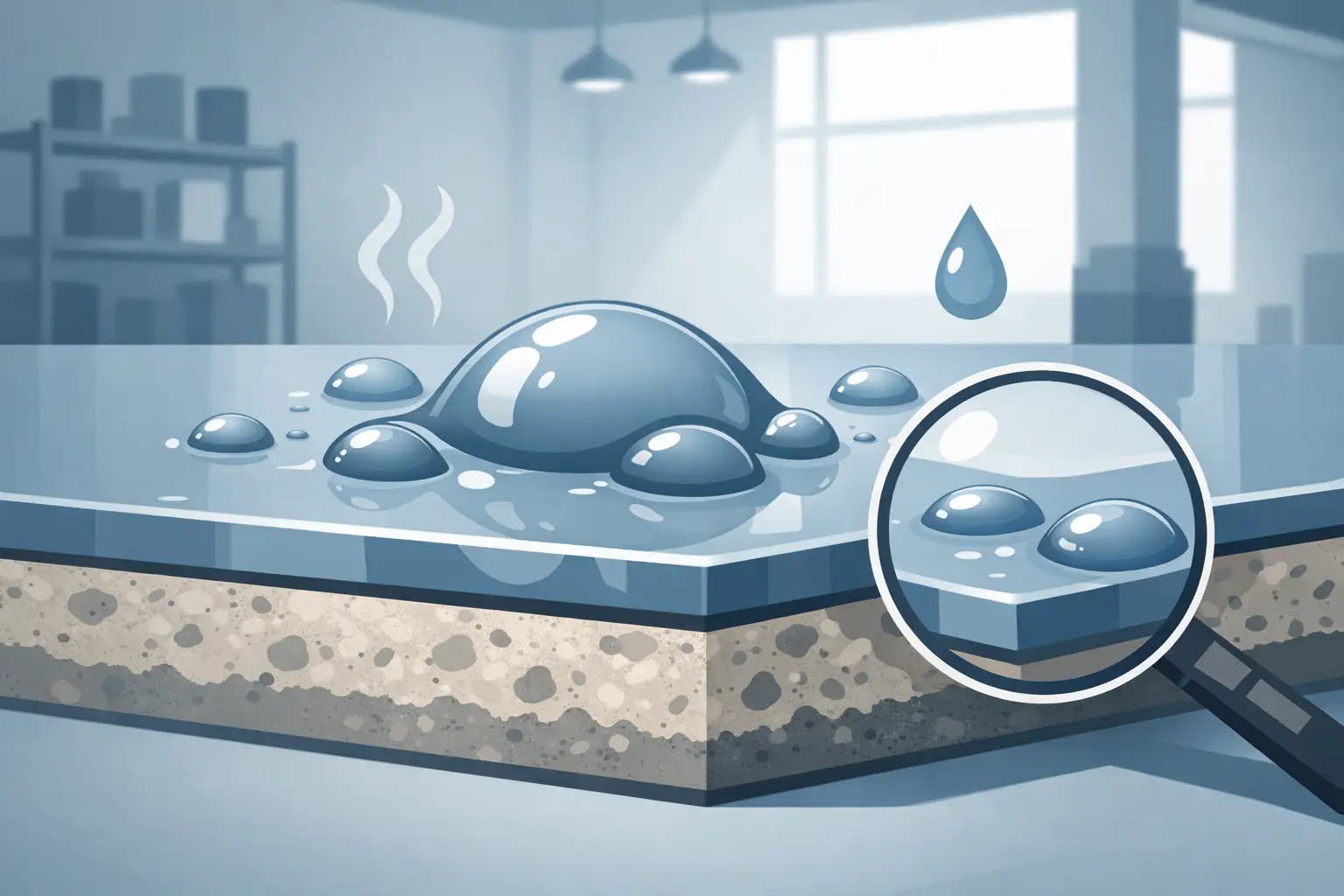
A newly coated epoxy floor should cure smooth, dense, and tight to the concrete. When blisters or raised bubbles show up instead, something in the installation conditions was working against the coating from the start. If you are asking why does epoxy floor bubble, the short answer is this: air, moisture, heat, or contamination pushed up through the coating before it fully cured.
That answer sounds simple, but the real cause usually sits deeper in the slab, the prep work, or the timing of the install. Bubbling is not just a cosmetic nuisance. It can point to weak adhesion, trapped moisture, or a floor system that may fail earlier than it should. For homeowners, that means a garage floor that loses its clean finish. For commercial and industrial spaces, it can mean more serious issues with durability, hygiene, and maintenance.
Why does epoxy floor bubble during installation?
Most bubbling happens because epoxy is applied over concrete that is not ready to accept it. Concrete is porous. It holds moisture, air, dust, oils, and residue in ways that are not always visible from the surface. Once epoxy goes down, that trapped material has one job – try to escape.
If the coating is still wet or early in the curing stage, pressure from beneath can create bubbles, pinholes, or blisters. Sometimes the issue appears within hours. Sometimes it shows up the next day, after the surface has already started to harden.
Heat also plays a role. When concrete warms up, the air inside its pores expands. If epoxy is applied while the slab is heating rather than cooling, that rising air can move upward and form bubbles through the fresh coating. This is one reason experienced installers pay close attention not just to temperature, but to the direction temperature is moving.
The most common causes of epoxy floor bubbling
Moisture in the concrete
This is one of the biggest causes, especially on ground-level slabs and older concrete. Moisture vapor can move up through the slab from the ground below, or remain trapped inside if the concrete was not dry enough at the time of coating.
Even if the surface looks dry, moisture can still be present below. Once epoxy seals the top, vapor pressure builds and pushes against the bond line. That pressure can create blisters, bubbling, peeling, or widespread delamination.
This is why proper moisture testing matters. Guessing based on appearance is not enough.
Poor surface preparation
Epoxy performs best when it can mechanically bond to clean, properly profiled concrete. If the floor was not ground or shot blasted correctly, the coating may sit on a weak surface layer instead of anchoring into the slab.
Dust is another common problem. So are grease, tire residue, curing compounds, sealers, paint, and old adhesive. Any contamination left behind can interrupt adhesion and trap material under the coating. What looks like bubbling may actually be localized bond failure caused by poor prep.
Outgassing from the slab
Outgassing happens when air in the concrete pores rises into the wet epoxy. This often occurs when the slab temperature is increasing, such as in the late morning or early afternoon after a cool night.
On highly porous concrete, outgassing can be severe enough to create widespread pinholes and bubble formations across the surface. A primer coat can help reduce this risk, but timing and slab condition still matter.
Incorrect mixing or application
Epoxy is not forgiving if the mix ratio is off or the material is overworked. If components are not blended properly, the chemical cure can become inconsistent. If the installer mixes too aggressively, that can introduce excess air into the product.
Application thickness matters too. If epoxy is laid too thick in one pass, heat generated during cure can amplify defects. The result may be bubbling, fisheyes, soft spots, or an uneven finish.
Installing in the wrong environmental conditions
Humidity, air temperature, slab temperature, and ventilation all affect how epoxy behaves. High humidity can interfere with cure. Extreme heat can shorten working time and increase outgassing risk. Cold conditions can slow cure and affect flow.
There is no single perfect condition for every product, which is why product selection and job planning matter. A garage floor, commercial kitchen, and warehouse slab may all need different systems or installation windows.
What bubbling looks like and what it usually means
Not all bubbles mean the same thing. Small pinholes scattered across the surface often point to outgassing or porous concrete. Larger soft blisters may suggest moisture vapor pressure or contamination beneath the coating. If the bubble breaks open and the coating lifts easily, bond failure is likely involved.
Location matters as well. If bubbling appears only in one section, there may be a localized moisture issue, previous patch material, or hidden contamination. If it appears across the whole floor, the cause is usually broader – poor prep, slab moisture, or installation timing.
This is where experience makes a difference. Treating every bubble as a surface defect can lead to the wrong repair.
Can an epoxy floor bubble later, even if it looked fine at first?
Yes. Some floors look sound at handover but develop bubbling later because the underlying issue was never resolved. Moisture-related failures are a common example. If vapor transmission is high enough, pressure can keep building beneath the coating after cure.
Seasonal changes can expose problems too. A floor installed during a dry period may start showing blisters when humidity rises or when the slab sees more thermal movement. Heavy washdown areas, warehouses with frequent cleaning, and garages exposed to weather shifts are especially worth watching.
That does not mean every late bubble is caused by moisture. Impact damage, chemical exposure, or failure of a previous repair can also trigger localized lifting. But if bubbling spreads over time, the slab conditions need to be investigated carefully.
How to prevent epoxy floor bubbling
The best prevention starts before any resin is opened. Concrete needs to be tested, cleaned, profiled, and evaluated for suitability. That means checking moisture levels, identifying contamination, removing weak surface material, and choosing the right primer and system for the environment.
Timing also matters. Installing when the slab is cooling rather than heating can reduce outgassing risk. So can using a primer designed to penetrate and seal porous concrete. On moisture-prone slabs, a moisture mitigation system may be needed before the main epoxy build goes down.
This is also why low-price epoxy jobs often fail sooner. Surface prep is the part many shortcuts hide in. A floor can look good on day one even if the slab was not properly prepared. The difference shows up later, when traffic, vapor pressure, and time test the bond.
What to do if your epoxy floor already has bubbles
The right fix depends on the cause and the extent of the damage. Small isolated defects may be ground out, patched, and recoated. But if bubbling is tied to moisture or widespread prep failure, spot repairs usually do not hold for long.
A proper assessment should look at the substrate, not just the finish. That may include adhesion testing, moisture testing, and inspection of the concrete profile beneath failed areas. In some cases, the affected coating needs to be removed so the slab can be treated correctly and recoated with a system suited to the conditions.
For homeowners, that can be frustrating, especially if the floor is fairly new. For commercial and industrial spaces, delay can cost more than the repair itself. Once the coating bond is compromised, traffic, cleaning, and impacts tend to make the failure spread.
Why professional installation makes the difference
Epoxy flooring is not just about applying a coating. It is about reading the slab, controlling the environment, and building a system that matches how the space will be used. A garage, showroom, workshop, and warehouse do not place the same demands on a floor, and they should not be treated the same way.
A quality-first installer will spend more time on prep, moisture control, and product selection because that is where long-term performance comes from. At Resin Masters, that focus is central to how durable floors are delivered across residential, commercial, and industrial projects.
If your floor is bubbling, the visible defect is only part of the story. The real answer is under the surface, and that is exactly where the fix needs to start. A strong epoxy floor is built on sound concrete, proper preparation, and the discipline to get every stage right.
3 Responses