Servicing : Gold CoastBrisbaneSunshine CoastToowoomba

Warehouse Flooring That Keeps Operations Moving
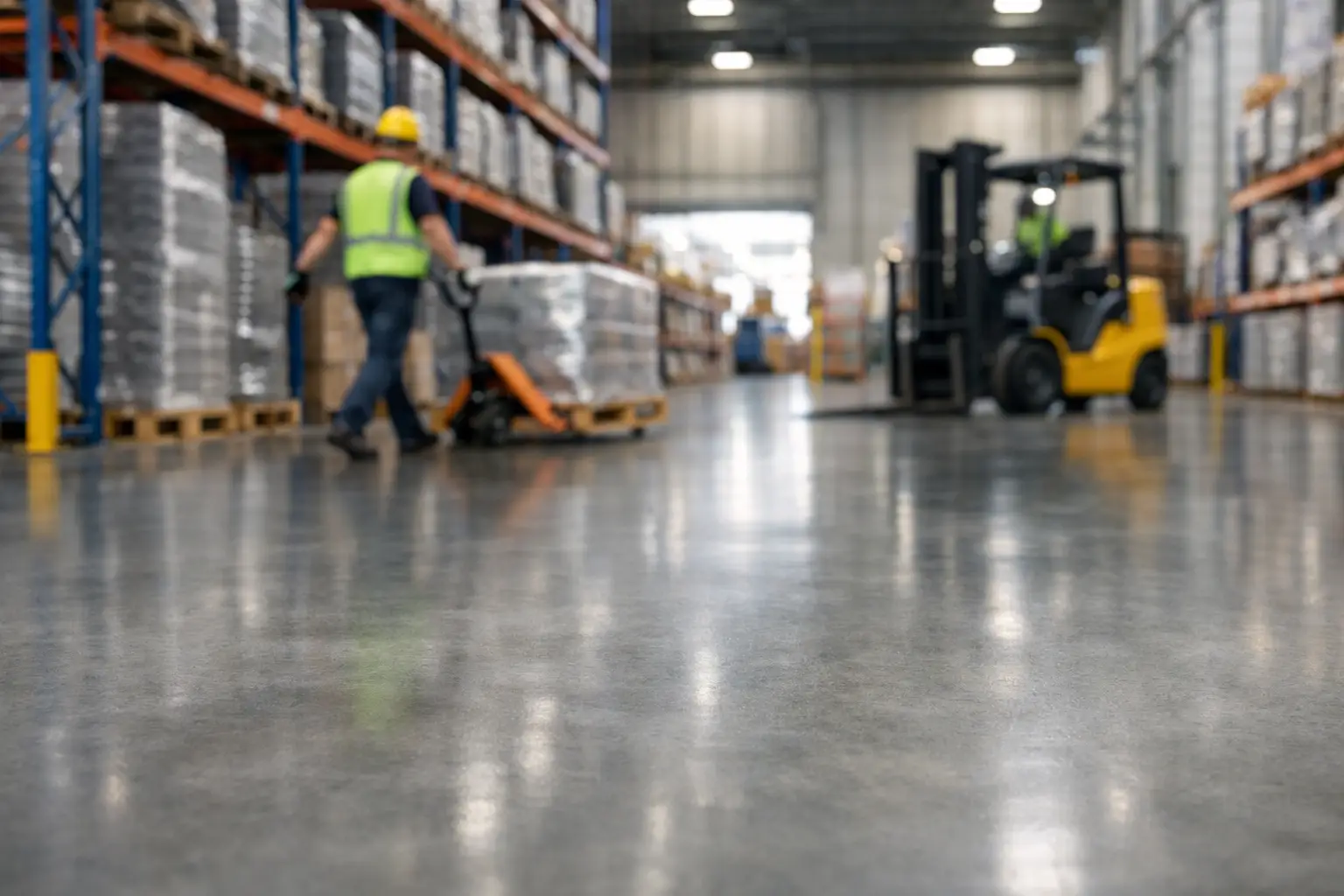
A warehouse floor is not just concrete underfoot. It carries forklifts, pallet jacks, racking loads, dropped stock, tyre traffic, cleaning chemicals and the daily pressure of keeping goods moving. The right warehouse flooring protects that working surface, supports safer operations and reduces the disruption caused by dusty, damaged or difficult-to-clean concrete.
For Queensland facilities, the decision is also shaped by heat, humidity and moisture in the slab. A coating may look good on day one, but without correct preparation and moisture management, even premium materials can lose adhesion. Long-term performance starts below the finished surface.
What warehouse flooring needs to withstand
Every warehouse has a different traffic pattern, but most floors face a similar combination of abrasion, impact and contamination. Bare concrete gradually wears down under hard wheels and repeated traffic. It can dust, absorb oil and chemicals, crack around joints, and become harder to keep clean as its surface opens up.
A professionally installed epoxy resin floor creates a dense protective layer over prepared concrete. This helps limit dusting and staining while providing a hard-wearing finish that is easier to clean than porous concrete. It can also improve the presentation of dispatch areas, production spaces, showrooms and staff walkways without compromising practical performance.
The specification must match the site. A light-duty storage space does not need the same system as a busy logistics warehouse with loaded forklifts operating all shift. Likewise, a workshop exposed to oils, batteries or cleaning agents needs chemical resistance considered alongside wear resistance. Choosing a generic coating because it is inexpensive often shifts the cost into repairs, downtime and early replacement.
Start with how the space actually operates
Before selecting a resin system, assess the floor in operational terms. Consider vehicle type and frequency, point loading beneath racking, wheel hardness, turning zones, washdown practices, temperature changes and any chemicals handled on site. Loading docks and travel lanes commonly receive more punishment than storage bays, while entrances can bring in grit and moisture that accelerate surface wear.
Traffic management matters too. Clearly defined pedestrian routes, forklift lanes and exclusion zones help workers move safely and help visitors understand the site at a glance. Coloured coating areas and durable line marking can be incorporated into a flooring plan, rather than added as an afterthought that quickly wears away.
A practical warehouse floor is usually not one uniform finish everywhere. Higher-build systems may be appropriate in heavy traffic areas, while anti-slip finishes can be targeted around wash bays, access points and zones where water or product spills are likely. This approach controls cost without compromising the areas that need the greatest protection.
Why concrete preparation decides the result
Epoxy flooring is only as reliable as the concrete beneath it. Surface preparation is not an optional preliminary step. It is the foundation of adhesion, appearance and service life.
Professional preparation generally involves mechanical grinding or shot blasting to remove weak surface laitance, old coatings, contaminants and surface irregularities. The goal is to create a clean, sound concrete profile that allows the resin to bond properly. Cracks, spalls and failed joints should also be assessed and repaired with compatible materials before coating begins.
Moisture deserves particular attention in Brisbane, the Gold Coast and coastal Queensland. Concrete can hold moisture long after it appears dry, and humidity can affect installation conditions. If moisture vapour is not properly managed, it can create pressure beneath a coating and contribute to blistering or delamination. Testing the slab and selecting the right moisture-control process protects the investment before the first coat is applied.
This is where low-cost coating jobs frequently fall short. Applying resin over poorly prepared concrete may provide a short-term visual improvement, but it does not correct underlying contamination, weak concrete or excessive moisture. The failure usually appears later, when the floor is already carrying warehouse traffic.
Warehouse flooring and slip resistance
A hard-wearing floor should also support safe movement. Smooth, glossy finishes can be suitable in dry, controlled environments, but they may not be appropriate where water, oils or other contaminants are present. Slip resistance needs to be considered according to the use of each area, not chosen purely for appearance.
Resin systems can include graded aggregates or textured finishes to improve traction. The trade-off is that more texture can make a floor slightly more demanding to clean. A well-designed specification balances grip, hygiene and maintenance, with the required slip-resistance performance assessed against relevant Australian standards, including AS 4586 where applicable.
The right finish is especially valuable around pedestrian crossings, amenities, washdown areas, ramps and warehouse entry points. It helps create a safer working environment while keeping the surface practical for trolleys, pallet jacks and routine cleaning equipment.
Epoxy systems for different warehouse demands
Epoxy is a popular choice for industrial flooring because it delivers a durable, protective finish with excellent adhesion when installed correctly. It is available in different build levels, colours and textures, allowing the system to be tailored to the warehouse rather than forcing the warehouse to suit a standard product.
For general warehousing, a quality epoxy coating can control concrete dust and improve cleanability. In heavy-use environments, a thicker high-build or mortar-style system may be specified to manage greater abrasion and impact. Areas exposed to chemicals may require a system selected for the particular substances used on site.
There is no single “best” epoxy floor for every operation. The right answer depends on the slab condition, site conditions, traffic profile and the level of shutdown the business can accommodate. A detailed site assessment is more valuable than a quick square-metre estimate because it identifies the work needed to achieve a reliable result.
Installation planning reduces unnecessary downtime
Warehouses cannot always stop operating for days at a time. A professional installer should plan the works around access requirements, staged handovers, curing times and safety controls. In some facilities, completing the project in sections allows stock and operations to remain active elsewhere on site.
Preparation is often noisy and dusty before coating begins, so clear scheduling and site separation are essential. Once the floor is prepared, resin application must proceed under suitable conditions and within the manufacturer’s system requirements. Rushing this stage can affect finish consistency and cure performance.
Ask about the expected return-to-service timing for pedestrian traffic, light equipment and forklifts. These timeframes vary by product, temperature and system build. A contractor who provides clear expectations helps facility managers plan around the work rather than react to unexpected delays.
Keeping an epoxy warehouse floor performing
A resin floor is low maintenance, not maintenance-free. Routine sweeping removes abrasive grit that can gradually dull the finish. Regular cleaning with suitable equipment and cleaning products helps prevent a build-up of oils, tyre residue and warehouse dust.
Spills should be addressed promptly, particularly chemicals that may affect the coating or create a slip hazard. Heavy impacts and damaged joints should also be repaired early, before water or contaminants can travel beneath the protective layer. Where forklifts operate, keeping wheels in good condition reduces unnecessary stress on both the floor and equipment.
Periodic inspections are worthwhile in high-traffic zones, turning circles and loading areas. Small repairs completed at the right time are simpler and less disruptive than allowing local damage to spread across a larger section of flooring.
Choose workmanship, not just a coating price
The cheapest quote can be appealing when a warehouse floor covers a large area, but the installed system is what matters. Material quality, mechanical preparation, moisture control, repair work, application thickness and curing conditions all influence the final outcome.
Resin Masters approaches industrial flooring with those details in mind, using professional surface preparation and premium-grade systems suited to the operating environment. A properly specified floor should give managers confidence that the surface can support daily operations, meet safety expectations and continue to look professional under pressure.
When your concrete starts creating dust, staining easily or becoming difficult to maintain, it is a useful signal to assess the floor before minor issues become operational problems. A site-specific warehouse flooring plan can protect the slab, improve the working environment and give your facility a surface built for the way it actually works.