Servicing : Gold CoastBrisbaneSunshine CoastToowoomba

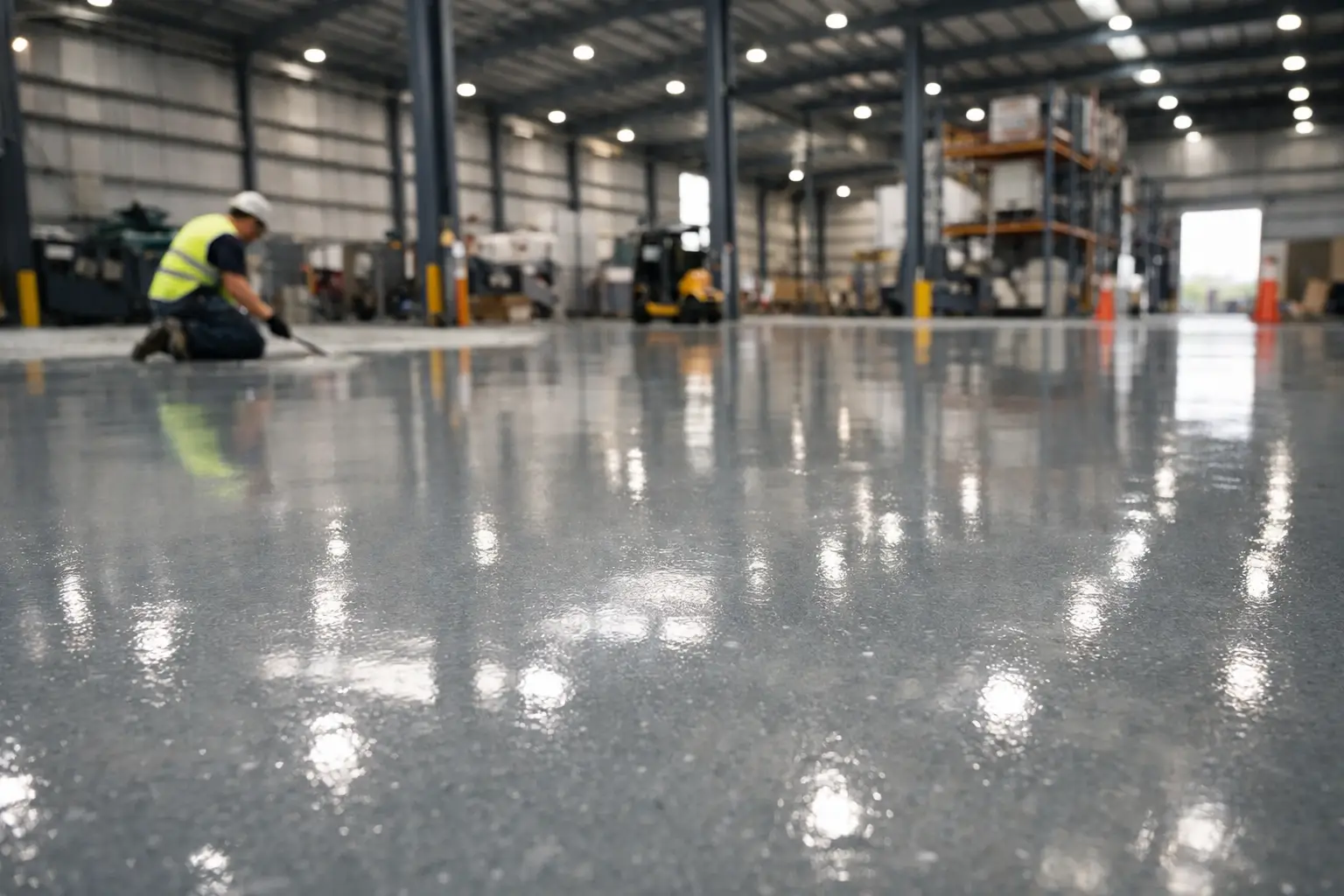
Toowoomba Industrial Epoxy Floors That Last
A warehouse floor can look sound from a distance while quietly costing the business money. Concrete dust settles on stock, forklift traffic wears through weak coatings, and oil or chemical spills become harder to manage. Professionally installed Toowoomba industrial epoxy floors are designed to solve those operational issues at the source, creating a hard-wearing, low-maintenance surface suited to demanding workplaces.
For workshops, warehouses, processing areas and commercial facilities, epoxy is not simply a cosmetic upgrade. The right system protects the concrete slab, supports safer movement through the site and presents a cleaner, more professional environment for staff, customers and visiting contractors. The result depends heavily on preparation, product selection and installation conditions – not just the coating applied on the day.
Why industrial concrete needs more than paint
Bare concrete is porous. It absorbs contaminants, releases dust as it wears and can be difficult to keep clean once oils, tyre marks and everyday industrial grime become embedded. In high-traffic areas, repeated forklift turns, pallet jack wheels and dropped equipment can progressively damage an unprotected slab.
A properly specified epoxy system forms a continuous protective layer over the prepared concrete. It limits dusting, improves resistance to many common industrial spills and makes routine cleaning more efficient. Because there are no grout lines or joins to trap dirt, a resin floor also provides a more hygienic finish than many tiled or segmented flooring options.
That does not mean every epoxy floor is identical. A light-duty storeroom, a busy mechanical workshop and a warehouse with regular forklift movements each need different levels of build, aggregate and chemical resistance. Selecting a generic coating because it is cheaper at the outset can lead to premature wear, peeling or an unsuitable level of slip resistance.
What a high-performing epoxy floor should handle
Industrial flooring has to perform under real working conditions, not just look good when the keys are handed over. In Toowoomba facilities, that can mean temperature variation across the year, tracked-in dirt and water, heavy equipment, vehicle traffic and the ongoing demands of a busy worksite.
Forklifts, trolleys and point loads
Tyre traffic is especially hard on weak floor coatings. Forklifts and trolleys apply force through small contact points, while turning movements can place additional stress on the surface. A correctly built industrial system uses the appropriate resin build and preparation profile to help resist abrasion and reduce wear in travel lanes.
If a floor carries frequent heavy loads, this should be raised during the quoting stage. It affects the coating system, the treatment of damaged areas and whether high-wear zones need additional attention.
Oils, fluids and workplace contaminants
Workshops and industrial facilities regularly deal with oils, fuels, lubricants, coolants and cleaning chemicals. Epoxy can provide valuable protection against many of these substances, provided spills are cleaned within a sensible timeframe and the system is selected for the chemicals used on site.
Where aggressive chemicals are present, a standard epoxy may not be the best answer on its own. The flooring contractor should assess the exposure and recommend a system with suitable chemical resistance rather than overpromising what a general-purpose coating can do.
Slip resistance without an impossible cleaning burden
A glossy floor can be easy to clean, but industrial safety is about more than appearance. Areas exposed to water, oils, wet footwear or vehicle movement may require a textured finish to improve underfoot grip. The challenge is finding a finish that suits the risk level without creating an overly coarse surface that holds dirt and increases cleaning time.
This is where specification matters. Slip resistance should be considered in line with the space, its expected contaminants and relevant Australian requirements, including AS 4586 where applicable. A practical floor balances traction, cleanability and the way people actually use the area.
Moisture beneath the slab
One of the most common causes of coating failure is not visible from above. Moisture vapour moving through the concrete can interfere with adhesion and contribute to bubbling, blistering or delamination. Even a slab that appears dry can hold moisture levels that require further assessment.
Experienced installers test and evaluate the substrate before coating. Where moisture control is needed, the right primer or vapour-mitigation approach must be included before the epoxy system is applied. Skipping this step may save time initially, but it can put the whole floor at risk.
The preparation work that determines the result
Industrial epoxy flooring is only as reliable as the concrete beneath it. The visible topcoat gets the attention, but surface preparation does the heavy lifting. A premium installation begins with an assessment of slab condition, contamination, existing coatings, cracks, joints and moisture.
Mechanical grinding is generally used to remove weak surface material and create a clean profile for the resin to bond to. This is very different from simply washing the floor, acid etching it or applying a coating over old paint. Oil-contaminated areas need specific treatment, while cracks and surface defects should be repaired as part of the preparation process where appropriate.
The floor must then be properly cleaned before primers, base coats and any broadcast aggregate are applied. Cure times also matter. Rushing traffic back onto the surface before the product has reached the required strength can mark or compromise an otherwise sound installation.
Choosing the right system for your facility
The best flooring specification starts with the operation, not a colour chart. A small fabrication workshop may prioritise chemical resistance and easy clean-up. A distribution warehouse may need better abrasion resistance under forklifts. A showroom connected to an industrial area may require a more refined finish while still accommodating day-to-day commercial traffic.
Before approving a quote, make sure the conversation covers these practical points:
- the type and frequency of vehicle, trolley and foot traffic;
- oils, chemicals, water and other contaminants likely to reach the floor;
- the condition, age and moisture level of the concrete slab;
- the slip-resistance needs of the workspace; and
- access requirements, cure times and how the installation will affect operations.
Colour also has a role beyond aesthetics. Mid-tone grey finishes can help conceal everyday marks in active work areas, while lighter colours improve brightness in enclosed spaces. Line marking, defined walkways and zoned colours can be incorporated to support site organisation where required.
How to protect an industrial epoxy floor after installation
An industrial epoxy floor is low maintenance, not no maintenance. Routine sweeping removes abrasive grit that can gradually dull the surface. Spills should be attended to promptly, particularly oils and chemicals, and cleaning products should suit the resin finish rather than leaving a film that affects traction.
Managers should also avoid dragging sharp metal items across the floor and should fit protective pads to equipment that remains in one position. If the facility layout changes, it is worth reassessing high-traffic routes and placing protective measures where repeated turning or loading is concentrated.
Small chips or localised damage are often simpler to repair when addressed early. Waiting until moisture, contaminants or traffic reach the exposed concrete can make the repair more involved.
A floor built around the way you work
The right industrial epoxy floor should make the workplace easier to run: cleaner at the end of a shift, safer underfoot and better protected against the daily impacts that wear down bare concrete. It should also be specified honestly. Some sites need a highly textured system, others need a smoother clean-room-style finish, and some slabs require moisture management before any coating can begin.
Resin Masters approaches industrial flooring with that site-specific mindset, using thorough preparation, premium-grade materials and professional application standards backed by a 7-year warranty. A detailed site assessment before work starts gives you the best chance of a floor that keeps performing long after the initial shine has settled into everyday use.