Servicing : Gold CoastBrisbaneSunshine CoastToowoomba

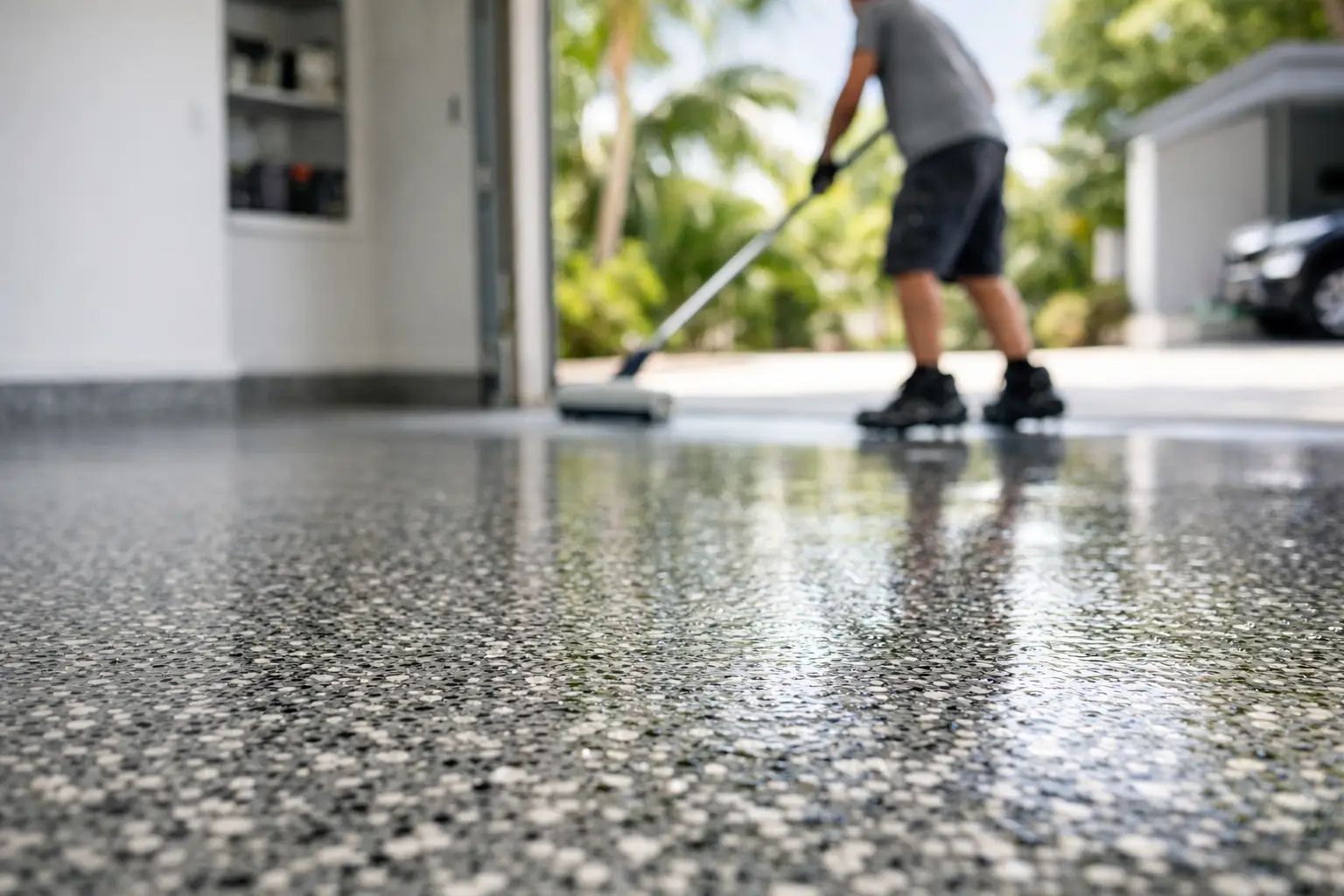
Sunshine Coast Flake Floor Coatings That Last
A flake floor can look sharp on day one and still fail early if the prep work is poor. That matters on the coast, where heat, humidity and concrete moisture can turn a basic coating job into peeling, bubbling or tyre marks within a short time. For property owners comparing Sunshine Coast flake floor coatings, the real difference is not just the finish you see – it is the system underneath and the standard of installation.
Flake coatings are popular for good reason. They give plain concrete a cleaner, more finished appearance, they improve slip resistance when specified correctly, and they hide minor surface variation better than a plain painted floor. In garages, workshops, showrooms and light commercial spaces, they also deliver a tougher wearing surface that is far easier to keep clean than bare concrete.
Why Sunshine Coast flake floor coatings suit coastal properties
Coastal conditions are hard on concrete floors. Moisture moves through slabs, especially in older properties or areas without an effective moisture barrier. Add Queensland humidity and high surface temperatures, and any shortcuts in the coating process tend to show up quickly.
That is why a professionally installed flake floor is more than a decorative upgrade. It acts as a sealed, protective surface that reduces dusting, resists staining and stands up better to daily traffic. In a home garage, that could mean protection from hot tyre pickup, dropped tools and oil drips. In a commercial setting, it often means a floor that presents better to customers while handling foot traffic, trolley movement and regular cleaning.
The key point is this – not every flake floor system is equal. The local environment makes product selection, surface preparation and moisture management far more important than many buyers expect.
What a quality flake floor system actually includes
A proper flake floor is a multi-layer resin system, not a single coat of paint with decorative chips thrown on top. The process usually starts with mechanical grinding to open the concrete and remove weak surface material. That stage is critical because coatings bond to the slab itself, not to dust, laitance or old contaminants.
Once the concrete is prepared, any cracks, pitting or damaged sections should be repaired. From there, the installer applies a primer or base coat suited to the slab condition, broadcasts the flake blend into the wet resin, then seals the system with one or more clear topcoats.
Each layer has a job to do. The base coat drives adhesion and build. The flakes add texture, coverage and visual depth. The topcoat locks everything in, improves cleanability and contributes to abrasion and chemical resistance.
When buyers compare quotes, this is often where the price gap comes from. A cheaper system may skip moisture mitigation, reduce film thickness or use lower grade materials that do not hold up as well under UV exposure, traffic or routine washing.
Surface preparation is where performance is won or lost
Preparation is rarely the exciting part of the job, but it is the part that protects your investment. A floor can have premium flakes and still fail if the slab was not assessed and prepared correctly.
Concrete needs to be tested, not guessed. If there is moisture pressure in the slab, that has to be managed with the right primer or moisture control system. If there are oil-soaked areas in a garage or workshop, they need treatment before coating begins. If the surface is weak or contaminated, grinding alone may not be enough.
For coastal projects, this attention to detail matters even more. The finish is only as reliable as the bond to the concrete underneath.
Where flake coatings work best
Flake systems are a strong fit for residential garages, carports, patios, home workshops and utility rooms where owners want a floor that looks finished and cleans up easily. They are also well suited to commercial spaces such as showrooms, back-of-house service areas, amenities and light industrial zones where slip resistance and presentation both matter.
That said, the right system depends on the use of the space. A home garage storing two family cars has different demands to a warehouse receiving pallet traffic. A poolside area has different slip requirements to a sealed indoor storeroom. A good installer will not treat them as the same job with the same coating schedule.
This is where experience adds value. The best result comes from matching the resin chemistry, flake coverage and topcoat finish to the way the floor will actually be used.
Appearance matters, but so does maintenance
One of the biggest selling points of flake flooring is that it looks clean and polished without feeling too clinical. The flakes soften the look of the surface, disguise dust better than plain solid-colour coatings and provide a more premium finish than standard concrete paint.
Popular colour blends tend to sit in the practical range – light greys, darker charcoal blends and neutral mixes that suit modern homes and commercial interiors. They give the floor a crisp, updated look without showing every mark.
Maintenance is simple when the system is installed properly. Most floors only need regular sweeping and occasional washing with a mild cleaner. Because the surface is sealed, dirt and spills stay on top rather than soaking into the concrete. That means less staining, less dust and a more hygienic finish overall.
There is a trade-off, though. A textured anti-slip finish improves grip, but if you go too aggressive in a domestic setting it can hold onto more dirt and feel harsher underfoot. The right balance depends on where the floor is and who uses it.
Slip resistance and compliance are not box-ticking exercises
For commercial properties and shared-use areas, slip resistance is more than a preference. It may need to align with compliance requirements and practical safety standards, particularly in wet areas or entrances.
This is why specification matters. The coating needs to suit the environment, not just the look the owner wants. A glossy finish might be fine in a dry showroom, but less suitable in an external walkway or washdown zone. Australian slip-resistance standards should be considered early so the finished floor performs as expected in real conditions.
A professional installer will explain the trade-off between appearance, cleanability and traction. That is the kind of advice that prevents disappointment later.
What to ask before choosing a contractor
If you are comparing Sunshine Coast flake floor coatings, ask how the slab will be prepared, how moisture will be assessed and what topcoat system is being used. Ask whether the finish is designed for vehicle traffic, foot traffic or both. Ask what warranty is included and what conditions apply.
Those questions quickly separate a true resin flooring specialist from a basic painter offering coatings as a side service. You want a contractor who can explain the system in plain terms, identify risks in the slab and recommend a finish based on performance, not guesswork.
It is also worth asking about turnaround times and curing. A floor may be dry to touch quickly, but that does not always mean it is ready for cars, heavy items or full service. Good advice here protects the coating in its most vulnerable stage.
Why premium installation pays off over time
The cheapest quote can be expensive if the floor needs repairs or replacement a year later. A properly installed flake system should hold its finish, resist wear and stay easier to maintain over the long term. That is where better preparation, better materials and better workmanship earn their keep.
For many owners, the real value is not just visual. It is the confidence that the floor will handle daily use without constant patching, staining or surface breakdown. In commercial spaces, it is also about presentation, safety and reducing disruption from avoidable flooring issues.
Resin Masters approaches flake flooring with that long-view mindset – rigorous prep, moisture-aware installation and systems built for Queensland conditions rather than short-term cosmetic results.
If you are planning a garage upgrade, fitting out a commercial space or replacing a floor that has already let you down once, the smartest move is to look past the flakes themselves and focus on the quality of the full system. A good floor should not just look right when it is handed over. It should still be doing its job well after the novelty wears off.