Servicing : Gold CoastBrisbaneSunshine CoastToowoomba

Are Epoxy Floors Slippery? What Affects Grip
A glossy epoxy floor can look exceptionally smooth, which is why property owners often ask: are epoxy floors slippery? The straight answer is that epoxy is not automatically slippery, but the final level of grip depends on the coating system, surface profile, contaminants and how the area is used. A high-gloss, completely smooth finish in a dry garage behaves very differently from an entryway exposed to wet shoes, or a warehouse aisle where spills are possible.
For homes, businesses and industrial sites across South East Queensland, the right result comes from matching the finish to real conditions. That means considering humidity, rain tracked in from outdoors, vehicle traffic, cleaning routines and the footwear people use every day. Slip resistance should be designed into the system from the start, not added as an afterthought.
Are Epoxy Floors Slippery When Wet?
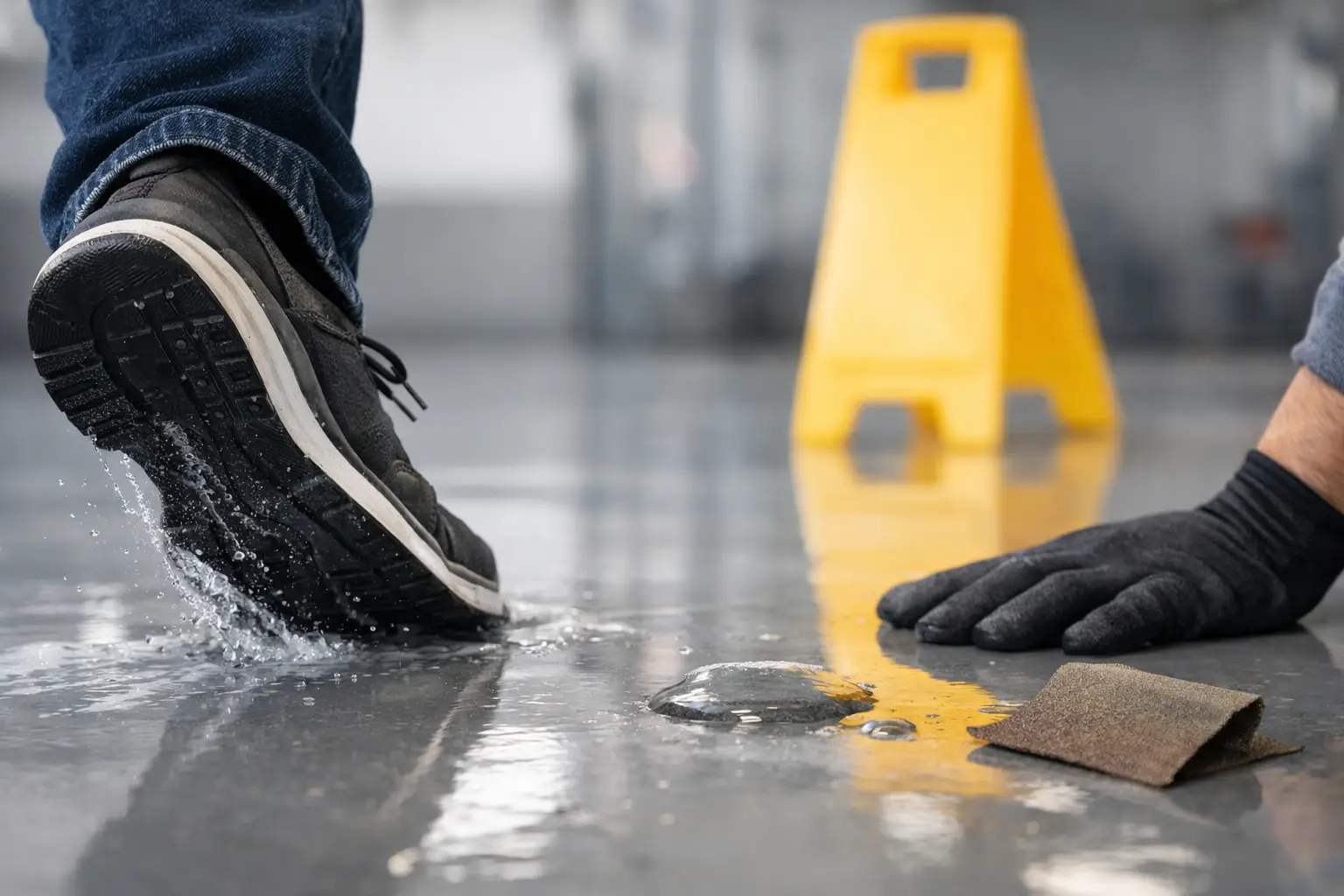
Like polished concrete, tile and other hard surfaces, a smooth epoxy coating can lose traction when water, oil, grease or dust sits on top of it. The issue is not that epoxy becomes inherently unsafe. It is that contaminants create a barrier between footwear and the floor, reducing the friction needed for a secure step.
A smooth, decorative metallic epoxy floor may be suitable for a dry residential room or low-risk retail setting. It may not be the right choice for a commercial kitchen, workshop wash bay, pool-adjacent area or busy warehouse loading zone. These spaces need a more textured surface and a clear maintenance plan.
Queensland conditions make this decision particularly relevant. High humidity, summer storms and wet footwear can quickly introduce moisture into garages, workshops and commercial entrances. If an area regularly gets wet, specifying a practical anti-slip finish is far more effective than relying on a glossy coating alone.
What Determines Epoxy Floor Grip?
Slip resistance is not one product feature. It is the outcome of several decisions made during design and installation.
The coating texture
The clearest factor is the amount of texture built into the topcoat. Professional installers can incorporate a fine anti-slip aggregate into the coating, creating a lightly textured finish that improves grip without making the floor difficult to clean. For areas with higher risk, a more pronounced texture may be appropriate.
More texture generally means more traction, particularly when the floor is wet. The trade-off is that heavily textured finishes can hold dirt more readily and take longer to mop. The best finish is rarely the roughest one. It is the one that provides suitable footing for the area while remaining practical to maintain.
The decorative system selected
Different epoxy systems have different natural surface characteristics. Full-flake coatings are a popular choice for garages, workshops, showrooms and commercial spaces because the flake broadcast creates visual variation and can support a practical, slip-resistant finish. They also disguise small marks, dust and tyre residue better than a single-colour gloss floor.
Metallic epoxy is known for its depth and movement, making it well suited to feature spaces, retail interiors and premium residential areas. It can be finished with additional grip where needed, though a highly textured treatment may change the smooth visual effect that makes metallic epoxy appealing.
For industrial floors, the system is usually selected around operations rather than appearance alone. Forklift routes, pallet movement, chemical exposure, cleaning methods and spill risk all influence the required coating build and surface profile.
Water, oils and other contaminants
Even a well-specified anti-slip coating needs sensible housekeeping. Water from rain, oil drips under a car, tyre dressing, fine dust and cleaning residues can all affect grip. In garages, it is wise to wipe up oil and coolant leaks promptly and avoid leaving wet mats or muddy footwear at the entry.
In commercial and warehouse environments, spills should be managed through documented cleaning procedures, appropriate drainage and matting at entrances where required. A floor coating improves durability and cleanability, but it cannot replace safe site practices.
Footwear and traffic
Work boots with clean, well-maintained soles will perform differently from smooth-soled office shoes, thongs or worn footwear. Similarly, pedestrian traffic has different requirements from trolley movement, forklifts and vehicles. A floor should be designed around the people and equipment that will use it, not simply around the desired colour or gloss level.
Slip Resistance and Australian Standards
Commercial property owners, builders and facility managers may need to consider Australian slip-resistance requirements, including testing and classification under AS 4586. The appropriate requirement depends on the location, the likelihood of the floor becoming wet, the type of use and the relevant project or regulatory requirements.
There is no single slip rating that suits every epoxy floor. A reception area, a food-preparation space and an industrial wash-down zone each present different risks. Specifying a rating without understanding the operating conditions can lead to a finish that is either unsuitable for safety or unnecessarily difficult to clean.
A professional assessment should account for the expected contaminants, the direction and volume of pedestrian traffic, ramps or changes in level, drainage and cleaning chemicals. On larger commercial projects, confirm the required performance level before the coating is applied. Testing a finished floor after the fact is not a substitute for selecting the right system upfront.
Choosing the Right Epoxy Finish for Each Space
For a typical residential garage, a full-flake epoxy system with a fine anti-slip additive often provides the right balance. It offers grip underfoot, handles hot tyre pickup when the concrete has been properly prepared, and remains easy to sweep or hose down. A slightly satin finish can also reduce the visual impact of dust and minor scuffs compared with a very high gloss surface.
For a home interior, decorative studio or low-traffic showroom, the priority may be a cleaner, smoother aesthetic. If the space stays dry, a lower-profile texture may be sufficient. Where the floor meets an external door, mudroom or wet area, use a more practical transition finish rather than treating every room exactly the same.
In warehouses and workshops, requirements are more operational. Fine aggregate may suit pedestrian walkways, while particular work zones may require a more aggressive profile. Heavy texture across an entire warehouse is not always the answer, as it can make cleaning and wheeled equipment movement less efficient. Zoning the floor by risk can be the smarter approach.
For hospitality, healthcare, food-related and public-facing settings, the coating must balance hygiene, cleaning needs and safety. Seamless epoxy is valued because it removes grout lines and makes routine cleaning easier, but the final topcoat needs to be selected with the wet-use conditions firmly in mind.
Installation Quality Matters as Much as the Topcoat
A slip-resistant additive only works as intended when it is applied consistently within a properly prepared coating system. Poor surface preparation, inconsistent broadcast rates or rushed topcoat application can create uneven texture, weak areas or a finish that does not perform as specified.
Concrete preparation is especially important in Brisbane, the Gold Coast and the Sunshine Coast, where moisture conditions can be challenging. The slab needs to be assessed, mechanically prepared and treated with the correct moisture-control approach before coating begins. If adhesion is compromised, even a premium anti-slip topcoat cannot deliver long-term performance.
At Resin Masters, the focus is on matching the resin system and finish to the way the area will actually be used. That includes rigorous preparation, premium-grade materials and clear advice on the level of texture that makes sense for the project. It is a quality-first process designed to protect both the floor and the people using it.
Maintaining a Safer Epoxy Floor
Routine cleaning preserves both appearance and grip. Sweep away grit and dust, clean spills promptly and use a suitable neutral cleaner rather than leaving soap residue behind. Avoid waxes, silicone-based dressings or products that leave a glossy film, as these can reduce traction on any hard floor surface.
Inspect high-traffic areas periodically, particularly entrances, ramps, workstations and locations exposed to water or oils. If operations change, such as adding a wash-down process or increasing public access, reassess whether the current finish still suits the risk level.
A professionally installed epoxy floor can be durable, attractive and safe underfoot. The key is not asking whether epoxy is slippery in isolation, but choosing a finish that gives your garage, workplace or commercial space the right grip for its real-world conditions.