Servicing : Gold CoastBrisbaneSunshine CoastToowoomba

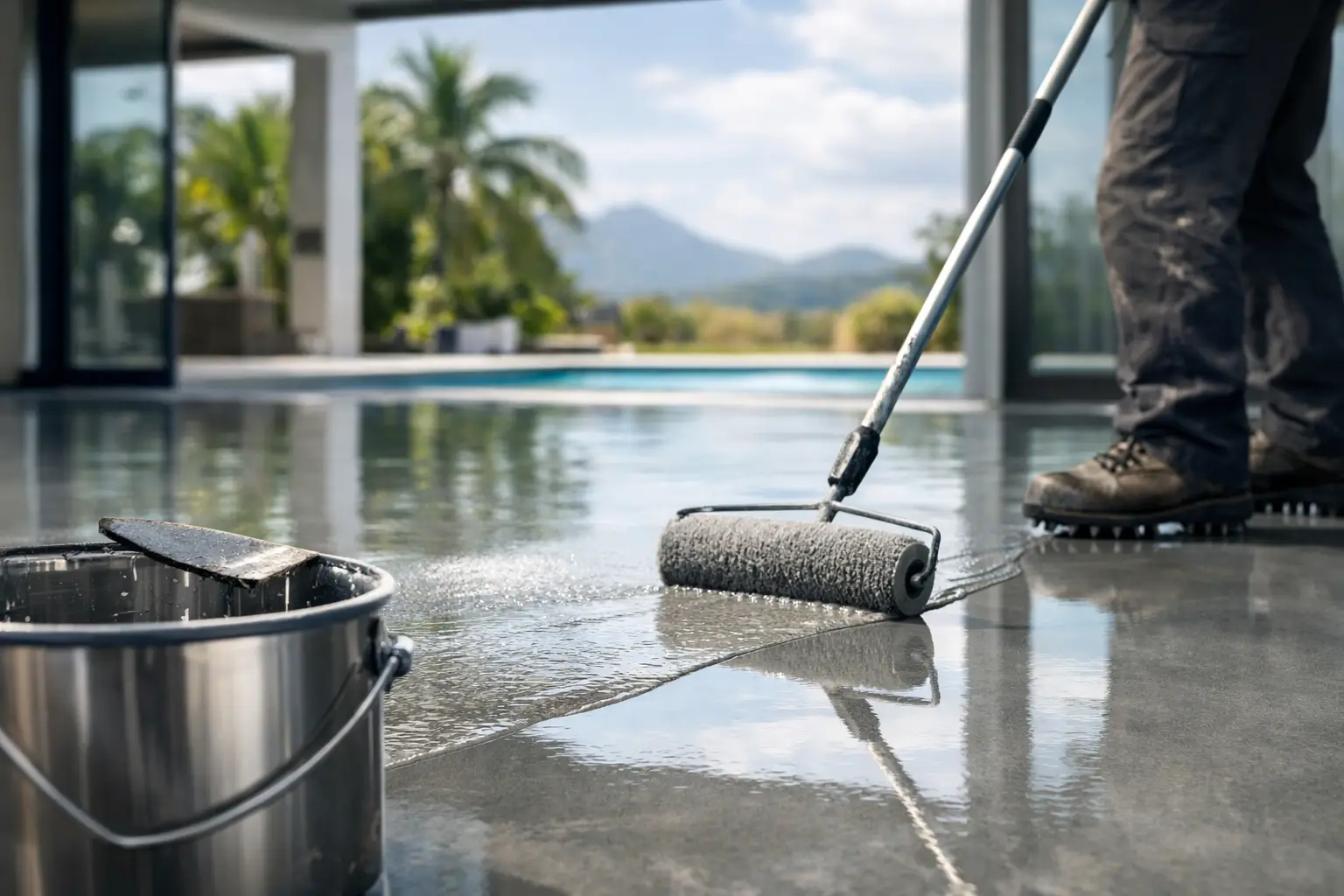
Queensland Humidity Epoxy Guide for Lasting Floors
A floor can look dry at 8 am and still be the wrong surface to coat by lunchtime. That is the reality behind this Queensland humidity epoxy guide. In Brisbane, the Gold Coast and coastal Sunshine Coast areas, warm air, wet-season humidity and moisture moving through concrete can all affect how an epoxy system bonds and cures.
Epoxy flooring performs exceptionally well in Queensland when the installation is planned around site conditions, not simply the calendar. The coating itself is only one part of the job. Concrete assessment, mechanical preparation, moisture control and cure management determine whether the finished floor remains seamless and durable for years, or develops early peeling, pinholes or patchy gloss.
Why Queensland Humidity Changes Epoxy Installation
Humidity is the amount of water vapour held in the air. As relative humidity rises, the difference between the air temperature and dew point becomes smaller. When a slab surface sits at or near the dew point, condensation can form even when it is not visibly wet. Applying epoxy onto that surface risks trapping moisture at the bond line.
That matters because epoxy relies on a secure mechanical and chemical bond to prepared concrete. Moisture can interfere with adhesion, create bubbling as the coating cures, or leave a cloudy appearance in some systems. High humidity can also affect curing speed and workability, particularly where temperatures are already high.
Queensland conditions are not uniform. A shaded garage in Redland City after overnight rain behaves differently from a sun-exposed warehouse in Toowoomba. A coastal commercial site may deal with sustained humid air, while an older slab can have a separate issue: moisture vapour rising from below. A professional assessment distinguishes between atmospheric humidity, surface condensation and moisture within the concrete.
The Three Moisture Risks That Need Different Solutions
Humid air during application
High relative humidity can make a normal application window unreliable. The installer must assess temperature, humidity and dew point before coating begins, then keep monitoring conditions as the work progresses. Opening a roller door may help ventilation in one setting, but it can introduce wetter coastal air in another. There is no single rule that suits every site.
The practical answer may be to alter the application time, control ventilation, use dehumidification where appropriate or postpone coating until conditions are stable. Rushing because a job is booked for a particular day is rarely worth the risk.
Moisture in the concrete slab
Concrete can hold moisture long after it appears dry. New slabs need adequate curing time, but age alone does not guarantee a suitable substrate. Ground moisture, missing or damaged vapour barriers, previous water ingress and frequent washdowns can all raise moisture vapour transmission.
This is especially relevant for garages, workshops, ground-floor commercial spaces and warehouses. A slab may be sound enough for a standard epoxy system, or it may need a compatible moisture-mitigation primer before the build coat is applied. Testing informs that decision. Guesswork does not.
Surface contamination and trapped water
Queensland garages often carry more than dust. Tyre residue, oil, sunscreen, salt air deposits, fertiliser, cleaning chemicals and water from wet vehicles can contaminate the slab. In industrial spaces, oils and process residues are common. If contaminants remain in the concrete pores, they can compromise adhesion even when humidity is within range.
Mechanical diamond grinding removes weak surface laitance and opens the concrete profile so the coating can key into a clean, sound substrate. Degreasing alone is not a substitute for proper preparation. It is a cleaning step, not a preparation system.
Queensland Humidity Epoxy Guide: The Installation Standard
A reliable epoxy floor begins before any material is mixed. The first stage is inspecting the slab for cracks, failed coatings, surface hardness, contamination, moisture history and drainage issues. Hairline cracking may be repairable. Active movement joints and areas affected by ongoing water entry need a different approach, because coating across a moving or wet defect will not make the underlying problem disappear.
Next comes mechanical preparation. Diamond grinding is used to remove existing coatings, expose a clean concrete profile and create the texture needed for adhesion. The floor is then thoroughly vacuumed and detailed, including edges and repair areas. This stage is dusty, demanding work, but it is where long-term performance is won or lost.
Moisture testing and environmental checks follow. The exact method and acceptable result depend on the specified resin system and the slab condition. If readings show elevated moisture, a correctly matched moisture barrier or primer may be required. If conditions indicate a condensation risk, application should wait or the environment should be controlled. Premium installation means choosing the right response, not forcing the same coating schedule onto every floor.
Once the substrate is ready, the coating system is installed to its required film build and recoat timing. A garage floor may receive a decorative flake broadcast with a clear protective topcoat. A showroom may suit a metallic epoxy finish. A warehouse may need a heavier-duty system designed around traffic, impact, cleaning routines and safety requirements. The best finish is not necessarily the thickest or glossiest one. It is the system suited to the way the area will be used.
Curing Is Part of the Job, Not the Finish Line
A newly coated floor can look complete before it has achieved service strength. Epoxy needs controlled curing time before foot traffic, vehicles, heavy equipment or cleaning can begin. High temperatures can shorten working time during application, while damp conditions may affect the cure profile of particular products.
For homeowners, this means resisting the urge to park the ute back in the garage too early. Hot tyres, vehicle weight and tyre plasticisers place real stress on a young coating. For commercial and industrial clients, cure planning should be built into the shutdown schedule so that forklifts, pallet jacks and washdown crews return only when the system is ready.
Good installers provide clear site-specific guidance because cure times vary by product, temperature and the coating build. A rushed handover can undermine a floor that was otherwise prepared correctly.
Slip Resistance Must Match the Space
A glossy epoxy floor can be practical and easy to clean, but gloss alone does not define safety. Entrances, food-service areas, workshops, ramps and washdown zones can become slippery when wet. Where a space needs a specified level of slip resistance, the system should be designed with the intended use and relevant Australian requirements, including AS 4586 testing considerations, in mind.
Texture can be introduced through flakes, aggregate or purpose-designed topcoats. There is a trade-off: more texture generally improves grip, but can make cleaning more involved. In a warehouse, the priority may be forklift traffic and cleanability. In a pool-adjacent entertaining area, wet-foot traction may matter more. The right balance comes from understanding the site, rather than applying a decorative finish chosen from a photo.
When DIY Epoxy Becomes a False Economy
DIY kits can be tempting for a small garage, particularly when the slab looks clean and the weather seems fine. The issue is not that every kit fails. The issue is that a homeowner has limited room to recover from hidden moisture, a weak surface profile or an unsuitable application window.
Peeling often begins at the edge of a tyre track, around a crack repair or in a section where moisture was not detected before coating. Repairing a failed epoxy floor usually costs more than getting the original preparation right. It may require full removal, grinding and a new system rather than a simple touch-up.
For high-value residential floors, commercial premises and industrial sites, professional installation provides a more controlled outcome. At Resin Masters, that means matching premium-grade materials and rigorous preparation to Queensland conditions, then backing the workmanship with a 7-year warranty.
Practical Steps Before Booking an Epoxy Floor
Before requesting a quote, consider how the space is used and what it has been exposed to. Mention any past flooding, rising damp, leaking doors, frequent washdowns, oil spills or previous paint failures. If the floor is a garage, note whether it receives direct afternoon sun and whether vehicles regularly enter wet. These details help determine the preparation and coating system required.
Also plan the timing around access. Clear vehicles, shelving and stored items from the area, and allow the full cure period before returning them. For a business, schedule the work around delivery movements, staff access and cleaning requirements. A well-planned installation is quicker, cleaner and less disruptive than trying to work around an occupied floor.
Queensland humidity is not a reason to avoid epoxy flooring. It is a reason to insist on better assessment, better preparation and an installer prepared to wait for the right conditions. A properly specified epoxy floor gives your garage, workplace or facility a hard-wearing surface that is easier to clean, designed for its environment and built to keep performing long after the wet season has passed.