Servicing : Gold CoastBrisbaneSunshine CoastToowoomba

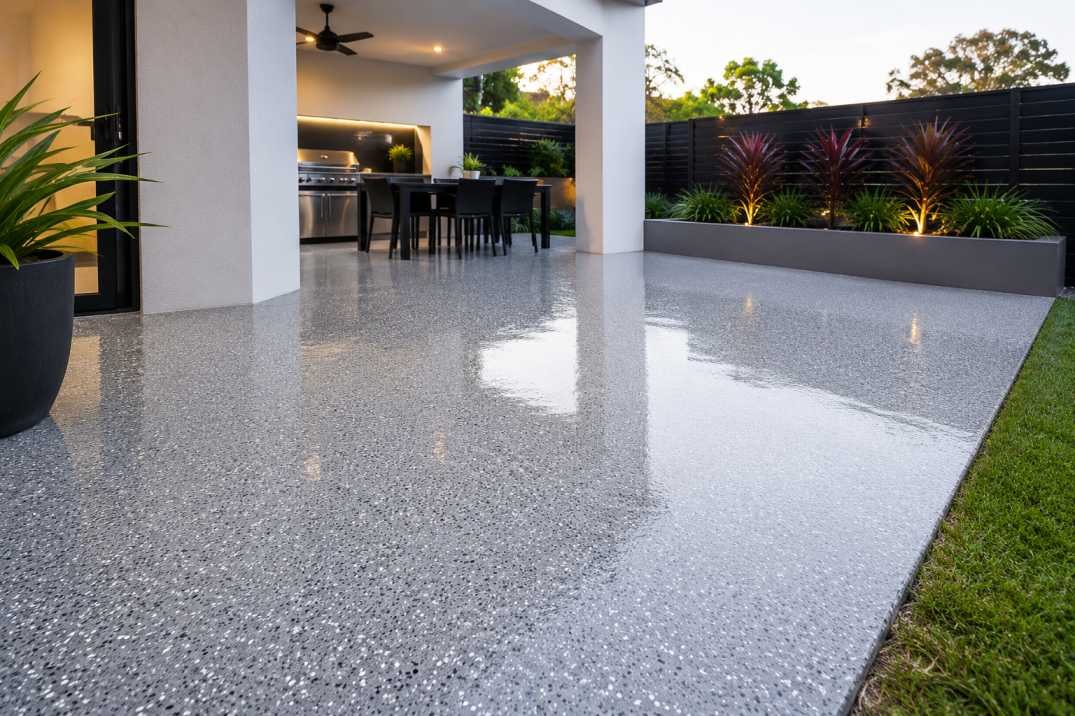
Epoxy Flooring for Outdoor Areas Gold Coast: What Actually Works
Quick Answer: Standard epoxy is not recommended for fully exposed outdoor areas on the Gold Coast — it will yellow and degrade under direct UV exposure even with a topcoat over time. For patios, alfresco areas, and pool surrounds, a UV-stable polyaspartic coating is the correct choice. It cures fast, handles temperature swings, and resists UV far better than standard epoxy. Covered or semi-covered outdoor areas can use UV-stable epoxy with appropriate topcoats.
A genuinely common question from Gold Coast homeowners is whether epoxy flooring can be used outdoors — for alfresco areas, pool surrounds, patios, and driveways. The honest answer requires a distinction most installers don’t make clearly enough: standard epoxy and polyaspartic coatings are not the same thing, and only one of them is genuinely suited to full outdoor exposure on the Gold Coast.
Why Standard Epoxy Struggles Outdoors on the Gold Coast
Epoxy resin is fundamentally a UV-sensitive material. The Gold Coast’s intense, near-year-round sun exposure accelerates this — standard epoxy will yellow, chalk, and gradually lose its gloss when fully exposed to direct sunlight, even with a UV-stable topcoat applied. The topcoat slows the process significantly, but doesn’t eliminate it entirely on a fully exposed outdoor surface.
Additionally, standard epoxy can become brittle and crack under the temperature extremes of an exposed outdoor Gold Coast surface — hot tiles in summer, rapid cooling during storms, and the thermal cycling that comes with full sun exposure.
What Actually Works for Gold Coast Outdoor Areas: Polyaspartic
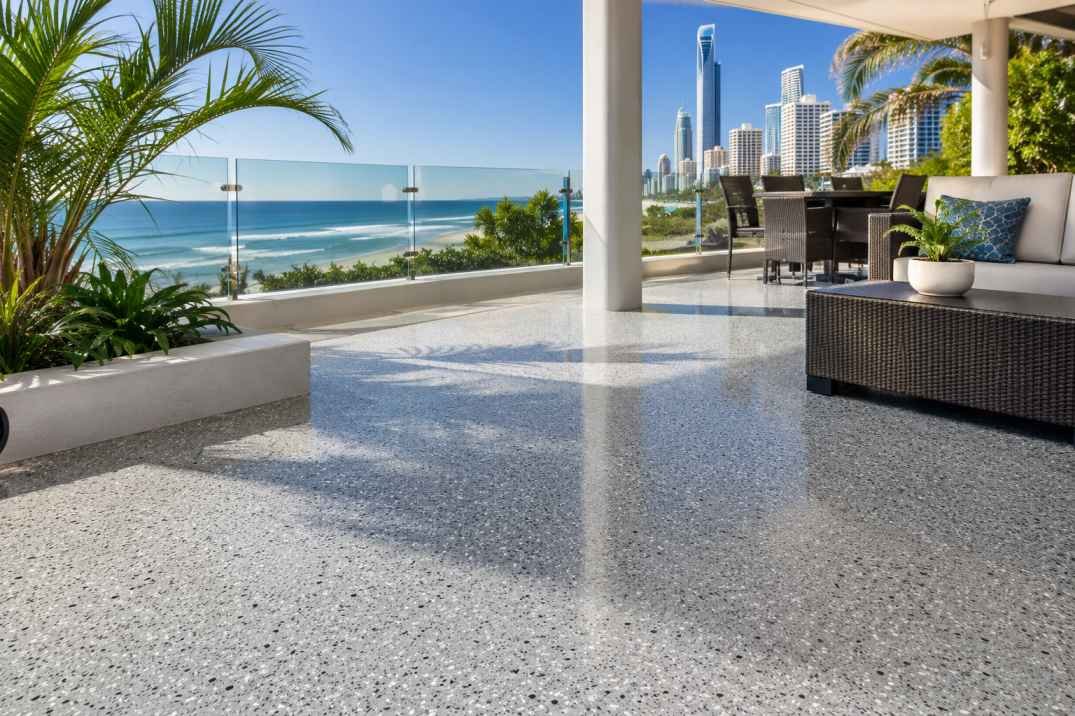
Polyaspartic coatings are the correct technology for genuinely outdoor, sun-exposed Gold Coast surfaces. Unlike standard epoxy, polyaspartic is engineered with excellent UV stability, flexes slightly with temperature changes rather than cracking, and cures dramatically faster — often within 24 hours.
Where polyaspartic excels on the Gold Coast:
- Pool surrounds — UV-stable, slip-resistant when specified, handles chlorine exposure well
- Alfresco and entertaining areas — common in Gold Coast home designs that blend indoor/outdoor living
- Driveways — fast cure means less downtime, and the system handles vehicle weight and hot tyres well
- Exposed patios — won’t yellow or chalk the way standard epoxy would over time
Covered and Semi-Covered Outdoor Areas: Epoxy Can Still Work
Not every ‘outdoor’ area on the Gold Coast receives full, direct sun exposure. Covered alfresco areas, under-deck spaces, and patios with substantial roof coverage receive significantly less UV than fully exposed surfaces. In these semi-protected applications, a quality epoxy system with a UV-stable polyaspartic topcoat can perform well and offers a more budget-friendly option than a full polyaspartic system.
The key question to ask any Gold Coast installer: how many hours of direct sun does this specific area receive, and does the proposed system match that exposure level?
Also Read:- Is Metallic Epoxy Flooring Worth It? Gold Coast Homeowner Guide
Outdoor Flooring Options Compared
| System | UV Stability | Best For | Cost per m² |
| Standard Epoxy (any topcoat) | Poor outdoors | Indoor only — not recommended outdoors | N/A for full exposure |
| Epoxy + UV-Stable Topcoat | Fair (covered areas) | Semi-covered patios, under-deck areas | $70–$100 |
| Polyaspartic Coating | Excellent | Full sun pool surrounds, alfresco, driveways | $90–$140 |
| Polyurea/Polyaspartic Hybrid | Excellent | Heavy-use outdoor commercial areas | $100–$150 |
Slip Resistance for Outdoor Areas
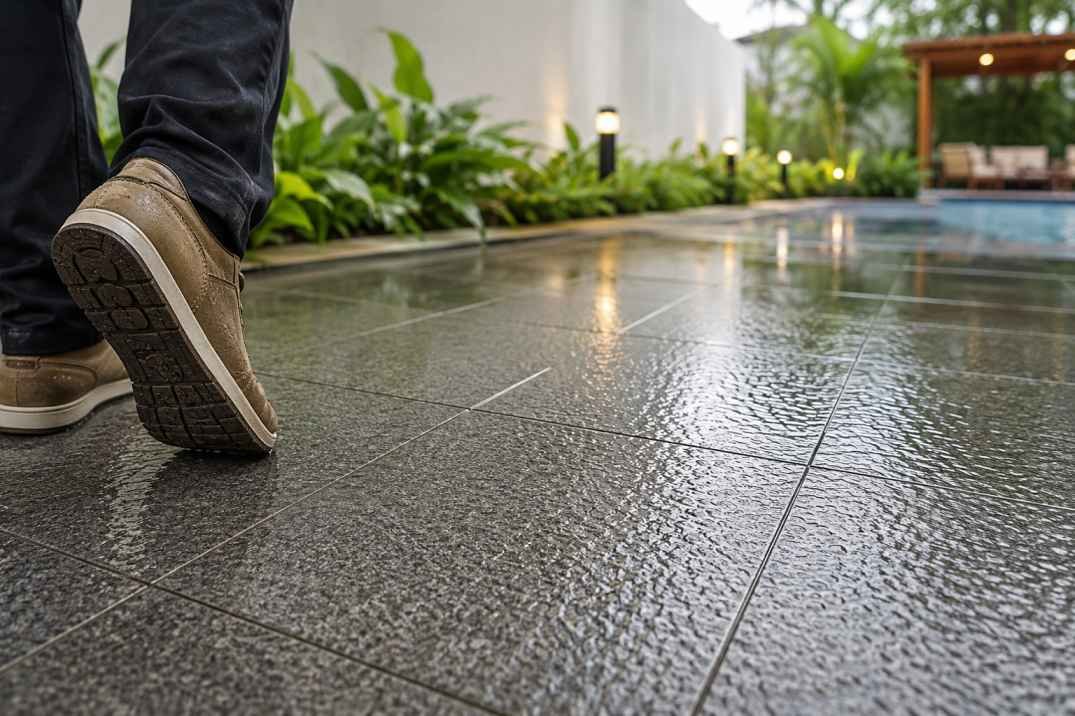
Any genuinely outdoor Gold Coast surface — particularly pool surrounds — needs slip resistance built into the specification. Non-slip aggregates or textured additives are incorporated into the topcoat during installation. For pool areas and any commercial outdoor application, this should comply with AS 4586 slip-resistance ratings. Get a Free Quote
Common Mistakes Gold Coast Homeowners Make with Outdoor Epoxy
- Installing standard epoxy (not polyaspartic) on a fully exposed pool deck — expect visible yellowing within 12–18 months
- Skipping slip-resistance additives on pool surrounds — a genuine safety risk, particularly with wet feet
- Assuming all ‘outdoor epoxy’ products are equivalent — always confirm specifically whether the product is polyaspartic or standard epoxy with a topcoat
- Underestimating UV exposure on west-facing or north-facing Gold Coast outdoor areas, which receive the most intense sun
Also Read:- How to Choose an Epoxy Flooring Contractor on the Gold Coast
Frequently Asked Questions
Can I use epoxy flooring on my Gold Coast pool deck?
Standard epoxy is not recommended for a fully exposed pool deck. A UV-stable polyaspartic coating is the correct choice and will resist yellowing, handle chlorine exposure, and offer proper slip resistance when specified.
How long does outdoor polyaspartic coating last on the Gold Coast?
With proper installation, 10–20 years is realistic, even with full sun exposure — significantly longer than standard epoxy would last in the same conditions.
Is polyaspartic more expensive than epoxy?
Yes, typically 20–40% more per square metre. However, for genuinely outdoor applications, this is the only system that delivers a comparable lifespan to indoor epoxy — making it the more cost-effective choice over time despite the higher upfront cost.
Planning an outdoor flooring project on the Gold Coast? Resin Masters will assess your specific sun exposure and recommend the right system — epoxy or polyaspartic — for lasting results. Get a FREE quote: +61 433 733 956 or resinmasters.com.au.