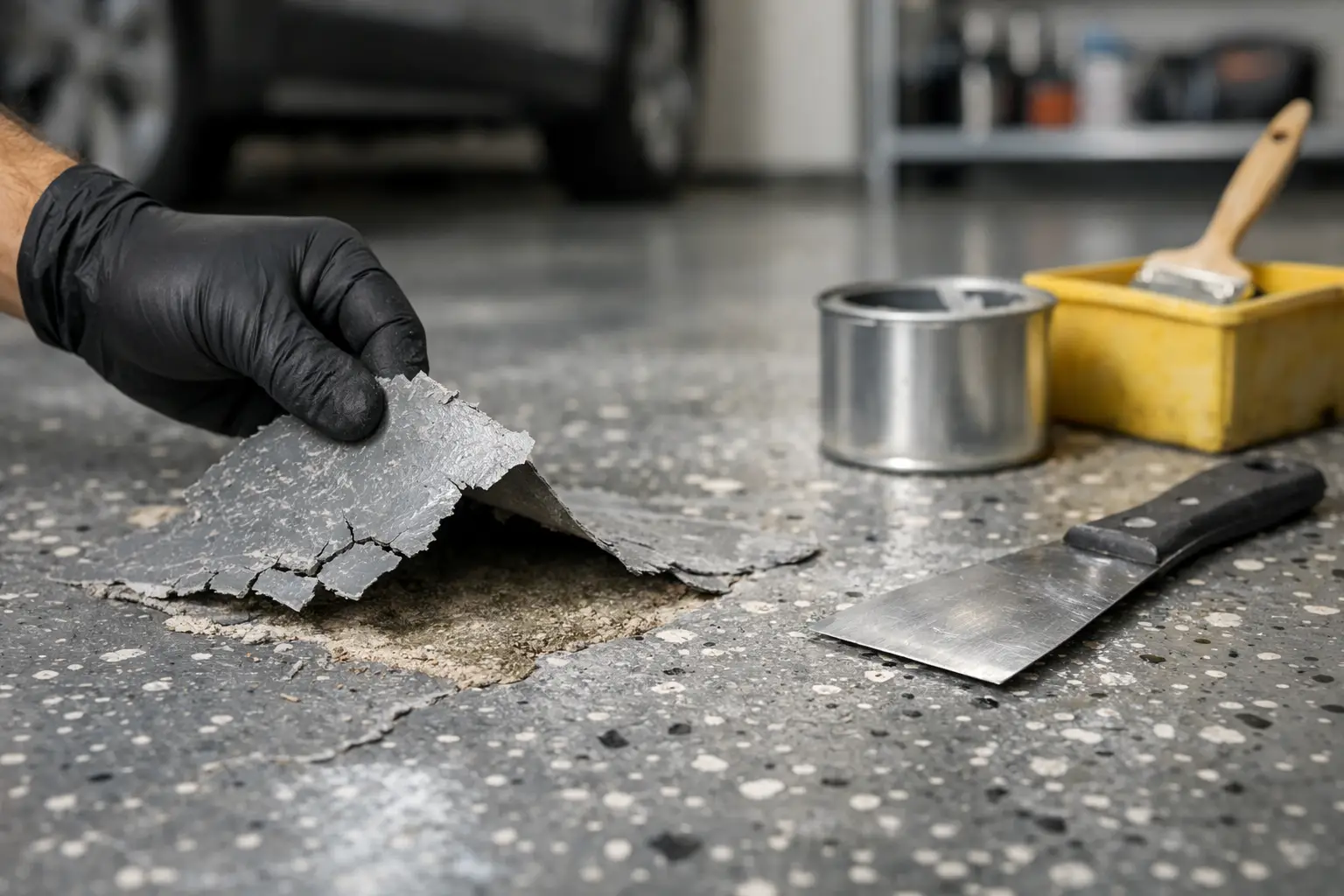
A peeling epoxy floor rarely fails without warning. It may begin as a dull patch near the garage door, lifting around tyre marks, or small flakes at the edge of a warehouse traffic lane. If you are searching for how to stop epoxy floor peeling, the real answer is not another coat over the top. It is finding out why the bond failed, then correcting the concrete, moisture or application issue underneath.
Epoxy is designed to form a hard, protective bond with concrete. When that bond is properly prepared and installed, it handles vehicle traffic, spills, cleaning and daily wear exceptionally well. When it peels, the coating is usually telling you that the slab was contaminated, damp, weak at the surface, or coated under unsuitable conditions.
See Your Price in Minutes
Why epoxy floors peel
The most common cause is inadequate surface preparation. Concrete can look clean while still holding oil, tyre residue, curing compounds, old sealers, fine dust or previous coating material. Epoxy cannot reliably bond to these contaminants. It bonds to the layer on top, and that layer eventually releases from the slab.
A smooth, machine-trowelled concrete surface can cause the same problem. It may appear sound, but it does not provide enough profile for the coating to key into. Professional mechanical grinding removes weak surface material and creates a consistent profile that allows the epoxy system to grip the concrete rather than sit on it.
Moisture is another major factor, particularly across Brisbane, the Gold Coast and the Sunshine Coast. Concrete is porous and can hold moisture long after it appears dry. Moisture vapour moving up through the slab can push against the coating, creating blisters, cloudy areas and eventual peeling. High humidity can also affect application conditions and cure times, especially when a floor is coated without appropriate moisture testing and control.
Poor adhesion can also be caused by the wrong product for the environment. A light-duty coating may not be suitable for a busy workshop, forklift route or garage exposed to hot tyres. Queensland summers place extra stress on garage floors, where warm tyres can soften lower-grade coatings and pull at an already weak bond.
Finally, epoxy can peel when recoat windows are missed. If one layer has cured too far before the next is applied, it may need sanding or grinding to create a mechanical bond. Skipping this step can leave a floor that looks fine at handover but begins delaminating months later.
How to stop epoxy floor peeling at the source
The repair method depends on how widespread the failure is. A small, localised chip caused by a sharp impact may only need a targeted repair. Broad peeling, bubbling or lifting around multiple areas points to a substrate or moisture issue that needs more thorough work.
The first step is to determine whether the coating has failed from the concrete or between coating layers. If bare concrete is exposed beneath the peeling epoxy, the slab preparation or moisture condition is often at fault. If the base coat remains firmly attached but the top layer separates, the problem may be contamination, an unsuitable recoat interval or poor intercoat preparation.
Do not simply brush away loose flakes and apply fresh epoxy over the affected area. The new material may adhere briefly, but it will be anchored to the same compromised coating or concrete. A lasting repair starts by removing every loose, poorly bonded section until only sound material remains.
Remove failed coating completely
For widespread failure,
mechanical diamond grinding is usually the most reliable approach. It removes weak epoxy, old sealers, laitance and contaminated concrete while establishing the surface profile required for a new resin system. Acid etching can have limited uses on suitable clean concrete, but it is not a substitute for controlled mechanical preparation on slabs with old coatings, oil contamination or major adhesion failure.
Edges around repaired sections require particular care. The transition between existing sound coating and newly exposed concrete must be feathered properly so the repair does not leave a ridge or become a weak point under traffic. Cracks, spalls and joints should also be assessed before coating. Epoxy will protect a floor, but it cannot stop an active structural crack from moving.
Test and manage concrete moisture
Moisture should be measured before a new epoxy system is selected. A visual inspection is not enough. The correct approach depends on the slab, building age, drainage, whether there is a vapour barrier beneath the concrete and the intended coating system.
Where elevated moisture is present, a compatible moisture-mitigation primer may be required before the epoxy build coat. This is not an optional upgrade on a damp slab. It is the barrier that helps protect the bond from moisture vapour pressure below. In some cases, external drainage, leaking downpipes or water entering at garage openings must be corrected as well. Coating over an ongoing water problem only hides it temporarily.
Clean for adhesion, not appearance
Before coating, the prepared floor must be vacuumed thoroughly and kept free of dust, oil, silicone, grease and airborne contamination. This matters in garages where car-care products, lubricants and tyre dressing can leave residues that are difficult to see. In commercial and industrial settings, forklifts, machinery and cleaning chemicals can create similar adhesion risks.
A floor should also be coated within the correct environmental conditions. Temperature, slab temperature, relative humidity and dew point all affect how resin flows, cures and bonds. The aim is not to rush a job between weather changes. It is to apply the system when conditions support a stable, long-term finish.
Choose a system that matches the job
Stopping epoxy floor peeling also means specifying the right floor system from the start. A decorative garage floor, a showroom, a commercial kitchen and a warehouse do not have the same exposure to abrasion, chemicals, heat and slip risks.
For residential garages, a professionally
installed flake system can provide a hard-wearing, easy-clean surface with better visual concealment of dust and marks than a plain colour. A clear protective topcoat improves stain and wear resistance, while the flake broadcast can contribute to a practical underfoot finish.
For
industrial areas, coating thickness, chemical resistance and traffic loading need closer attention. Forklift wheels, pallet jacks and heavy point loads can damage coatings that are otherwise suitable for foot traffic. In wet or frequently cleaned areas, the surface also needs to be designed around the required slip resistance. This should be considered alongside Australian Standard AS 4586 requirements, rather than treated as an afterthought once the floor is already installed.
There are trade-offs. A more aggressive anti-slip finish improves grip but can be harder to mop clean. A high-gloss decorative finish may suit a showroom but need a different aggregate or topcoat in an entry exposed to rain. The best solution balances appearance, cleaning needs, safety and the actual demands placed on the floor.
Prevent peeling after installation
A quality epoxy floor needs far less maintenance than bare concrete, but it is not maintenance-free. Sweep abrasive grit regularly, clean spills promptly and use a pH-neutral cleaner where possible. Harsh degreasers, solvent-heavy products and stiff abrasive pads can dull or wear a topcoat over time.
Use protective pads beneath heavy equipment and avoid dragging sharp metal items across the surface. In a garage, clean tyre residue and chemical spills before they sit for extended periods. If a small chip or scratch appears, have it inspected early. Timely repairs help prevent water, oils and dirt from working beneath the coating edge.
For new concrete, allow adequate curing time before coating. Rushing onto a young slab is a common source of preventable failure because moisture levels and surface strength may not yet be suitable. The exact timing depends on the concrete mix, site conditions and coating specification, so it should be verified rather than assumed.
When professional repair is the better investment
DIY patch kits can be useful for minor cosmetic damage on an otherwise sound floor. They are less reliable where peeling is widespread, moisture is suspected or the concrete has been previously sealed or contaminated. Those jobs require preparation equipment, moisture assessment and product compatibility knowledge that determine whether the repair lasts.
A professional assessment should identify the reason for the failure before recommending a coating. Resin Masters approaches peeling floors through substrate preparation, moisture control and system selection, not a quick cover-up. This is particularly valuable in humid coastal conditions, where the slab and application environment need to be managed carefully.
A properly repaired epoxy floor should feel like a permanent upgrade, not a surface you need to watch for the next lifted edge. Address the cause beneath the coating, and the finish above it can deliver the clean, durable performance the space was meant to have.