Servicing : Gold CoastBrisbaneSunshine CoastToowoomba

How to Fix Hot Tyre Pickup on Epoxy Floors
A tyre mark that has lifted or softened your garage coating is more than an eyesore. If you are searching for how to fix hot tyre pickup epoxy damage, the right repair starts with identifying whether the tyre has left a surface stain or actually pulled the coating away from the concrete. The two problems look similar from a distance, but they require very different fixes.
In Queensland, hot tyre pickup is most common in garages where vehicles arrive after a summer drive, then sit on a floor that was not fully prepared, cured or specified for the conditions. The heat held in the tyres, combined with tyre plasticisers and pressure from a parked vehicle, can expose weak adhesion quickly.
What hot tyre pickup actually means
Hot tyre pickup occurs when a warm tyre bonds to an epoxy surface and either leaves rubber residue behind or lifts sections of the coating when the vehicle moves. In a minor case, the floor is intact and only needs cleaning. In a more serious case, the coating has become soft, peeled or delaminated, often revealing bare concrete underneath.
It is tempting to blame the epoxy alone. In practice, hot tyre pickup is usually a preparation or system issue. Epoxy needs a clean, mechanically profiled concrete surface to bond properly. If the slab had moisture pressure, old sealer, oil contamination, curing compound or inadequate grinding, the coating may hold up everywhere except under the demanding conditions created by hot tyres.
A quality epoxy system also needs the right cure time. Parking on a floor before it has reached its intended service cure can leave it vulnerable, even if it feels dry to touch.
How to fix hot tyre pickup epoxy damage safely
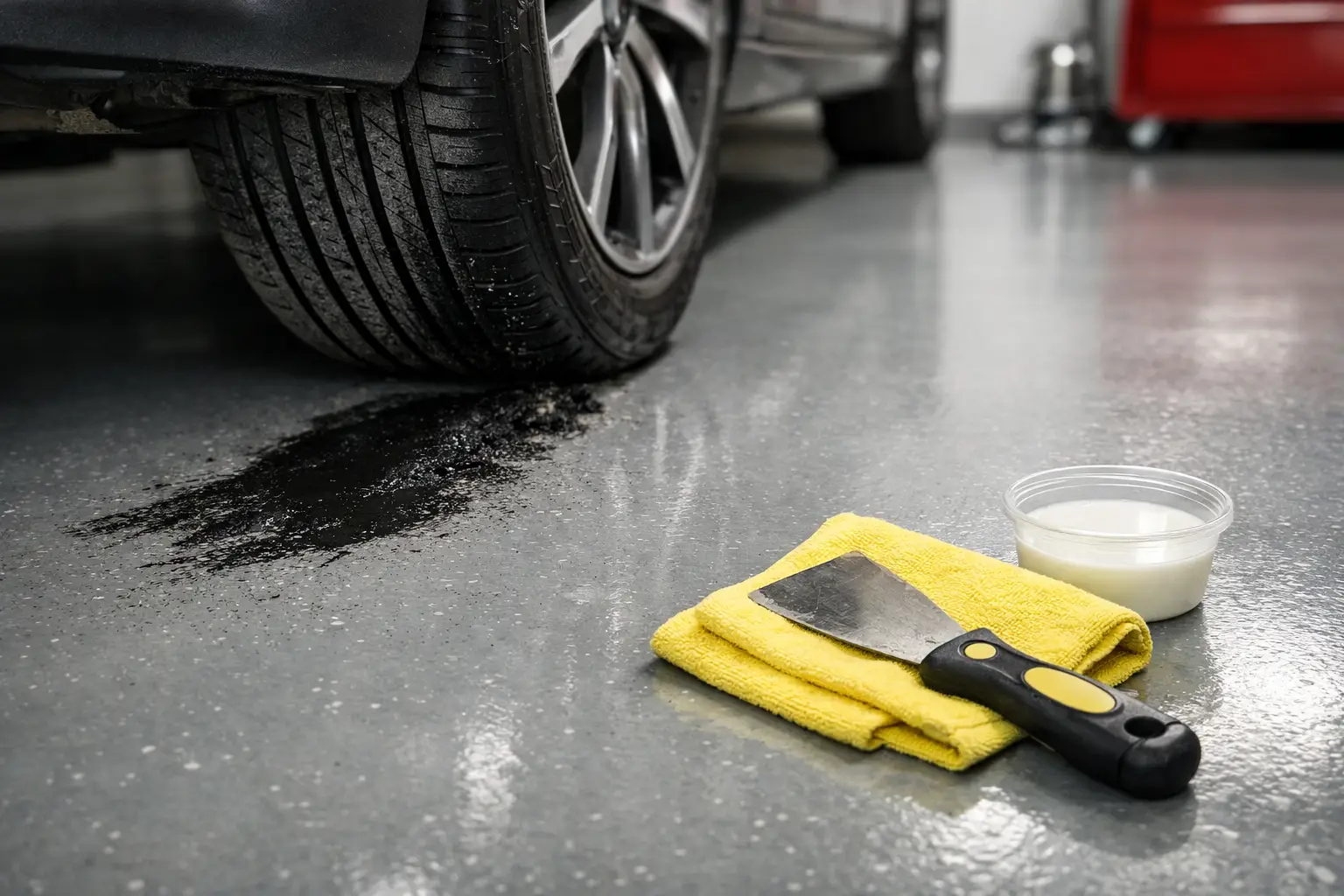
Before repairing anything, give the floor a close inspection. Run a blunt scraper around the affected patch. If only dark rubber transfers onto the coating and the finish remains firm, you are dealing with residue. If the scraper catches an edge, flakes lift away or the coating feels soft, the bond has failed and the damaged material must be removed.
When it is tyre residue, not coating failure
For tyre transfer on an otherwise sound floor, start with a pH-neutral floor cleaner and a soft nylon brush. Allow the cleaner to dwell as directed, scrub the mark, then rinse and dry the area completely. Avoid aggressive solvents as a first response. Strong thinners can dull the gloss, soften some topcoats or spread the rubber residue across a larger area.
If the mark remains, use a cleaner recommended for cured resin flooring and test it in an inconspicuous corner first. The goal is to lift the tyre compound without damaging the finish. Never use a metal scraper, wire wheel or harsh abrasive pad on a decorative metallic or flake floor, as it can leave a noticeably different sheen.
Once clean, inspect the surface under good light. If there is no lifting, bubbling or change in texture, the coating itself has not failed. A periodic clean and a suitable sacrificial topcoat may be enough to improve resistance in high-use parking bays.
When the epoxy has lifted or peeled
Where the coating has pulled away, cleaning alone will not solve the problem. Any loose or poorly bonded epoxy needs to be removed back to a firm edge. Trying to coat over lifting material only traps the weakness underneath and leads to another failure.
A durable local repair generally involves:
- mechanically grinding the affected area and a small margin beyond the visible damage
- removing dust and checking the exposed concrete for oil, moisture or weak surface laitance
- feathering the sound coating edge so the repair does not leave a sharp ridge
- applying a compatible primer and repair coat at the required film thickness
- rebuilding flakes, colour or topcoat layers where needed, then allowing the full cure period before traffic returns.
For a plain colour epoxy floor, a small repair can sometimes blend well. With metallic epoxy, decorative flakes or a high-gloss finish, patch repairs are more difficult to disguise. The repaired section can vary in colour, texture or gloss because the original coating has aged and been exposed to different light and wear. In those cases, recoating the whole parking bay or garage floor may provide a more consistent result.
Find the cause before recoating
A repair is only as reliable as the diagnosis behind it. If hot tyre pickup appears in one isolated spot, the issue may be a local oil contamination or a thin area in the original coating. If several parking locations show lifting, investigate the preparation and moisture condition of the slab before authorising further work.
Concrete in Brisbane, the Gold Coast and the Sunshine Coast often faces high humidity and moisture movement. Even a slab that looks dry can release moisture vapour through the concrete. Without suitable moisture testing and control, pressure can compromise the bond between concrete and epoxy. This is why professional installers assess the substrate rather than treating every garage floor as the same.
Also consider the age and history of the slab. New concrete needs adequate curing before resin installation. Older garages can carry years of oil, tyre dressing, silicone products, paint, sealers and DIY coatings. Surface cleaning helps, but it does not replace diamond grinding or proper mechanical preparation.
Tyre chemistry matters as well. Some high-performance tyres, soft compounds and heavily treated tyres are more likely to leave residue. That does not mean a garage floor should fail under normal use. It means the flooring system and its topcoat need to be selected for the traffic, heat and finish expected in that space.
Prevent hot tyre pickup on an epoxy garage floor
The best prevention is built into the installation. A professionally prepared epoxy floor begins with mechanical grinding that opens the concrete and removes contaminants. Moisture is tested, cracks are repaired, and the primer, build coat and protective topcoat are selected as a complete system. Skipping any of those steps may reduce the initial price, but it can cost more when the floor starts lifting beneath parked vehicles.
Cure time deserves equal attention. A coating may be walkable within a day, but that is not the same as being ready for a hot vehicle. Follow the installer’s vehicle-return instructions, particularly during humid weather. Rushing a ute, SUV or daily driver back into the garage can mark a coating that would otherwise have performed well for years.
Good housekeeping also helps. Clean oil drips promptly, do not apply tyre shine immediately before parking, and wash off road grime that can build up under tyres. If your vehicle regularly returns with very hot tyres, parking mats can reduce direct contact in the most demanding bays. They are a useful precaution, not a substitute for a correctly installed floor.
For commercial workshops and warehouses, the solution may need to go further than a standard domestic epoxy. Forklift traffic, turning tyres, chemical exposure and wet cleaning demand a system designed around the actual use of the floor. Slip resistance must also be considered where vehicle areas connect with pedestrian traffic, particularly when the floor can become wet.
When a professional assessment is the better option
Call an epoxy flooring specialist if the affected area is spreading, bubbles are appearing, the coating is lifting in sheets, or bare concrete is visible. Those signs point to adhesion or moisture issues that should be addressed before a cosmetic touch-up.
Resin Masters assesses the concrete, existing coating and likely source of failure before recommending a repair or replacement. For garages and commercial spaces, that means focusing on surface preparation, moisture control and a coating system suited to Queensland conditions, rather than simply applying another layer over the problem.
A sound epoxy floor should make your garage or work area easier to clean and better protected, not leave you worrying about where you park. Deal with tyre marks early, insist on proper diagnosis where coating has lifted, and give every repair the preparation and curing time it needs to perform.