Servicing : Gold CoastBrisbaneSunshine CoastToowoomba

How to Choose Garage Floor Coating
A garage floor usually tells the story before the walls do. Tyre marks, oil stains, concrete dust and patchy repairs are all signs that the slab is taking a beating. If you are working out how to choose garage floor coating, the right answer is not just about colour or price. It is about how the floor will perform under heat, traffic, moisture and daily use over the long term.
For homeowners, that might mean stopping hot tyre pickup and making the space easier to clean. For builders, warehouse operators and facility managers, it often means getting a coating system that stands up to forklifts, foot traffic and compliance requirements without constant maintenance. The best coating is the one that matches the slab, the environment and the way the space is actually used.
How to choose garage floor coating for your space
Start with the job your floor needs to do. A home garage used for parking two cars has different demands from a workshop, a storage area or a commercial loading space. That sounds obvious, but it is where many coating decisions go wrong. People compare products first, when they should be assessing conditions first.
A coating needs to handle the real pressures of the site. That includes vehicle traffic, chemical exposure, impact, UV exposure, cleaning frequency and slip risk. In Queensland, humidity and concrete moisture also matter more than many people realise. A coating can look impressive on day one and still fail early if the slab was not properly tested and prepared.
This is why there is no single best garage floor coating for every project. There is only the best-fit system for your slab and your usage.
Start with the condition of the concrete
The slab itself sets the limits. If the concrete is weak, dusty, cracked, contaminated with oil or holding moisture, no premium topcoat will fix that on its own. Surface preparation is what determines whether the coating bonds properly or starts peeling under pressure.
Good installers assess the concrete before they talk about finishes. That means checking for cracks, laitance, previous sealers, old paint, contamination and moisture vapour issues. In coastal and humid parts of South East Queensland, moisture control is not an optional extra. If moisture is moving through the slab, the system needs to account for it with the right primer or moisture mitigation approach.
If a quote skips past prep and focuses only on the final look, that is usually a warning sign.
Match the coating to how the garage is used
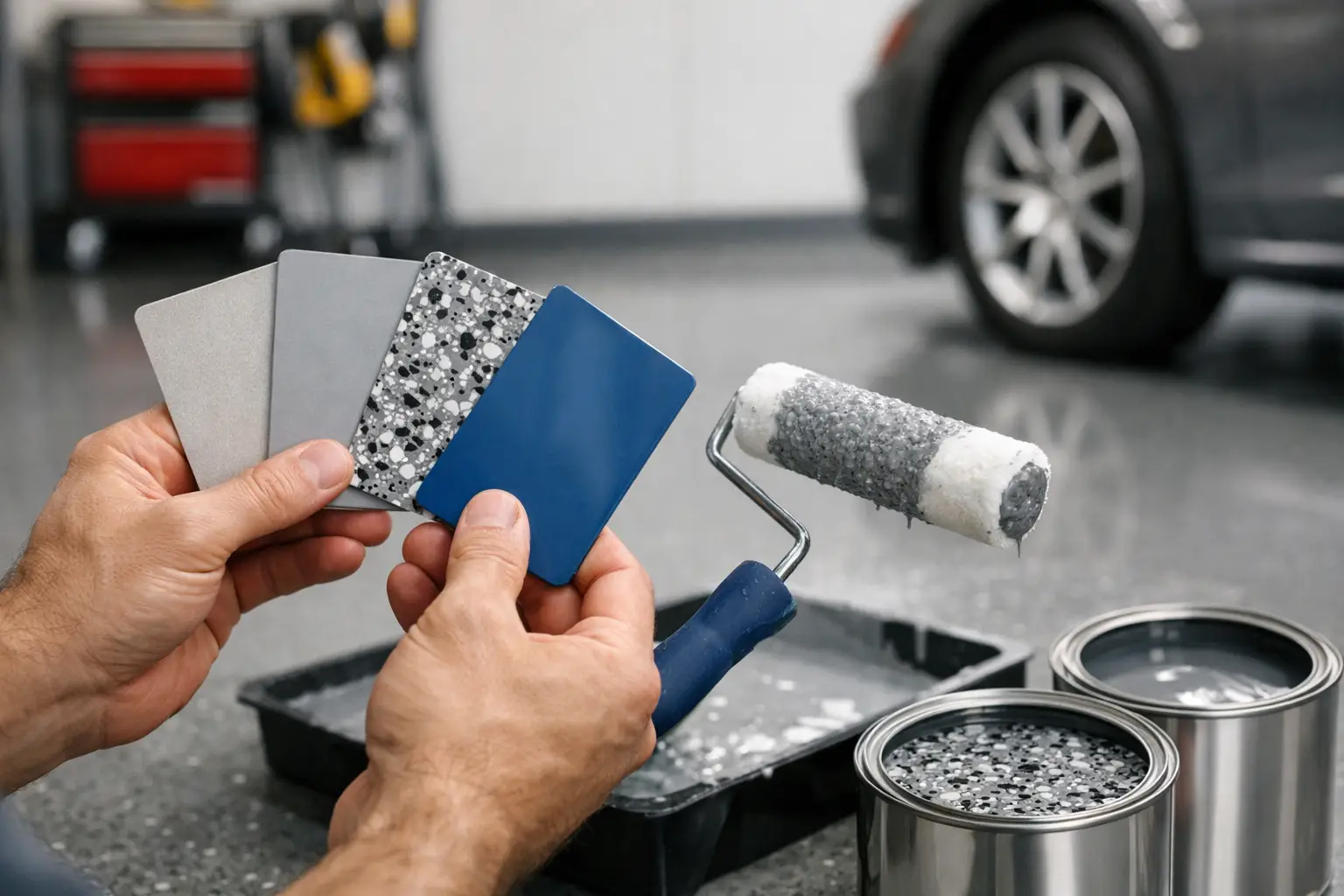
A purely decorative floor and a hard-working floor are not the same thing. If the garage is mainly for parking and home storage, an epoxy flake system is often a strong balance of durability, appearance and easy maintenance. It hides dirt well, improves slip resistance and gives the floor a more finished look.
If the space doubles as a workshop, you may need stronger chemical resistance and better impact performance. If the floor gets direct sunlight, UV stability becomes more important, because some systems can yellow or amber over time. In a commercial or industrial setting, the brief shifts again. You may need higher build systems, specific slip ratings or a finish that supports safety and cleaning standards.
The point is simple: choose for function first, then appearance.
Compare the main garage floor coating options
Most buyers end up comparing epoxy against newer resin systems, but the real difference lies in performance, installation method and site suitability.
Epoxy coatings
Epoxy remains one of the most trusted choices for garage floors because it delivers excellent adhesion, mechanical strength and a seamless finish. When installed properly over a well-prepared slab, it performs well under vehicle traffic and everyday wear. It also allows for different looks, from solid colours to decorative flake blends.
The trade-off is that epoxy is sensitive to conditions during installation. Temperature, humidity and moisture levels all matter. It also has limited UV stability compared with some topcoat systems, which is worth considering if the garage is open often or exposed to sunlight.
Flake systems
A flake floor is not a separate chemistry so much as a system built over a resin basecoat. It is popular in residential garages because it improves the finish visually while also helping with grip and hiding dust or minor marks between cleans.
For many homeowners, this is the sweet spot. It delivers a premium look without becoming high maintenance. The quality still comes back to the base system and prep work underneath. Cheap flake systems can look good at first and still fail if the installer cuts corners on grinding, repairs or moisture management.
Polyaspartic and similar fast-curing systems
Fast-curing systems appeal to clients who want minimal downtime. In the right application, they can offer strong UV stability and a quick return to service. That can be useful for busy households or commercial sites where shutting down access for days is not practical.
The trade-off is that fast cure times leave less room for error during installation. They require an experienced hand, especially in warm conditions. Not every slab or project suits a rapid-install system, and a faster install is not automatically a better one if the floor has underlying moisture or surface issues that still need full attention.
What matters more than the brochure
Product names get attention, but system design and installation quality are what decide lifespan. A premium coating applied over poor prep will not outperform a well-specified system installed correctly.
When comparing quotes, look beyond the headline price. Ask what preparation is included. Will the floor be mechanically ground? Are cracks repaired properly? Is moisture testing part of the process? What topcoat is used, and why? Is slip resistance considered for the intended use? These are the questions that separate a cosmetic coating from a durable flooring system.
For commercial and industrial spaces, compliance matters as well. If the floor needs to meet Australian slip-resistance expectations, the installer should be able to explain how texture, finish and testing requirements relate to the job. That is especially relevant in entry points, work zones and wet-use environments.
Don’t choose on price alone
A low quote can become expensive very quickly if the floor lifts, stains easily or needs to be redone in a year or two. Coating failures are rarely just a product issue. More often, they come from rushed prep, weak primers, poor moisture control or unsuitable system selection.
A professionally installed floor should be priced around the labour, preparation and materials needed to achieve a lasting result. That is where the value sits. For many property owners, paying more upfront saves a full replacement cycle later.
Think about finish, cleaning and slip resistance together
Gloss level, texture and colour all affect how the floor performs day to day. A very smooth, high-gloss finish can look sharp, but it may show more dust and become slippery when wet. Heavier texture improves grip, though it can make cleaning slightly more involved. The best finish is usually the one that balances appearance with practical use.
In home garages, flake blends are popular because they soften the look of dirt and tyre residue. In commercial settings, solid colours may be better for line marking, traffic flow and visual control. There is no right answer across every site. It depends on whether the priority is presentation, safety, maintenance or a mix of all three.
How to choose garage floor coating without making a costly mistake
If you want a floor that lasts, choose the installer with the same care as the coating. Ask how they assess concrete, what preparation method they use, how they manage moisture, and what warranty backs the work. A serious contractor will explain the system clearly and be direct about what your slab needs.
That matters even more in Queensland conditions, where heat, humidity and seasonal storms can expose weaknesses in both the slab and the coating system. A floor that is specified properly for local conditions will hold up better than one chosen from a generic product pitch.
At Resin Masters, that practical approach is what drives long-term performance. The right garage floor coating is not the flashiest sample board or the fastest quote. It is the system that suits the slab, stands up to the way you use the space, and is installed with enough care that you do not have to think about it again for years.
A good floor should make the whole space work harder – cleaner, safer, stronger and easier to maintain every day.
One Response