Servicing : Gold CoastBrisbaneSunshine CoastToowoomba

Best Garage Floor Finishes for Queensland Homes
A garage floor can look clean on handover day and still fail early. Queensland heat, humidity rising through the slab, hot tyres, dropped tools and tracked-in grit all test a coating far harder than a standard interior floor. The best garage floor finishes are not simply the glossiest option or the cheapest kit from a hardware aisle. They are systems matched to the condition of the concrete, how the space is used and the performance you expect over time.
For most garages, a professionally installed resin system provides the strongest balance of durability, appearance and easy maintenance. But epoxy is not a single product, and it is not the right answer in every circumstance. Understanding the differences helps you invest in a floor that continues to perform long after the first coat has cured.
What are the best garage floor finishes?
The strongest finish depends on whether your garage is primarily for parking, storage, a workshop or a space that doubles as an entry to the home. It also depends on the slab itself. A sound, dry slab with effective preparation offers far more coating options than concrete affected by moisture, contamination or movement.
For most Brisbane, Gold Coast and Sunshine Coast homes, full-flake epoxy and premium seamless epoxy coatings are leading choices. They protect concrete from tyre marks, oil, chemical spills and abrasion while creating a finished surface that is simple to clean. Polyurethane topcoats can add further UV stability and scratch resistance where the garage receives regular sunlight.
Full-flake epoxy systems
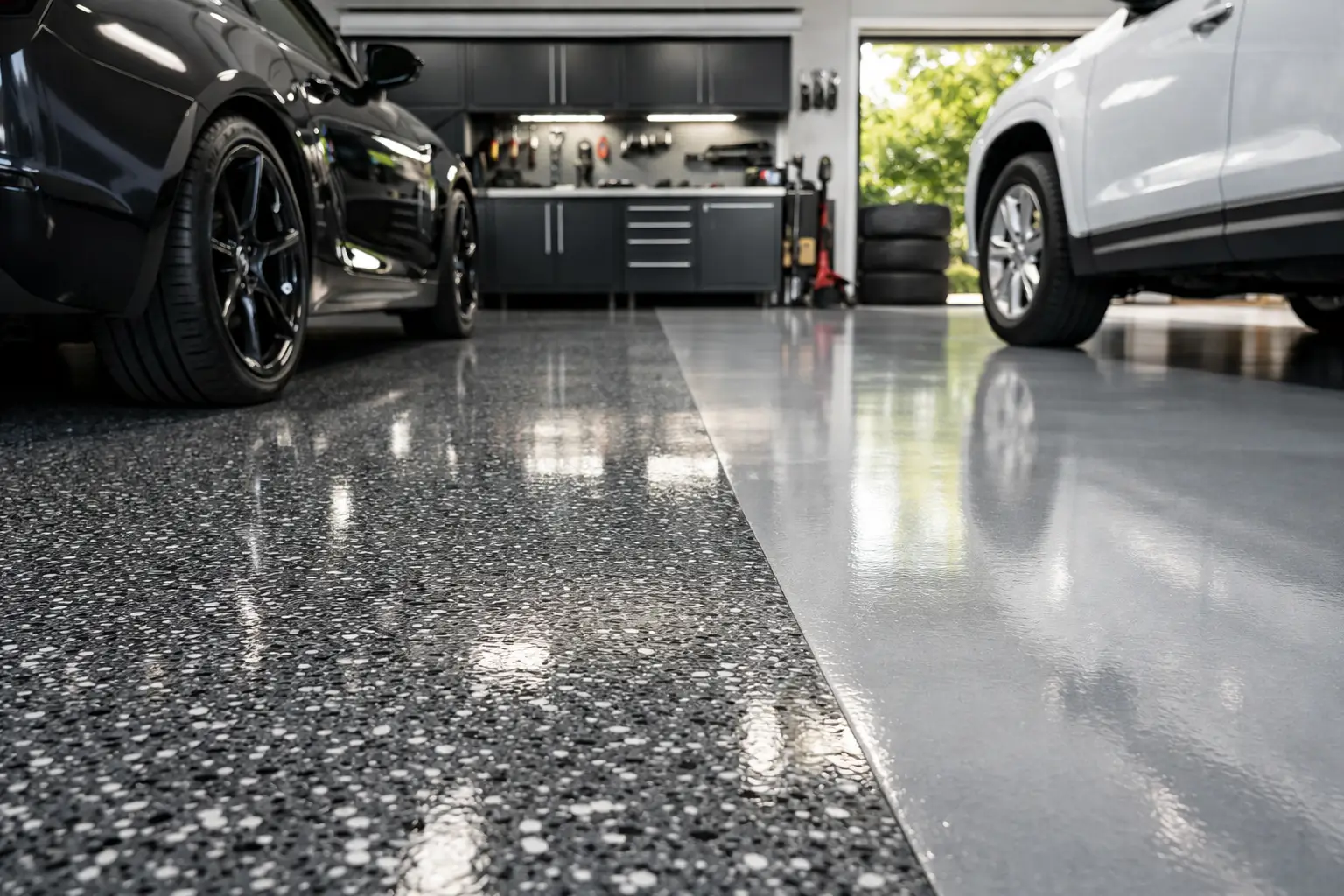
A flake system starts with a high-build epoxy base coat, followed by decorative vinyl flakes broadcast across the surface and a clear protective topcoat. The result is a textured, multi-tonal floor that conceals dust, minor marks and everyday wear better than a plain colour coating.
This is often the practical favourite for busy family garages, utes, bikes and home workshops. The flakes add visual depth without making the room feel overly industrial, while the sealed finish prevents oil and dirt from soaking into the concrete. A professionally specified topcoat can also be adjusted for appropriate slip resistance, particularly near doors, laundry entries or wet areas.
There is a trade-off. A full-flake floor has more visual texture than a high-gloss solid epoxy, so it will not deliver the mirror-like appearance some homeowners want. It is, however, very forgiving in real-world conditions, which is why it remains one of the best long-term garage choices.
Solid-colour epoxy coatings
Solid-colour epoxy creates a clean, seamless finish with a sharper, more contemporary appearance. It works well in garages that are also used as home gyms, display spaces or organised storage zones, where a simple colour scheme supports the overall look.
Quality epoxy is hard wearing and chemically resistant, but the result relies heavily on substrate preparation. Concrete must be mechanically ground to create a sound profile, repaired where necessary and assessed for moisture before coating begins. Applying epoxy over a smooth, contaminated or damp slab can lead to peeling, bubbling or delamination, regardless of the product quality.
A solid finish can show tyre dust, scuffs and scratches more readily than flake. Adding a durable clear topcoat and a fine anti-slip aggregate helps protect the finish without compromising the clean appearance.
Metallic epoxy for a statement garage
Metallic epoxy is a decorative option for owners who want their garage to feel more like a finished extension of the home. Pigments are worked through the resin to create movement, depth and a one-off visual effect. No two floors are exactly alike.
It suits lower-traffic display garages, high-end homes and spaces where appearance is the priority. Metallic systems can still be durable, but they require experienced application to control pigment flow, curing times and gloss consistency. They are less forgiving of repair work than flake systems, as a local patch may not blend into the original pattern.
If the floor will see daily vehicle traffic, workshop equipment and regular DIY projects, consider whether a flake system may offer the more practical finish. A metallic floor can be the right choice, but it should be selected for the way you actually use the space, not just how it looks in a photo.
Polyurethane and polyaspartic topcoats
Polyurethane and polyaspartic products are commonly used as protective topcoats rather than standalone solutions over unprepared concrete. They offer excellent resistance to UV exposure, staining and abrasion, making them useful where sunlight reaches the garage floor or where a long-lasting clear finish is needed over epoxy.
Polyaspartic systems also cure quickly, which can reduce downtime in suitable conditions. That speed is valuable, but it narrows the application window. In humid coastal conditions, the installer needs to manage temperature, moisture and working time carefully. Faster is not automatically better if the concrete is not properly prepared or the system is rushed.
For a premium garage floor, the best approach is often a layered one: a moisture-tolerant primer where required, a high-build epoxy body coat for strength, then a UV-stable protective topcoat. The exact specification should follow a proper inspection, not a one-size-fits-all formula.
Finishes that can fall short in a working garage
Concrete paint is inexpensive and can freshen a floor quickly, but it is rarely a durable solution for a vehicle garage. Most paint films are too thin to handle hot tyre pickup, impacts and repeated cleaning. Once the coating breaks, moisture and contaminants can work underneath it.
Polished concrete is another attractive option. It is hard, low-maintenance and well suited to certain architectural homes, but it does not offer the same chemical barrier as a quality resin coating. It can also be slippery when wet unless it is treated appropriately, and significant slab imperfections remain visible.
Interlocking garage tiles avoid coating the slab altogether and can be replaced individually. The downside is that dirt, moisture and spills can collect beneath the tiles. They also lack the continuous, hygienic surface of a seamless resin floor. For garages that need a properly sealed, easy-clean finish, tiles are usually a compromise rather than a permanent solution.
Choosing a garage floor finish that lasts
Start by looking beyond colour. Ask how the garage is used, whether vehicles are parked inside every day, how much sun reaches the slab and whether the concrete has existing cracks, oil staining or moisture issues. These details determine the preparation and coating system needed for reliable adhesion.
In South East Queensland, moisture testing matters. Humidity and moisture vapour moving through concrete can compromise coatings if it is not addressed before installation. A professional installer should inspect the slab, mechanically prepare the surface, repair cracks and joints where appropriate, and use a moisture-control primer when the assessment calls for it.
Slip resistance also deserves more than a quick mention. A glossy floor may look impressive, but a garage can become wet from rain, washing vehicles or bringing in a wet car. The right level of texture should be incorporated into the system, especially where the garage connects to internal living areas or receives frequent foot traffic. Commercial and shared-access areas may need to meet relevant Australian slip-resistance requirements, including AS 4586 testing considerations.
Colour is the final decision, not the first. Mid-grey, charcoal and stone-toned flake blends remain popular because they work with most homes and hide daily dust. Lighter finishes can brighten a dark garage, while darker tones create a more dramatic look but may show pale debris. A good finish should suit the house and make the garage easier to live with.
Why installation quality determines performance
Even premium resin can fail on poorly prepared concrete. Surface grinding removes weak laitance, old coatings and contamination while opening the concrete profile so the resin can bond correctly. Skipping this step is one of the most common reasons DIY coatings and low-cost applications peel away.
The other factor is system control. Resin products have specific mixing ratios, recoat windows and curing requirements. Temperature and humidity influence all of them. Experienced installers plan the work around site conditions, use compatible products from primer to topcoat and check the finished surface for consistency, coverage and safe traction.
At Resin Masters, this preparation-first approach is central to every garage coating project. The aim is not to cover concrete temporarily. It is to build a seamless floor system that handles the demands placed on it and remains a feature of the property for years.
A well-chosen garage floor should make the space easier to clean, safer to use and more satisfying to walk into each day. Before settling on a finish, arrange a proper assessment of the slab and discuss how you use the garage. That conversation is where a floor that merely looks good becomes one that is built to last.