Servicing : Gold CoastBrisbaneSunshine CoastToowoomba

Best Epoxy Flooring for Home Garage
A garage floor usually tells the truth fast. If the concrete is dusty, stained, cracked, or wearing hot tire marks, no amount of storage cabinets or fresh paint will make the space feel finished. Choosing the best epoxy flooring for home garage use means looking past color chips and glossy photos and focusing on what actually holds up under cars, tools, spills, and daily traffic.
For most homeowners, the right system is not the cheapest box on a shelf. It is the coating system that matches how the garage is used, how well the slab is prepared, and how much long-term performance matters. A garage that stores two vehicles every day has different demands than a garage that doubles as a gym, workshop, or showroom. That is where the real decision starts.
What makes the best epoxy flooring for home garage use?
The best garage epoxy floor is durable, well-bonded to the concrete, resistant to stains and tire pickup, and easy to clean. Just as important, it should be installed over a properly prepared slab with moisture issues addressed before coating begins. When homeowners are disappointed with epoxy, the problem is often not epoxy itself. It is poor prep, weak materials, or a system that was never suited to the garage in the first place.
A high-performing garage floor needs more than a shiny top layer. It needs a complete system. That usually includes mechanical surface preparation, crack and joint repair where needed, a primer or moisture-tolerant base if conditions call for it, a build coat, and a protective topcoat. Each layer contributes to adhesion, impact resistance, chemical resistance, and appearance.
That is why there is no single answer for every home. The best choice depends on the slab condition, expected traffic, moisture levels, and the finish you want.
The main epoxy flooring options for a home garage
When homeowners compare systems, three options usually rise to the top: solid color epoxy, flake epoxy, and metallic epoxy. All can work in a garage, but they serve different goals.
Solid color epoxy
A solid color epoxy system gives the floor a clean, uniform finish. It works well for homeowners who want a sharp, practical surface without a decorative broadcast layer. This option can look excellent in modern garages, especially when paired with a satin or gloss topcoat.
The trade-off is that solid finishes tend to show dust, scratches, and minor slab imperfections more clearly than flake systems. If your garage sees regular vehicle traffic, tool drops, or general family use, solid color can still perform well, but it is less forgiving visually.
Flake epoxy systems
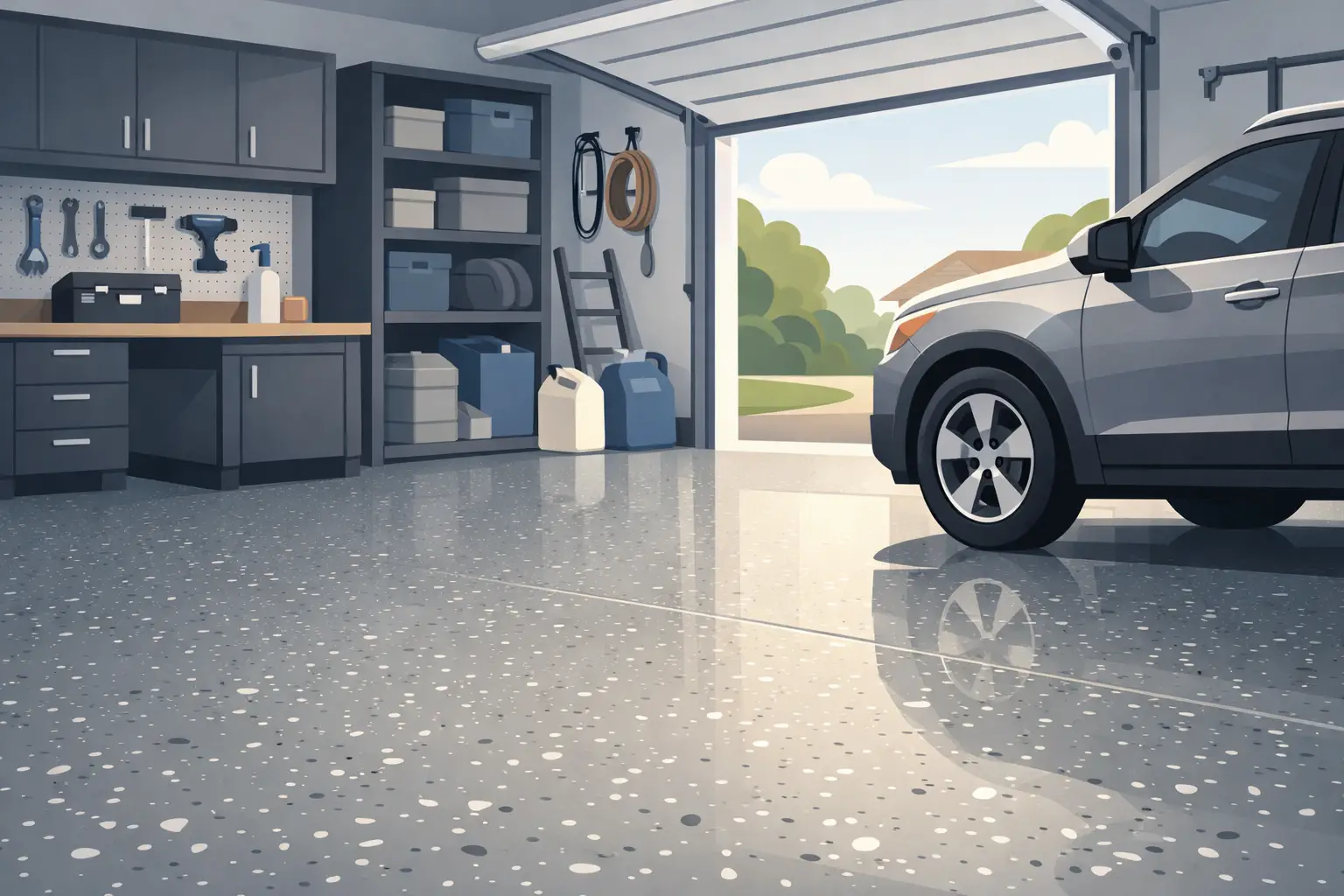
For many households, a flake system is the best epoxy flooring for home garage spaces because it balances durability, grip, and appearance. Decorative flakes are broadcast into the coating and then sealed with a protective topcoat. The result is a textured, multi-tone finish that hides dirt better than a plain surface and adds visual depth.
Flake floors are especially practical in working garages because they camouflage dust, small marks, and normal wear. They also offer better slip resistance when the right texture and topcoat are used. If you want a garage floor that looks polished but still handles everyday use without constant upkeep, this is often the strongest all-around choice.
Metallic epoxy
Metallic epoxy is the showpiece option. It creates a dramatic, high-gloss finish with movement and depth that feels more custom than standard coatings. In the right garage, especially one used for display, entertaining, or a premium home upgrade, metallic epoxy can be a standout surface.
Still, this is a style-driven choice more than a purely practical one. Metallic floors can show dust and surface imperfections more easily, and the final appearance is more installation-sensitive than a flake system. For homeowners who want a garage that feels like an extension of the home, metallic epoxy can be worth it. For heavy daily use, flake usually wins on practicality.
Why installation matters more than most homeowners expect
Epoxy flooring is only as good as the concrete underneath it. A coating cannot fix a weak slab, moisture vapor issues, oil contamination, or poor preparation. It can only cover them for a while, and when it fails, it usually peels, bubbles, or lifts where the underlying problem was ignored.
Mechanical grinding is one of the most important steps in professional installation. It opens the concrete surface and creates the profile needed for strong adhesion. Acid etching and quick prep methods may seem convenient, but they do not deliver the same level of consistency or bond strength.
Moisture is another major factor. Many garage slabs have vapor coming through the concrete, especially in humid regions or older homes without effective moisture barriers. If that moisture is not tested and managed, even a premium coating can fail. This is one reason professional installers focus so heavily on slab assessment before recommending a system.
Cracks and surface damage also need the right treatment. Some cracks are cosmetic. Others indicate movement or stress in the slab. A professional approach means repairing what can be repaired, setting realistic expectations about what may reflect through over time, and building the coating system accordingly.
How to choose the best epoxy flooring for home garage conditions
Start with how the garage is actually used, not how you hope it will look on day one. If it is a daily parking area with bikes, storage bins, lawn equipment, and occasional spills, a flake epoxy system with a quality topcoat is often the smartest investment. It gives you durability without turning routine wear into a visual problem.
If your garage is more of a clean hobby space, home gym, or polished extension of the house, a solid color or metallic system may suit you better. In that case, appearance may rank just as high as stain resistance or slip texture.
You should also think about maintenance expectations. A professional epoxy floor is low maintenance, but no floor is maintenance-free. Lighter colors may show tire residue less clearly, while darker tones may highlight dust. Gloss finishes look sharp, but a slightly less reflective topcoat can be more forgiving in active spaces.
Budget matters too, but it helps to look at value rather than initial price alone. A low-cost coating that fails early is more expensive than a professionally installed system that performs for years. Better materials, proper grinding, moisture control, and a suitable topcoat all add to the cost, but they also add to the lifespan.
Common mistakes when comparing garage epoxy options
One of the biggest mistakes is comparing all epoxy floors as if they are the same product. They are not. Material quality, coating thickness, prep standards, and topcoat choice all affect the final result. A thin DIY kit and a professionally installed multi-layer system are not equal just because both use the word epoxy.
Another mistake is choosing based on appearance alone. A showroom finish looks great in photos, but if it becomes slippery when wet or shows every mark after a week of use, it may not be the right fit for your home. Good garage flooring needs to perform first and look good while doing it.
Homeowners also tend to underestimate the value of a warranty backed by real installation standards. A strong guarantee means more when the contractor has a clear process for moisture testing, surface prep, repair, coating application, and final sealing. Companies like Resin Masters build their reputation on that technical side of the job, not just the finished look.
So what is the best choice for most homes?
If the goal is the best balance of durability, maintenance, and appearance, a professionally installed flake epoxy system is usually the leading choice for a home garage. It hides everyday wear better than solid color, offers a more practical finish than metallic in heavy-use spaces, and gives the floor a finished, high-quality look.
That said, the best epoxy flooring for home garage projects is still the one matched to your slab and your lifestyle. A flawless installation on the right system will outperform a fashionable finish installed on poor concrete or with rushed prep. That is the difference between a floor that looks good for a season and one that continues to work year after year.
A garage floor should do more than cover concrete. It should make the space cleaner, tougher, and easier to live with every day. When you choose with performance in mind, the right floor tends to keep proving itself long after the shine settles in.