Servicing : Gold CoastBrisbaneSunshine CoastToowoomba

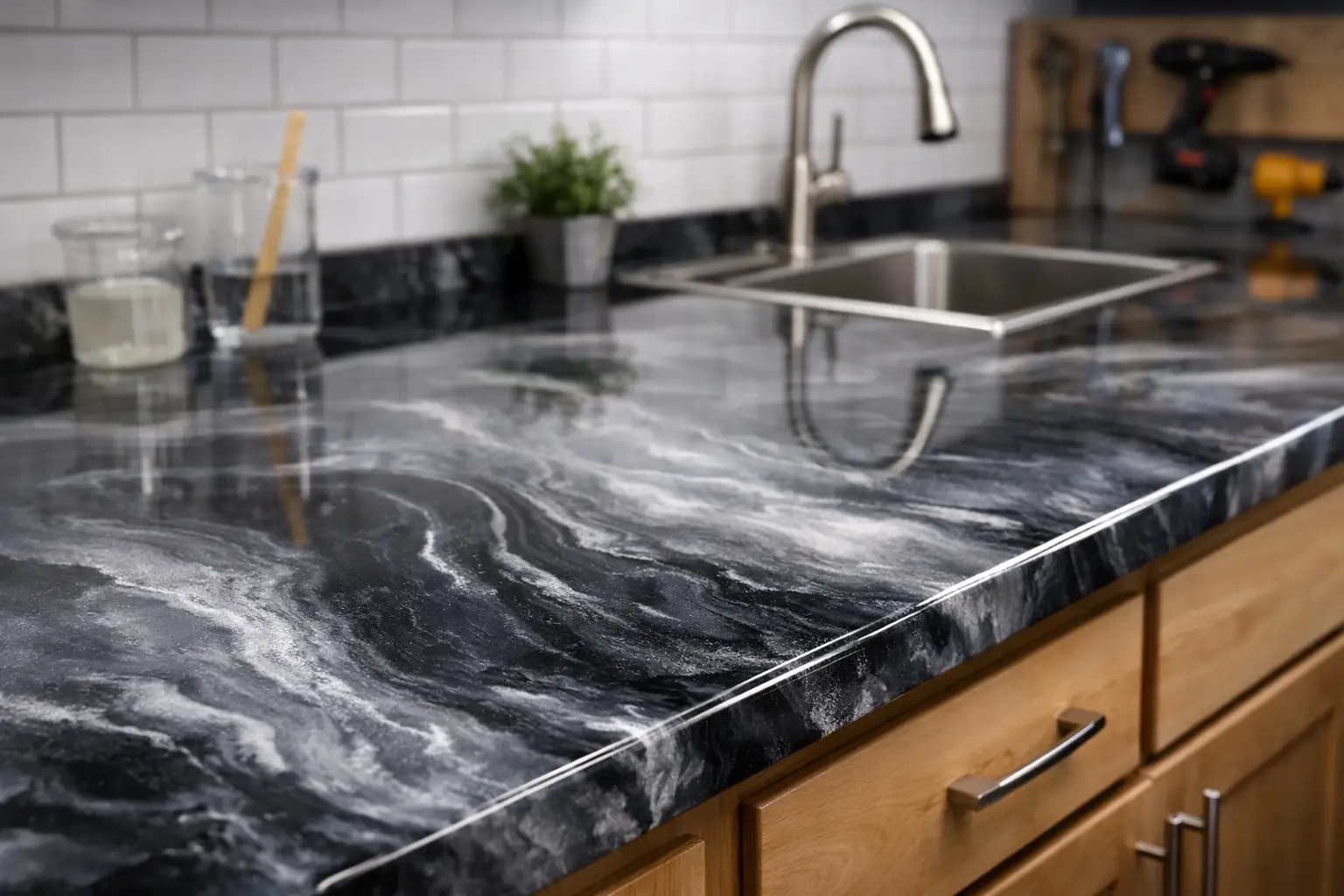
Benchtop Epoxy Makeover Example That Lasts
A tired laminate benchtop can make the whole room feel dated, even when the cabinetry is still solid. That is why a benchtop epoxy makeover example is useful – it shows what can realistically be improved, what the finish looks like in everyday light, and where professional installation makes the difference between a short-term cosmetic fix and a surface built to last.
For many property owners, the appeal is straightforward. Replacing benchtops can mean demolition, plumbing disconnection, joinery adjustments and a far higher budget. Epoxy resurfacing keeps the existing structure in place while delivering a seamless, high-gloss or satin finish that can completely change the look of a kitchen, laundry, bathroom vanity or commercial counter.
A realistic benchtop epoxy makeover example
Take a common scenario. The existing benchtop is structurally sound but visually worn – faded laminate, a few chips around the sink cut-out, dull patches where cleaning products have bitten into the finish, and stained silicone lines that never quite look clean. Functionally, it still works. Visually, it drags the entire space down.
In a professional makeover, the goal is not to hide problems under a shiny coating. The first step is assessing whether the substrate is suitable. If the benchtop is swollen from water damage, lifting at joins, or moving under pressure, resurfacing is the wrong fix. Epoxy performs best when the base is stable, dry and properly prepared.
Where the benchtop is suitable, the transformation is significant. The old surface is repaired, keyed and primed. Edges are refined. Seams and minor damage are filled. Then the epoxy system is applied in controlled layers to create a smooth, non-porous finish. Depending on the look selected, the final result might mimic stone, create a clean solid colour, or deliver a decorative marbled effect with more visual depth than paint ever could.
The biggest change is usually not just appearance. It is how the benchtop feels. A professionally finished epoxy surface feels solid, smooth and fully integrated with the rest of the room. There are no peel-and-stick edges, no brush marks, and no obvious signs that the benchtop has simply been patched over.
What actually changes in a benchtop epoxy makeover example
The visual shift gets the attention first, but the practical changes matter just as much. A resurfaced benchtop can improve stain resistance, simplify cleaning and remove the tired, porous feel that older surfaces often develop over time. In residential settings, that means easier wipe-downs after cooking and less grime collecting in rough or damaged areas. In commercial or hospitality-adjacent spaces, a seamless finish can also support a cleaner, more hygienic working surface.
It is worth being clear about expectations. Epoxy is highly durable, but it is not indestructible. It resists everyday wear very well when installed and maintained correctly, yet it can still be damaged by direct heat, aggressive cutting, or impact on exposed edges. A quality makeover improves performance, but good usage habits still matter.
That balance is where professional advice helps. The right system for a bathroom vanity is not always the same as the right system for a busy kitchen island or a commercial service counter. Exposure to heat, cleaning chemicals, moisture and traffic all affect specification.
Why preparation decides the outcome
Most failed benchtop coatings do not fail because epoxy is a poor material. They fail because the surface underneath was not prepared to the right standard. Grease contamination, moisture, weak paint layers, poor sanding, rushed curing times and cheap topcoats all create problems that usually show up later as peeling, yellowing, fisheyes or dull patches.
A premium installation starts with proper mechanical and chemical preparation, not guesswork. Every repair must be stable. Every contaminant must be removed. Every layer must be compatible. That process is not the glamorous part of the makeover, but it is the part that protects the finish long after the room photos are taken.
In Queensland conditions, moisture control is especially important. Humidity affects cure behaviour, surface tension and adhesion. A contractor who understands local conditions can adjust timing, preparation and product choice to avoid issues that many DIY kits and low-cost installers simply do not account for.
Choosing the right finish
When people search for a benchtop epoxy makeover example, they are often picturing a dramatic marble-style result. That finish can look excellent, but it is not the only option and it is not always the best one.
A solid colour finish suits more minimalist spaces and tends to age well visually. Stone-inspired veining creates a premium decorative effect and can lift a dated kitchen without replacing cabinetry. Metallic or highly reflective finishes can work in statement settings, although they need careful design judgement to avoid dating the room quickly.
Gloss level also matters. High gloss reflects light and can make a smaller room feel brighter, but it will show smudges and surface marks more readily. Satin or lower-sheen finishes can offer a more restrained look and may suit work-heavy areas better. The right choice depends on how the benchtop will actually be used, not just how it looks on day one.
Where epoxy resurfacing makes the most sense
Epoxy benchtop resurfacing is a strong option when the substrate is sound and the goal is a major visual upgrade without a full replacement project. That often makes sense in kitchens, laundries, bathroom vanities, office kitchenettes, reception counters and selected retail worktops.
It is also a practical fit where downtime matters. Full replacement often creates disruption well beyond the benchtop itself. Tiles, splashbacks, sinks and cabinetry can all be affected. A resurfacing approach is generally faster and less invasive, which can be valuable for occupied homes and operating businesses.
That said, replacement may still be the smarter decision if the benchtop has structural swelling, severe water damage, major movement at joins or design issues that resurfacing cannot solve. A reliable contractor should say so. Good advice is not about forcing every surface into the same system. It is about recommending the option that will perform properly over time.
The difference between DIY results and professional installation
There is a reason online benchtop epoxy kits look appealing. They promise a dramatic finish at a low price point. For some small, low-stakes projects, they may be acceptable. But on a main kitchen benchtop or customer-facing commercial surface, the margin for error is small.
The common DIY problems are easy to spot once you know what to look for. Uneven edge coating, roller marks, trapped dust, poor levelling, visible repair lines, cloudy topcoats and early wear around sinks and corners all point to shortcuts in preparation or application. The result might look passable at first glance, but performance tends to fall away quickly.
Professional installation is less about adding cost and more about controlling risk. Proper preparation equipment, product selection, humidity management and finish control all matter. So does knowing when a benchtop should not be coated at all. That judgement protects the client from paying twice.
For property owners who want a premium result rather than a weekend experiment, this is where specialist experience carries real value. Resin Masters approaches decorative resurfacing the same way it approaches resin flooring – with a focus on preparation, performance and finish quality rather than shortcuts.
What to expect after the makeover
Once cured, a professionally installed epoxy benchtop is straightforward to live with. Daily cleaning usually requires nothing more than a soft cloth and a mild cleaner. Because the surface is non-porous, spills sit on top rather than soaking in, which helps with hygiene and ongoing presentation.
Long-term performance still depends on sensible use. Hot pans should not be placed directly on the surface. Cutting should be done on boards, not on the coating itself. Harsh abrasives should be avoided. These are not unusual limitations – they are standard care principles for most premium benchtop finishes, including many natural and engineered surfaces.
The upside is consistency. A well-installed epoxy benchtop keeps its appearance because it does not rely on patch repairs, exposed joins or surface films that start lifting under regular use. It is one continuous finish, designed to handle real wear when specified and applied properly.
Is a benchtop epoxy makeover the right move?
If the benchtop is structurally sound and the room needs a serious refresh, epoxy resurfacing can be one of the smartest upgrades available. It gives you design flexibility, a cleaner finish and a more cost-effective path than full replacement. But it only works well when the condition of the existing benchtop, the intended use and the installation standard all line up.
That is why examples matter. A good benchtop makeover is not just about before-and-after contrast. It is about whether the surface still looks right six months later, still cleans easily, and still performs in the way the space demands.
The best results come from treating the benchtop as a working surface first and a design feature second. Get that balance right, and the makeover does more than improve the room – it gives the space a finish that feels properly built, not simply dressed up.