Servicing : Gold CoastBrisbaneSunshine CoastToowoomba

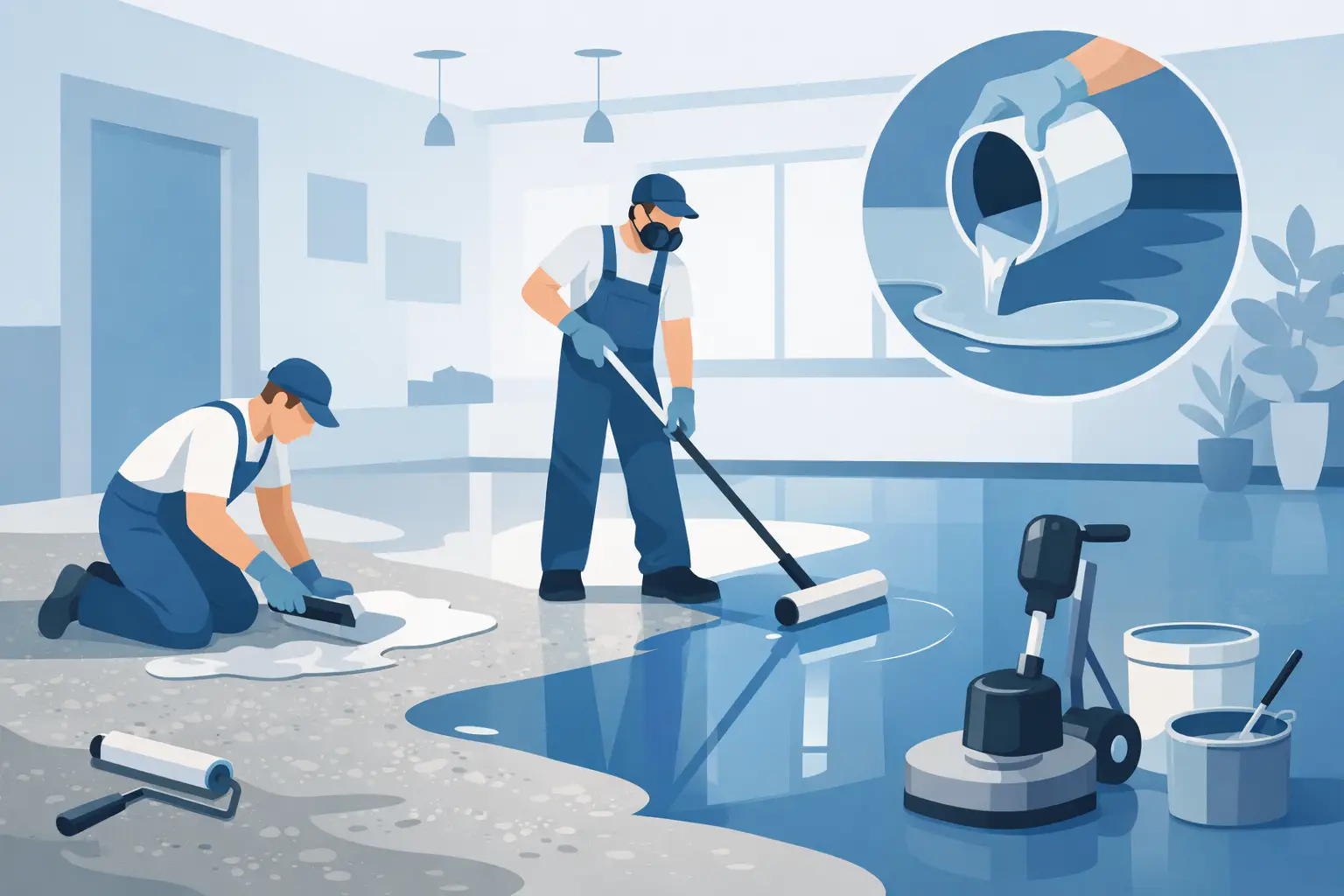
How Do You Install Epoxy Flooring?
A clean, glossy epoxy floor only looks simple once it is finished. The real work happens before the coating ever touches the slab. If you are asking how do you install epoxy flooring, the short answer is this: prepare the concrete correctly, control moisture, apply the right system at the right thickness, and give it enough time to cure. Miss any one of those steps and even premium epoxy can fail early.
That matters whether you are upgrading a home garage, fitting out a retail space, or protecting a warehouse floor from forklifts, spills, and daily wear. A professionally installed epoxy floor is not just about appearance. It is about adhesion, chemical resistance, impact strength, hygiene, and long-term performance.
How do you install epoxy flooring the right way?
The proper installation process starts with assessment, not coating. Every slab is different. Some concrete is new and sound. Some is old, oil-stained, cracked, or holding moisture. The condition of the substrate determines the system, the preparation method, and sometimes whether epoxy is the right choice at all.
A quality installer begins by inspecting the concrete for contamination, laitance, previous sealers, movement cracks, spalling, and moisture issues. This stage is where many long-term problems are either prevented or ignored. If the slab has rising moisture vapor or hidden contaminants, no topcoat will hide that for long.
Once the slab is assessed, the surface must be mechanically prepared. This usually means diamond grinding or shot blasting to create the profile needed for epoxy to bond properly. Acid etching is often talked about in DIY circles, but it does not deliver the same consistency or reliability as mechanical preparation. For floors expected to handle real traffic and real use, surface prep is not optional.
After grinding, the floor is vacuumed thoroughly. Dust left behind will interfere with adhesion and finish quality. The slab then needs repairs where required. Cracks, surface pits, and damaged sections are filled with compatible repair materials so the final surface is even and stable.
Surface prep is where epoxy floors are won or lost
If there is one part of the process that deserves extra attention, it is preparation. Strong epoxy flooring depends on what is underneath it. A floor can look fine on day one and still fail months later if the concrete was not prepared correctly.
Oil contamination is a common issue in garages and workshops. Degreasing may be necessary before grinding, and heavily contaminated concrete may need more aggressive treatment. In commercial and industrial settings, old coatings and line markings often need to be completely removed before a new system can be applied.
Moisture testing is another key step. Concrete can hold vapor long after it looks dry on the surface. If moisture pressure is too high, it can cause blistering, bubbling, or delamination. In some cases, a moisture-tolerant primer or moisture mitigation system is required before the epoxy build begins.
This is one reason professional installation delivers better outcomes. The process is not just about applying product. It is about reading the slab correctly and adjusting the system to suit site conditions.
Priming the floor
Once the slab is clean, profiled, repaired, and tested, the primer coat is applied. The primer helps the epoxy bond into the concrete and can reduce issues caused by porosity or minor surface variation. Depending on the floor system, the primer may also help seal the substrate and create a more uniform base for later coats.
At this stage, timing matters. Epoxy products have working windows, recoat windows, and cure schedules that need to be followed closely. Temperature and humidity also affect application. If the product kicks too quickly, it can leave roller marks or inconsistent texture. If conditions are too cool or damp, curing may slow down and affect final hardness.
Applying the epoxy system
After priming, the main epoxy coat or coats are installed. The exact build depends on the floor’s purpose. A residential garage may use a pigmented base coat with decorative flake and a protective topcoat. A commercial kitchen or medical setting may need a seamless hygienic system. A warehouse or industrial site may require a heavier-duty build designed for machinery, pallets, chemical exposure, and impact resistance.
The epoxy is mixed to the manufacturer’s ratio and applied evenly across the floor. This sounds straightforward, but consistency is critical. Uneven mixing, incorrect pot life management, or poor spreading can create soft spots, color variation, or weak adhesion.
For decorative flake systems, flakes are broadcast into the wet base coat to the desired coverage. Once cured, excess flake is scraped and vacuumed before the clear topcoat is applied. Metallic epoxy systems require even more control because movement in the product affects the final visual effect. These finishes can look exceptional, but they are less forgiving during installation.
Industrial systems may include multiple layers such as primer, body coat, aggregate, and chemical-resistant topcoat. These are built for function first, with the finish tailored to slip resistance, cleaning needs, and expected traffic.
Topcoats and final protection
A good epoxy floor system often includes a final topcoat for added wear resistance, UV stability, or chemical protection. In some environments, epoxy alone is enough. In others, a polyurethane or polyaspartic topcoat is added to improve scratch resistance, color retention, or cure performance.
This is where the intended use of the space matters. A showroom floor has different demands than a plant room. A garage used for parking and storage has different needs than a food prep area or workshop. The best result comes from matching the coating system to the environment rather than using a one-size-fits-all approach.
Slip resistance can also be adjusted at the topcoat stage. That is useful in wet areas, ramps, workshops, and commercial sites where safety is a practical concern. The trade-off is that more texture can make a floor slightly harder to mop than a completely smooth finish. That does not mean one option is better across the board. It means the floor should be designed around how the space is used.
Curing is part of the installation
One of the most common mistakes is treating cure time as an afterthought. The floor may look dry within hours, but that does not mean it is ready for foot traffic, vehicles, or equipment. Epoxy needs time to chemically cure and reach its designed hardness.
Exact cure times vary by product and site conditions, but rushing this stage can mark the surface or reduce long-term performance. In a residential garage, that may mean keeping cars off the floor longer than expected. In a commercial setting, it may mean planning installation around operating schedules. Efficient turnaround matters, but not at the expense of the floor’s service life.
Can you install epoxy flooring yourself?
You can, but the gap between DIY and professional results is usually clear. Small kits can work for light-duty spaces if the concrete is in good condition and the expectations are modest. The challenge is that most failures are not caused by the coating itself. They come from poor prep, moisture issues, incorrect mixing, or applying the product in the wrong conditions.
That is why professional epoxy floors last longer and perform better under pressure. Experienced installers have the grinding equipment, moisture testing methods, repair products, and system knowledge needed to deliver a floor that does more than look good for a few months.
For homeowners, that means a garage floor that resists hot tire pickup, stains, and peeling. For businesses, it means less downtime, lower maintenance, and a surface built for actual operational demands. Resin Masters approaches installation with that standard in mind, focusing on preparation, system selection, and workmanship that supports long-term durability.
What affects the final result?
Several factors shape how well an epoxy floor performs. The concrete condition comes first. Then comes moisture, the type of epoxy system, surface preparation quality, application skill, and cure management. Even color choice and texture level can affect how the floor looks over time.
There is also the question of budget. Lower-cost installations often reduce prep time, use thinner builds, or skip moisture safeguards. That can make the initial quote look attractive, but the floor may not hold up under real use. A quality installation costs more because it includes the steps that protect the investment.
If you are comparing options, ask how the slab will be prepared, whether moisture will be tested, what system thickness is included, and what topcoat is being used. Those details tell you far more than color charts ever will.
Epoxy flooring is one of the most durable and practical upgrades you can make to concrete, but only when it is installed with care. The finish you see at the end is really the result of dozens of technical decisions made from the first inspection onward. Get those decisions right, and the floor will keep working hard long after the shine settles in.
3 Responses