Servicing : Gold CoastBrisbaneSunshine CoastToowoomba

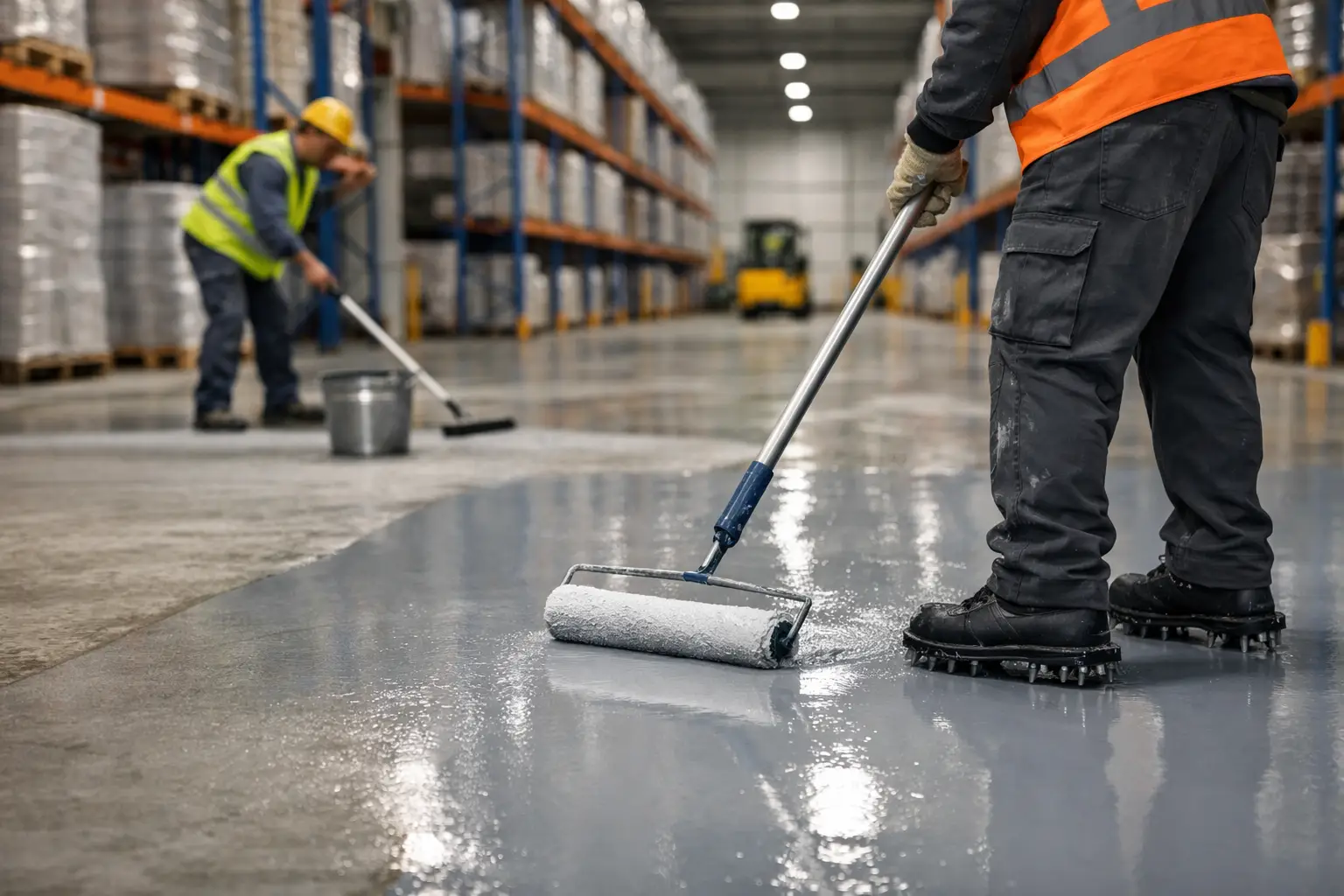
Warehouse Floor Coating Guide for Lasting Performance
A warehouse floor is not a cosmetic afterthought. It carries forklifts, pallet jacks, loaded racking, dropped stock, tyre traffic and daily cleaning – often while being exposed to dust, oil and Queensland humidity. This warehouse floor coating guide explains what separates a professional resin floor from a short-lived surface treatment, and how to specify a system that protects operations rather than disrupting them.
What a warehouse floor coating needs to do
A quality coating creates a sealed, seamless layer over concrete. That makes the floor easier to clean, reduces concrete dust, improves light reflectivity and helps contain minor spills before they soak into the slab. More importantly, it protects the concrete from the gradual abrasion and impact that occur in busy loading, storage and production areas.
However, not every warehouse needs the same finish. A light-duty storage facility with pedestrian traffic has different demands from a distribution centre moving loaded forklifts all day. Food handling areas may prioritise hygiene and wash-down resistance, while workshops may need stronger resistance to oils, fuels and chemicals.
The right answer depends on traffic, cleaning methods, exposure to chemicals, expected downtime and the condition of the existing concrete. Selecting a coating simply because it is cheap or has a glossy appearance can lead to early wear, peeling and expensive remedial work.
Warehouse floor coating guide: assess the concrete first
The coating is only as reliable as the concrete beneath it. Before a system is selected, the slab should be inspected for cracking, weak surface laitance, old coatings, oil contamination, spalling and moisture.
Moisture is a Queensland priority
Concrete can hold moisture long after it appears dry. In Brisbane, the Gold Coast and other coastal areas, humid conditions can complicate installation and increase the risk of moisture pressure beneath a coating. If moisture moves through the slab after application, it can cause blistering, delamination or cloudy patches.
Professional installers test the slab and use a suitable moisture-control primer or vapour barrier where required. This step is not an optional extra. It is part of building a floor that stays bonded through seasonal changes, wash-down routines and daily traffic.
Repairs must be completed before coating
Cracks, damaged joints and holes will not disappear under resin. They need to be repaired with compatible materials, then ground flush so the finished floor remains even and practical for wheeled traffic. Movement joints also need to be treated correctly. Filling every joint rigidly without considering slab movement can create new failures later.
A proper assessment identifies whether repairs are cosmetic, structural or related to ongoing movement. That distinction affects both the materials used and the expected result.
Choose a system for the work being done
Epoxy is a leading choice for warehouse floors because it provides a hard, seamless and highly durable surface. High-build epoxy systems can be tailored for demanding commercial and industrial settings, delivering strong adhesion and resistance to many common contaminants.
For areas with significant sunlight exposure, a UV-stable polyurethane topcoat can be a smart addition. Standard epoxy can amber or fade when exposed to direct UV light, particularly around roller doors, open loading areas and perimeter zones. A suitable topcoat helps preserve the floor’s appearance while adding another layer of protection.
Where the slab is subject to greater thermal stress, heavy impact or aggressive chemicals, a different resin system may be more appropriate. Cementitious polyurethane and specialist chemical-resistant systems can suit certain industrial environments, but they are not automatically the best option for every warehouse. The specification should match the actual operating conditions rather than the most extreme scenario on paper.
Colour also has a practical role. Mid-grey finishes are popular because they keep a clean, professional appearance without showing every tyre mark. Light colours can improve brightness in darker warehouses, while designated walkways, work zones and loading areas can be marked for clearer traffic management.
Build slip resistance into the finish
A glossy floor can look impressive, but safety comes first. Warehouses often have changing conditions: dry forklift lanes, wet entry points, wash-down zones, oil-prone maintenance bays and pedestrian routes. One uniform texture may not be suitable across all of them.
Slip resistance is created by incorporating the right aggregate profile into the coating system. The texture must suit the area’s likely contaminants, footwear, cleaning routine and traffic. Too little texture can leave the floor slippery when wet. Too much can make it harder to clean and can increase wear on wheels and equipment.
For commercial facilities, the finished floor should be considered against Australian slip-resistance requirements, including AS 4586 where relevant. A professional contractor will discuss the intended use of each zone rather than applying one generic finish throughout the building.
Surface preparation decides the lifespan
The most critical stage of a warehouse coating project is often the least visible once the job is complete: mechanical preparation. Concrete should be diamond ground or shot blasted to remove contaminants and create the correct surface profile for the resin to bond.
Acid etching and quick clean-and-coat approaches are rarely enough for a serious warehouse environment. They do not reliably remove deeply embedded oils, weak concrete or previous coatings, and they cannot provide the consistent profile required for long-term adhesion.
After preparation, the floor must be thoroughly vacuumed and inspected. Primer, body coats, aggregate and topcoats are then applied within the correct recoat windows. Temperature, humidity and slab conditions all affect curing, which is why experienced local installation matters in South East Queensland conditions.
Plan the installation around warehouse operations
A coating project should protect productivity as well as concrete. For an active facility, the installer may work in stages so stock, forklifts and staff can continue moving through other sections of the building. Clear staging plans, access routes and curing times should be agreed before work begins.
Downtime varies with the coating system, weather conditions and the type of traffic expected. A floor may be ready for foot traffic before it is ready for loaded forklifts. Returning vehicles too early can mark or damage a coating that has not achieved full cure.
Good planning also includes removing movable equipment, protecting fixed machinery, arranging alternative traffic routes and confirming when the site can be cleaned. These details prevent last-minute delays and give the coating its best chance of performing as specified.
Look beyond the upfront coating price
A lower quote can be attractive, particularly across a large floor area. But comparing only the square-metre rate often misses the items that determine service life: preparation method, crack repairs, moisture treatment, coating thickness, slip-resistance profile, line marking and warranty coverage.
A thin coating applied over poorly prepared concrete may look acceptable on day one. Under forklift turning and repetitive wheel paths, weak adhesion soon becomes visible as peeling, wear-through or tyre marking. The cost then includes disruption, removal and recoating – not just the original installation.
Ask each contractor to explain the complete scope in plain terms. A reliable proposal should identify the substrate preparation, resin system, number of coats, expected cure period and any exclusions. It should also explain how the system is suited to your traffic and environment.
Questions worth asking before you approve a quote
Before committing to a warehouse floor coating, confirm these points with your contractor:
- How will the concrete be tested for moisture and contamination?
- What mechanical preparation method will be used?
- Which coating system and thickness are proposed for our forklift and pallet-jack traffic?
- How will slip resistance be managed in wet, oily or high-traffic areas?
- What staging and cure time will be required before normal operations resume?
These questions quickly reveal whether a contractor is specifying a long-term flooring system or simply selling a fast application.
A floor that supports better operations
The best warehouse coating is not necessarily the shiniest or the cheapest. It is the one built around your slab, traffic pattern, safety requirements and operating schedule. When preparation, moisture control and resin selection are handled properly, the result is a cleaner, safer and more durable work surface that helps the facility perform at its best.
For warehouse owners and facility managers who want that level of certainty, Resin Masters can assess the existing concrete and recommend a professional coating system designed for the way the site actually works.