Servicing : Gold CoastBrisbaneSunshine CoastToowoomba

Flake Flooring vs Plain Epoxy for Your Space
A garage floor can look excellent on handover day and still disappoint once tyres, tools, humidity and daily traffic arrive. When comparing flake flooring vs plain epoxy, the better option is not simply the one with the strongest colour or lowest quote. It is the system that suits the space, the concrete condition and the level of use it will face for years.
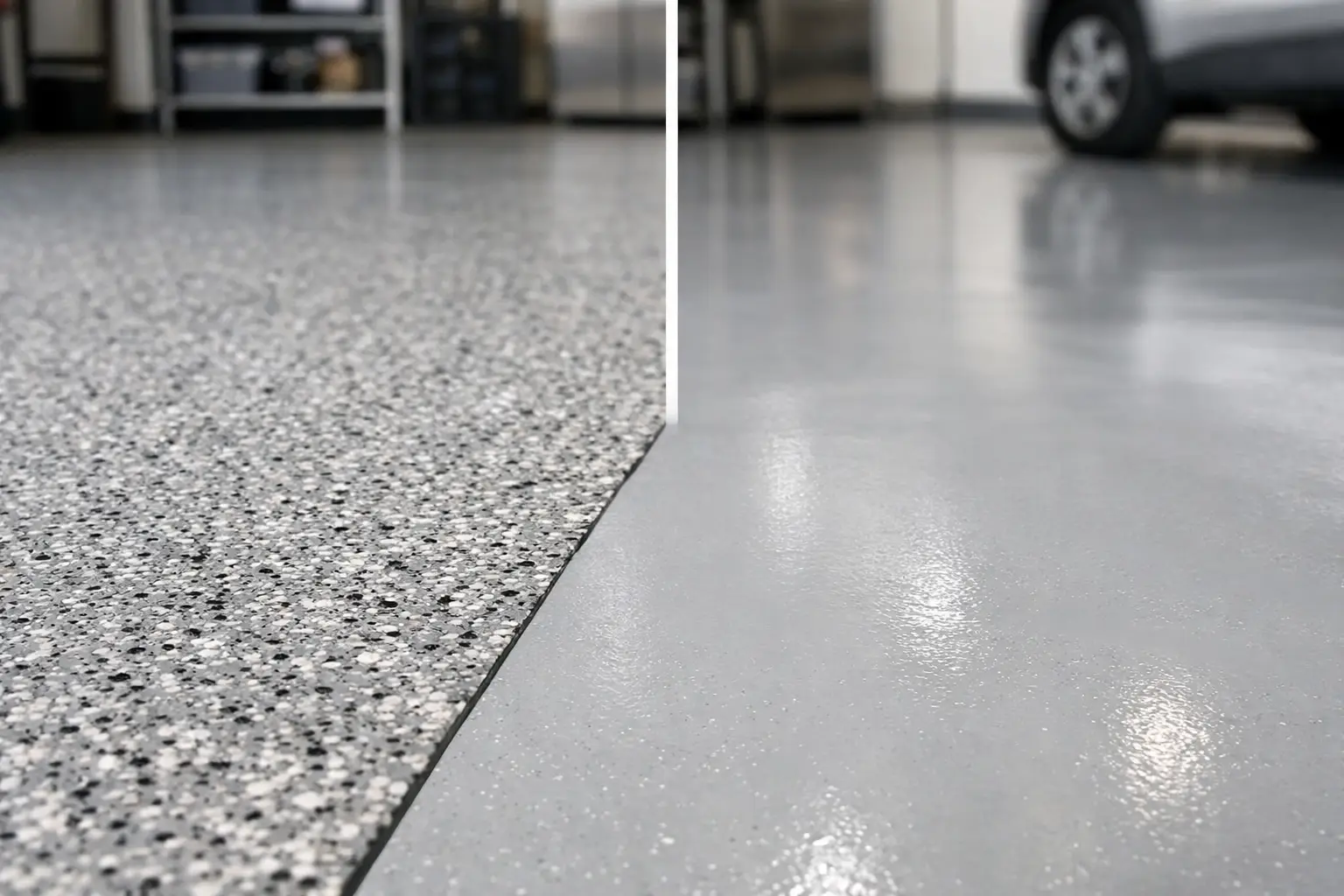
Plain epoxy delivers a clean, solid-colour surface with a modern commercial feel. Flake flooring combines a resin base coat with decorative vinyl flakes and a clear protective topcoat, creating more visual depth and a practical texture underfoot. Both can perform extremely well when installed over correctly prepared concrete. The difference is in their appearance, day-to-day usability and how forgiving they are in busy environments.
Flake flooring vs plain epoxy: the practical difference
Plain epoxy is a smooth, continuous resin coating, usually finished in one solid colour. It suits clients who want a crisp, minimal result, whether that is a light grey garage, a dark workshop floor or a colour-matched commercial area. It can make a space feel larger and brighter, particularly with a lighter shade and good lighting.
Flake flooring starts with a coloured epoxy or polyaspartic base coat. Decorative flakes are broadcast into that wet layer before excess flakes are removed and clear coats are applied. The flakes are not just decoration. They create a varied finish that can soften the look of dust, small marks and light scuffing while giving the floor a more textured appearance.
Neither system should be treated as a paint job. Long-term performance comes from concrete grinding, crack treatment, moisture assessment, the right primer and carefully controlled application. A premium flake system over poorly prepared concrete will fail. A plain epoxy floor installed with disciplined preparation can look sharp and perform reliably for many years.
Appearance: clean minimalism or visual depth
For a contemporary garage, showroom or clean utility space, plain epoxy has a strong appeal. Its uninterrupted surface creates a precise, uniform look that works well with white walls, cabinetry and organised storage. It is also a practical choice where branding or a specific colour scheme matters.
The trade-off is that a plain colour can show tyre dust, footprints, dirt and scratches more readily, especially in darker shades or high-gloss finishes. This does not mean it is difficult to maintain, but it does reward regular cleaning if presentation is a priority.
Flake flooring is more forgiving. The blend of colours breaks up the visual field, so everyday dust and minor debris tend to be less obvious between cleans. It is a popular choice for Brisbane, Gold Coast and Sunshine Coast garages where the floor regularly sees sand, garden debris, wet shoes and weekend vehicle work.
Flake systems also provide more design flexibility than many people expect. Subtle grey blends suit modern homes, while warmer blends can complement exposed brick, timber joinery or neutral outdoor living areas. The right blend should support the rest of the property rather than become the loudest feature in the room.
Grip and safety need a site-specific decision
A smooth plain epoxy finish can be appropriate in dry, controlled spaces, but gloss alone should never be used to judge floor safety. Any hard surface can become slippery when water, oil or contaminants are present. This matters in garages, commercial entries, wash-down areas, workshops and warehouses.
Flake flooring naturally has more texture than a plain gloss coating, which can provide a more secure feel underfoot. However, it is not automatically the right slip-resistance solution for every application. The coating build, flake coverage, clear coats and any added aggregate all affect the final result.
For commercial and industrial settings, slip resistance should be selected around the actual hazards, cleaning process and expected foot traffic. Where compliance is required, the system needs to be considered against relevant Australian standards, including AS 4586. A floor that is overly aggressive can trap grime and become harder to clean, while a floor that is too smooth may not suit wet conditions. The goal is controlled, fit-for-purpose traction.
Cleaning and daily maintenance
Both finishes are seamless, which is a major advantage over tiled surfaces and bare concrete. There are no grout lines to catch dust, spills or workshop debris. A routine sweep followed by a mop using a suitable neutral cleaner will keep most resin floors looking their best.
Plain epoxy is the simplest surface to wipe down because it has minimal texture. In a medical-style utility room, retail back-of-house area or low-contaminant workspace, this can be a genuine advantage. Spills are easy to spot and clean promptly.
Flake flooring needs no difficult maintenance, but its texture can hold more fine dirt than a smooth coating if neglected. A soft broom, microfibre mop or mechanical scrubber for larger commercial floors will manage this well. The upside is that the same texture disguises light dirt between scheduled cleans, which is valuable in a working garage or busy facility.
Avoid harsh solvents, abrasive pads and strong alkaline cleaners unless the product is confirmed as suitable for the installed coating. Good maintenance protects the clear topcoat and preserves the floor’s appearance.
Queensland concrete moisture changes the conversation
Coastal humidity, summer storms and moisture moving through concrete are not minor details in South East Queensland. They can affect adhesion and lead to blistering or coating failure if ignored. This applies to flake systems and plain epoxy alike.
Before a floor is coated, the slab should be assessed for moisture and prepared properly. Mechanical grinding opens the concrete profile and removes weak surface material, contaminants and old coatings. Cracks, joints and problem areas should be addressed before resin is applied, not disguised beneath it.
This preparation is particularly important in garages where hot tyres, vehicle fluids and temperature changes place extra pressure on the coating. A professionally specified system can help protect the concrete from hot-tyre pickup, but the product selection and installation conditions must be right. Cheap DIY kits often cannot account for slab moisture, preparation quality or the demanding conditions of a Queensland garage.
Where each option makes the most sense
Flake flooring is often the stronger all-round choice for residential garages, workshops, utility rooms and high-use commercial spaces. It offers a premium finish, practical grip options and better camouflage for the marks of normal life. It is especially well suited to owners who want the floor to stay presentable without noticing every footprint or speck of dust.
Plain epoxy can be the better fit when a clean, uniform appearance is central to the brief. It works well in showrooms, storage rooms, offices, display areas and garages where the floor is kept exceptionally tidy. A solid-colour system can also be a smart option for industrial zones requiring visual separation between work areas, walkways or storage sections.
For warehouses and production environments, the choice should be driven less by decoration and more by traffic, loads, chemicals, cleaning methods and safety requirements. Forklifts, pallet jacks, dropped tools and frequent wash-downs require a coating specification built around operational performance, not a standard residential finish.
Cost: compare the whole system, not only the quote
Flake flooring usually involves more application stages and materials than a basic plain epoxy coating, so it can carry a higher upfront cost. That does not make plain epoxy the budget compromise or flakes the automatic premium choice. The real value sits in the preparation, resin quality, coating thickness, topcoat performance and workmanship behind the proposal.
A low quote can omit moisture control, concrete grinding, crack repairs or a protective clear coat. Those omissions may not be obvious until the coating begins to peel, wear prematurely or lose its finish. Ask what surface preparation is included, how the slab will be tested, what product system is proposed and what warranty supports the work.
Resin Masters specifies flooring around the demands of the site, with rigorous preparation and a 7-year warranty on qualifying installations. That approach helps clients choose a finish for its long-term performance, not just its first impression.
Choose the floor you will be happy to use
If you want a polished, uninterrupted colour and your space stays relatively clean and dry, plain epoxy can be an excellent result. If you need a floor that handles everyday garage dust, offers more visual texture and can be tailored for practical grip, flake flooring is often the more forgiving choice.
The best decision starts with the slab beneath your feet. Have the concrete, moisture conditions, traffic and safety needs assessed before settling on a colour chart. A properly prepared floor will keep doing its job long after the initial shine has become part of the space.