Servicing : Gold CoastBrisbaneSunshine CoastToowoomba

How Professionals Prepare Concrete Surfaces
A premium epoxy floor is only as dependable as the concrete beneath it. To prepare concrete surfaces properly, installers need to deal with what is happening below, on and within the slab – not simply make it look clean. In Queensland garages, warehouses and commercial spaces, moisture, old coatings, tyre residue and weak concrete can all compromise an otherwise excellent resin system.
For property owners, proper preparation is the difference between a floor that continues to look sharp under daily use and one that peels, bubbles or wears prematurely. It is also the stage of the job where experience matters most.
Why concrete preparation determines epoxy performance
Epoxy and other resin coatings bond mechanically to concrete. The coating needs a clean, sound and correctly profiled surface to grip. If it is applied over dusty concrete, curing compounds, oils or a failed previous coating, the resin bonds to that weak layer rather than the slab itself.
The result may not be obvious on day one. Problems often appear months later as hot-tyre pickup in a garage, lifting around forklift routes, blisters caused by moisture vapour, or flaking near doorways and wet areas. These are costly faults because the coating generally has to be removed before the floor can be repaired properly.
Surface preparation is particularly important across Brisbane, the Gold Coast and the Sunshine Coast. High humidity, coastal conditions and slabs with limited vapour protection can create moisture challenges that cannot be solved by choosing a thicker topcoat. The right system starts with understanding the slab.
Step 1: Inspect the slab before any coating work
A professional installation begins with a close inspection, not a colour selection. The installer checks the concrete for cracking, spalling, laitance, contamination, existing sealers and previous coatings. They also look at how the area is used: vehicle traffic, wheeled equipment, chemicals, wash-downs, sunlight and slip-risk all affect the preparation and coating specification.
Concrete age matters too. New slabs need sufficient curing time before resin application. A slab may feel hard enough to walk on well before it is ready to accept a coating. Rushing this stage can trap moisture and lead to adhesion issues later.
The inspection should also identify construction joints, control joints and damaged edges. Joints move by design, so they cannot always be treated like ordinary cracks. A sound installer will explain which joints can be filled, which should remain flexible, and how the finished floor will handle movement without creating avoidable failures.
Step 2: Test for moisture, not guesswork
Concrete is porous and can hold or transmit moisture even when its surface appears dry. This is one of the main reasons preparation needs to be tailored to the site, especially in humid South East Queensland conditions.
Moisture testing helps determine whether the slab is suitable for the intended resin system or whether a moisture-control primer is required. Depending on the project, this may involve relative humidity testing within the slab, surface moisture readings and an assessment of the building conditions. The goal is not merely to obtain a number. It is to select a system that can perform reliably over that particular concrete.
A garage slab exposed to weather at the threshold may need a different approach from an enclosed showroom or an industrial warehouse. Ground-level slabs without effective vapour barriers can also require additional moisture management. Applying epoxy without addressing this risk is a false economy.
Step 3: Remove contaminants and failed coatings
Before mechanical preparation begins, the slab must be free of materials that could interfere with adhesion. In garages, this commonly includes oil spots, tyre marks, grease, silicone products and old sealers. In commercial areas, contaminants may include food oils, cleaning chemicals or residues from previous floor treatments.
Surface cleaning is more than a quick pressure wash. Oils can soak into concrete and need to be treated with the right degreasing process. Any soft, peeling or poorly bonded coating must be removed rather than covered. Resin applied over a failing finish is only as strong as the failed finish below it.
This is also where a site-specific assessment is valuable. A lightly used residential garage and a workshop with years of oil contamination may look similar from the doorway, yet require very different levels of remediation.
Step 4: Mechanically profile the concrete
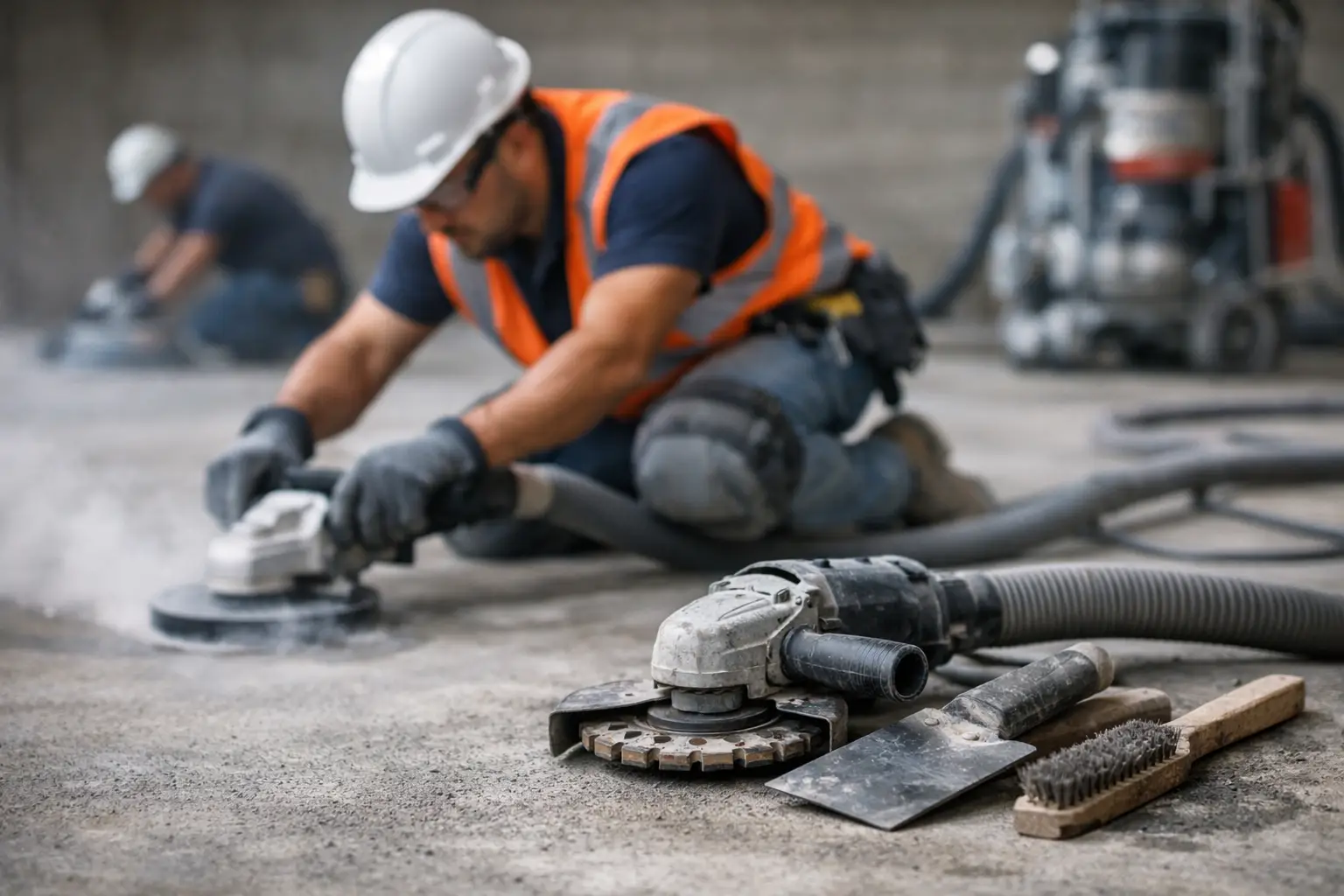
Mechanical profiling gives epoxy the texture it needs to bond securely. For most residential garages, workshops and decorative flake floors, diamond grinding is the preferred method. It removes weak surface laitance and minor coatings while creating a clean, even profile without introducing excessive water into the slab.
Professional grinding equipment should be paired with industrial dust extraction. This keeps the work area cleaner, protects nearby spaces and allows the installer to clearly inspect the concrete as preparation progresses. It also avoids leaving loose dust behind – a common cause of poor coating adhesion.
For larger industrial floors or heavily coated slabs, shot blasting may be more suitable. This process propels steel shot across the floor to remove coatings and create a consistent profile at scale. The best method depends on the condition of the concrete, access constraints and the specified coating system.
Acid etching is sometimes promoted as a shortcut, but it is rarely the right answer for a premium resin floor. It can be inconsistent, does not reliably remove all contaminants or coatings, and introduces water and neutralisation requirements. Mechanical preparation provides a more controlled and verifiable surface profile.
Step 5: Repair cracks, holes and weak concrete
Once the slab has been ground, its real condition becomes clear. Hairline cracks, chips, surface pitting and spalled areas that were hidden by dust or old coatings can now be assessed and repaired.
Cracks and holes are typically filled with compatible repair materials, then ground flush to create a smooth base. Localised weak concrete may need to be removed and rebuilt before coating. This work is not cosmetic. An epoxy floor follows the surface beneath it, so unrepaired damage can remain visible and may worsen under traffic.
There is a practical trade-off with crack repair. Filling a non-moving crack can greatly improve appearance and cleanability, but concrete can continue to move over time. In some cases, a repaired crack may telegraph through a finished coating. Clear advice upfront is better than promising a slab will never move again.
Step 6: Final vacuum, detailing and coating checks
After profiling and repairs, the floor is thoroughly vacuumed and detailed. Dust, debris and residue around edges, door frames, drains and joints need to be removed before primer is applied. Small oversights at this point can affect the finish along the perimeter or create weak spots in an otherwise well-prepared floor.
The installer should then confirm surface conditions before coating. Temperature, humidity and dew point influence how resin cures, while the specified primer must suit the prepared slab and moisture conditions. This is especially relevant when weather changes quickly or a space has limited ventilation.
For commercial and industrial projects, preparation also supports the broader floor specification. If a slip-resistant finish is required, the aggregate and topcoat need to be selected for the use of the area and the relevant Australian requirements, including AS 4586 where applicable. A floor should be easy to clean without becoming unsuitable for wet or high-traffic conditions.
What property owners can do before the installer arrives
The most useful preparation is usually practical rather than technical. Remove vehicles, stored items and loose shelving from the area, and make sure the installer can access the floor perimeter. Let them know about known oil leaks, previous coatings, damp patches, drainage concerns and any crack repairs already completed.
Avoid applying DIY sealers, patch products or acid treatments shortly before the project. These can create extra work or interfere with the selected system. If you are unsure what is on the slab, say so. A straightforward conversation before preparation begins can prevent delays and help the installer price the work accurately.
Preparation is where a quality floor begins
The finished colour, flake blend or metallic effect may be what catches the eye, but preparation is what keeps the floor performing. Resin Masters approaches this stage with the same care as the final coat: inspect the slab, control moisture, mechanically prepare the surface and repair what needs repairing before resin is applied.
Before choosing a finish, ask how the concrete will be tested, profiled and repaired. The answer will tell you far more about the expected life of your new floor than a sample board ever can.