Servicing : Gold CoastBrisbaneSunshine CoastToowoomba

How to Upgrade Warehouse Flooring Properly
Forklift tyre marks, dusting concrete and stained loading zones are more than cosmetic issues. They slow cleaning, create safety concerns and make a busy facility look poorly maintained. Knowing how to upgrade warehouse flooring starts with identifying why the existing slab is failing, then selecting a resin system built for the traffic, moisture and operating conditions on site.
A professionally installed epoxy flooring system can turn porous concrete into a hard-wearing, seamless surface that is easier to clean and better suited to daily warehouse work. The result should not simply look sharper on handover day. It should keep performing under pallet jacks, forklifts, spills, heat and regular washdowns for years to come.
Start with the condition of the concrete
Every successful warehouse flooring upgrade begins with an honest assessment of the slab. Concrete may look sound from a distance while hiding oil contamination, weak laitance, hairline cracking or moisture vapour issues beneath the surface. Coating over these problems can lead to peeling, blistering or premature wear.
Walk the warehouse and note where damage is concentrated. Loading bays, dispatch lanes, battery charging areas, washdown zones and racking aisles often need different levels of protection. Look for dust left on footwear, flaking edges at joints, tyre marking, ponding water and areas where old paint or coatings have already failed.
The age of the slab matters, but its current condition matters more. A newer slab can still hold excess moisture, particularly in Queensland’s humid coastal conditions. An older slab may be structurally sound but require crack repairs, joint treatment and mechanical preparation before a new coating can bond correctly.
How to upgrade warehouse flooring for the work it does
There is no single epoxy system that suits every warehouse. The right specification depends on what moves across the floor, what may spill onto it and how much downtime the business can accommodate. A light storage facility has different demands from a distribution centre operating forklifts across long shifts.
Begin by considering traffic. Repeated forklift turning, especially at aisle ends and loading points, creates high abrasion and tyre stress. These zones may require a thicker build system or an epoxy mortar repair beneath the final coating. If the warehouse handles oils, chemicals or food products, chemical resistance and hygiene become equally important.
Slip resistance should be specified for the way the floor is used, not added as an afterthought. A smooth gloss finish may be appropriate for a dry stock area, while ramps, entrances and washdown zones need a more textured surface. The goal is a finish that supports practical cleaning while meeting the relevant Australian slip-resistance requirements, including AS 4586 where applicable.
Colour also has a working purpose. Mid-tone greys hide day-to-day marks well, while lighter colours improve visibility in enclosed work areas. Line marking can separate pedestrian routes, forklift lanes, packing zones and hazardous work areas. A clear layout helps improve traffic flow without relying solely on signs mounted on walls.
Choose a system, not just a top coat
A warehouse floor is only as reliable as the layers beneath its visible finish. Thin paint products can appear cost-effective, but they rarely provide the build, adhesion or impact resistance needed for industrial use. They can soften under hot tyres, wear through in traffic lanes and become difficult to patch without visible edges.
A professional resin flooring specification may include concrete repairs, a moisture-tolerant primer, a high-build epoxy body coat and a protective top coat. Each layer has a role. The primer anchors the system to prepared concrete, the body coat provides thickness and durability, and the top coat can improve scratch, chemical or UV resistance where required.
Pure epoxy systems are a strong choice for many interior warehouse environments because they create a dense, seamless and highly durable surface. In areas exposed to direct sunlight through roller doors or open sides, a UV-stable polyurethane top coat may be worth considering to reduce yellowing and preserve the finish. It costs more than a basic coating, but it can be the sensible long-term decision for high-visibility areas.
Surface preparation decides the lifespan
The most attractive coating will fail if it is applied to weak, dirty or glossy concrete. Proper preparation is not optional labour added to a quote. It is the foundation of adhesion and the reason a professionally installed floor outperforms a rushed coating job.
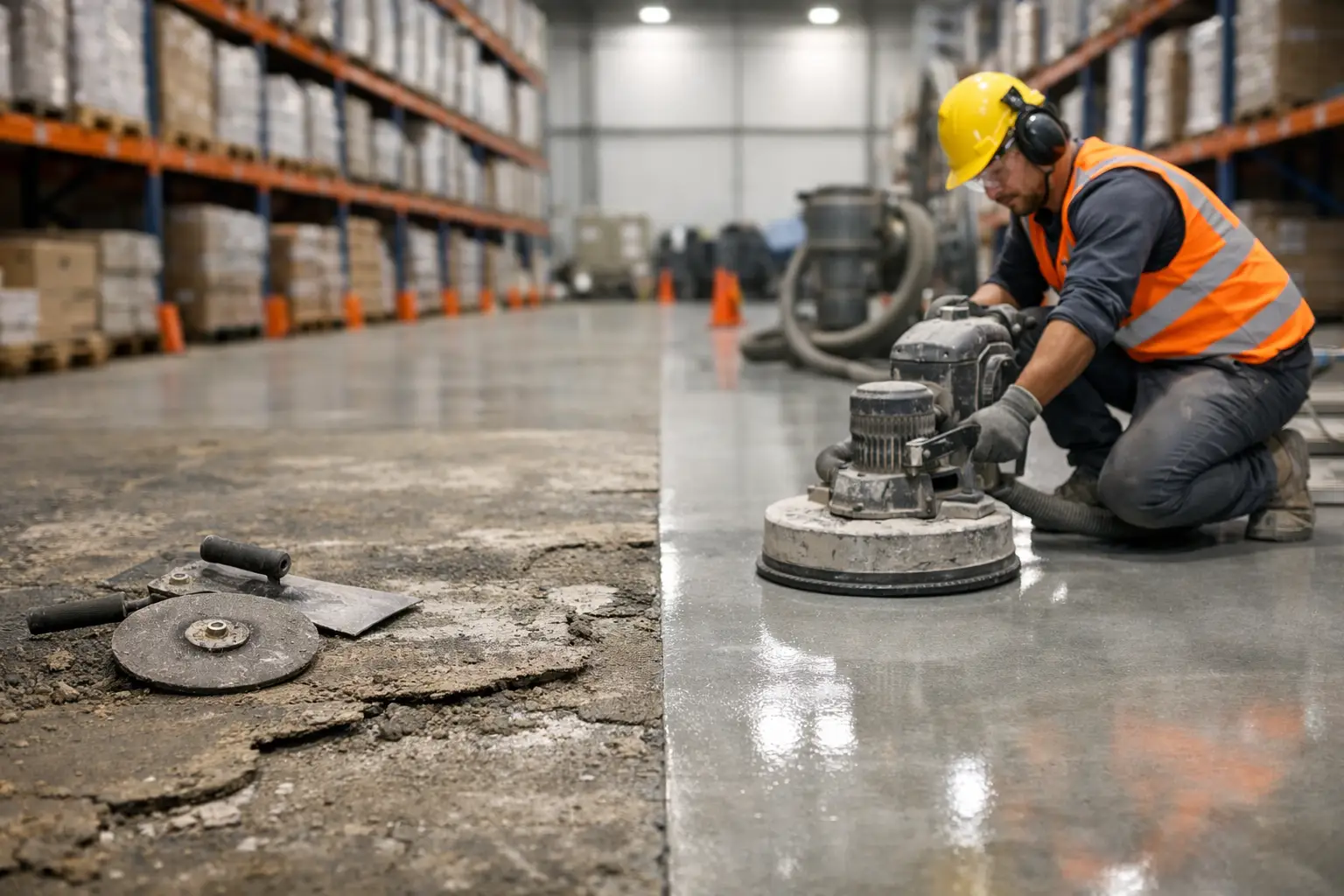
Mechanical diamond grinding removes weak surface material, opens the concrete profile and provides a clean substrate for the resin to grip. Shot blasting may be appropriate on larger industrial sites. Acid etching is not a substitute for proper mechanical preparation in a demanding warehouse environment, particularly where oil, old coatings or dense concrete are present.
Oil contamination needs special attention. Degreasing alone may not remove oil that has penetrated deep into the slab. A contractor should assess the affected area, remove contaminated concrete where necessary and use the right repair products before coating begins. Skipping this stage often leads to localised coating failure that spreads as traffic works at the edges.
Cracks and joints should also be treated with care. Static cracks can often be repaired before coating, while active expansion joints need to retain movement. Coating straight across a moving joint may look neat initially, but it is likely to crack as the building moves. A good flooring plan accounts for these details rather than hiding them.
Control moisture before it controls the project
Concrete is porous, and moisture vapour can travel through a slab long after it appears dry on the surface. This is a particular concern in Brisbane, the Gold Coast and the Sunshine Coast, where humidity, weather changes and ground moisture can affect coating performance.
Before installation, moisture testing should guide the system selection. Where readings are elevated, a suitable moisture control primer or vapour barrier may be required. This adds cost and time, but it is far less expensive than replacing a delaminated floor after the warehouse is back in operation.
Site conditions during installation matter too. Temperature, humidity and ventilation influence curing and finish quality. Resin products need to be mixed and applied within specified working times, with correct film thickness and recoat windows. These are controlled installation steps, not details to leave to chance.
Plan the upgrade around operations
Warehouse flooring work needs careful staging. Closing an entire facility may not be practical, so many projects are completed in sections. The staging plan should protect access to critical stock, dispatch areas and emergency routes while giving each coating section enough time to cure.
Before work starts, move stock, racking and equipment from the planned area wherever possible. Confirm vehicle access points, isolate dust-sensitive equipment and communicate the schedule to staff and contractors. Good preparation keeps the installation moving and reduces the risk of someone walking or driving onto a floor before it is ready.
Cure time should be treated as part of the project, not an inconvenience after application. A coating may be touch-dry relatively quickly but still need additional time before foot traffic, pallet jacks or forklifts can return. Pushing heavy traffic onto uncured resin can damage the finish and compromise long-term performance.
Protect the investment after handover
Once the new floor is in service, a simple maintenance routine helps it stay cleaner and perform as intended. Sweep abrasive grit regularly, clean spills promptly and use cleaning products suited to resin floors. Harsh, unsuitable chemicals and abrasive pads can dull the surface over time.
Pay attention to forklift wheels, especially if they carry embedded stones or show signs of deterioration. Fit protective pads beneath heavy stationary equipment and review high-wear areas during routine facility inspections. Small repairs made early are easier to manage than allowing damaged edges or impact points to worsen.
For warehouse operators, the best time to upgrade is before dusting concrete, failed paint and safety concerns begin affecting daily productivity. A tailored epoxy system, installed over properly prepared and moisture-managed concrete, gives the facility a floor that works as hard as the operation above it. Resin Masters can assess the slab, specify the right finish and deliver a professional result backed by a 7-year warranty.