Servicing : Gold CoastBrisbaneSunshine CoastToowoomba

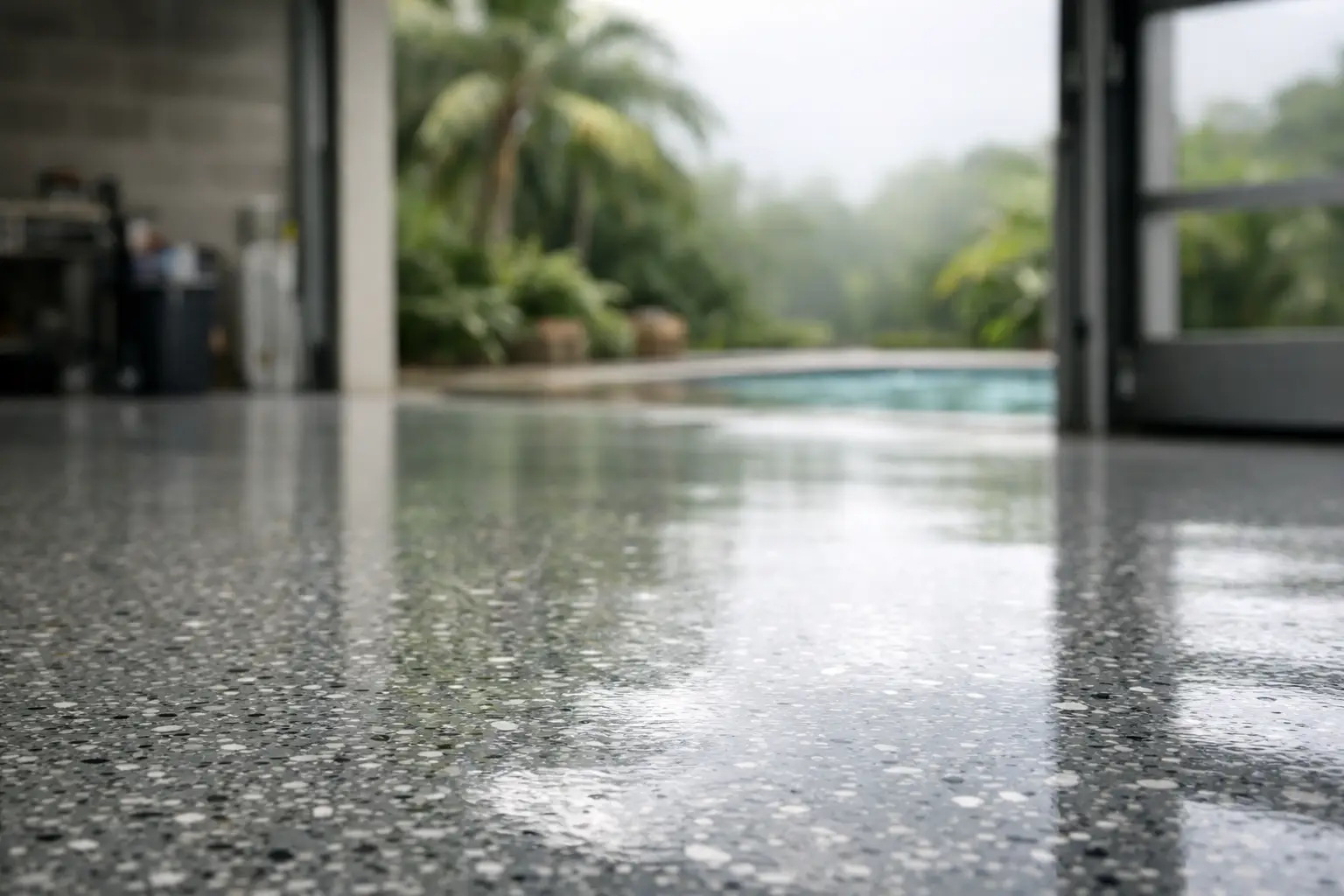
Humid Climate Epoxy Flooring That Lasts
A garage floor can look perfect on day one and start peeling six months later if the installer treats Queensland like a dry inland climate. That is the real issue with humid climate epoxy flooring. It is not just about choosing a coating that looks good in the brochure. It is about whether the slab, site conditions and installation method are suited to heat, moisture and daily wear.
In South East Queensland, that matters more than most people realise. Coastal air, summer storms, warm concrete and rising moisture vapour can all work against a resin floor if the system is not specified properly. For homeowners, that can mean tyre marks, lifting or patchy gloss. For commercial and industrial sites, it can mean downtime, cleaning problems and a floor that fails well before it should.
Why humid climate epoxy flooring is different
Epoxy is a high-performance flooring system, but it is not magic. It bonds to concrete, and concrete is a porous material that absorbs and releases moisture over time. In a humid climate, that moisture behaviour becomes a serious factor.
When the slab holds too much moisture, or when humidity is high during installation, the bond between epoxy and concrete can be compromised. That is where you see issues like bubbling, whitening, pinholes or delamination. Some floors fail quickly. Others look fine at first and start breaking down under hot tyres, forklifts or regular washing.
This is why a proper epoxy floor in Queensland is won or lost before the topcoat goes down. Surface preparation, moisture testing and product selection matter just as much as the final finish.
What usually causes epoxy flooring to fail in humid areas
Most failures come back to one of three things – poor preparation, poor moisture control or the wrong product for the site.
The first problem is surface prep. If the slab is not mechanically ground properly, the epoxy cannot achieve a strong bond. Acid etching and quick clean-and-coat methods are not enough for premium results, especially in older garages or commercial spaces where contaminants have soaked into the concrete.
The second issue is moisture. Concrete can release vapour long after it appears dry on the surface. In humid coastal conditions, that risk increases. If installers skip proper moisture testing or ignore borderline readings, the coating may trap that moisture and start to lift.
The third is specification. Not every epoxy system is suited to every environment. A decorative garage floor, a showroom and a warehouse all have different traffic, chemical exposure and slip-resistance requirements. A cheap one-size-fits-all system rarely performs well for long.
The role of moisture control in long-term performance
Moisture is the hidden factor that separates a floor that lasts from one that becomes a warranty headache. Many people assume that if concrete feels dry, it is ready to coat. That is not a safe assumption in Queensland conditions.
Professional installers test the slab, assess its history and decide whether a moisture-tolerant primer or vapour mitigation system is needed before the epoxy build starts. This is not an upsell. It is protection. Without that step, even a premium topcoat can fail because the problem is coming from underneath.
This is especially relevant in garages, warehouses and ground-floor commercial spaces where slabs are exposed to fluctuating temperatures and moisture movement. New concrete can also be risky if it has not cured properly or if the builder is trying to fast-track the handover.
Choosing the right epoxy system for Queensland conditions
The phrase humid climate epoxy flooring only makes sense if the coating system is tailored to the site. There is no single best finish for every floor.
For residential garages, many owners want a floor that looks sharp, resists hot tyre pickup and is easy to clean. That often points to a flake system with a hard-wearing topcoat, provided the slab is sound and the preparation is done properly. The visual result is clean and premium, but the real value is in the layered build and adhesion.
For commercial settings, appearance still matters, but hygiene, wear resistance and slip safety usually come first. Retail back-of-house areas, workshops and hospitality spaces need a finish that handles foot traffic, cleaning chemicals and day-to-day abrasion without becoming difficult to maintain.
Industrial sites are a different category again. Warehouse floors and plant areas may need heavy-duty resin systems that can withstand pallet jacks, forklifts and point loading. In some jobs, epoxy is ideal. In others, a different resin chemistry may be the better fit. Good advice starts with how the floor will actually be used, not with what is easiest to sell.
Slip resistance matters as much as appearance
In humid areas, floors are more likely to deal with moisture, condensation or regular washdowns. That makes slip resistance a practical issue, not just a compliance box. For commercial and industrial projects, Australian standards such as AS 4586 can come into play depending on the environment.
The trade-off is straightforward. A smoother floor is easier to mop and gives a sleeker appearance, while a more textured floor offers better grip but can hold more dirt if not maintained properly. The right balance depends on the space. A garage, a café prep area and a warehouse walkway should not all be finished the same way.
What good installation looks like
A quality epoxy floor is built in stages, and each stage affects the final result. First comes inspection of the concrete. Cracks, oil contamination, surface weakness and previous coatings all need to be identified early.
Then the slab should be mechanically prepared, usually by diamond grinding, to open the surface and create the profile needed for proper adhesion. Repairs are carried out where needed. Moisture levels are checked. If the slab requires a moisture-managing primer, that goes in before the decorative or protective layers.
Only after that should the coating build begin. Depending on the system, that may include primer coats, body coats, flake broadcast and protective topcoats. Timing matters. Ambient conditions matter. Recoat windows matter. In humid weather, rushing any of these steps is asking for trouble.
This is where experienced local installers have an advantage. They know how Queensland conditions behave across different seasons, and they plan around them instead of hoping for the best.
Is epoxy always the right choice in a humid climate?
Not always. Epoxy is an excellent flooring solution when the slab is suitable and the system is matched to the job, but there are cases where another resin option may perform better.
For example, some environments need faster cure times, higher UV stability or better flexibility under temperature swings. Outdoor-exposed areas are another point to consider, because standard epoxy can amber in direct sunlight. That does not make epoxy a bad product. It simply means proper specification matters.
For most enclosed garages, commercial interiors and industrial floors, epoxy remains a strong choice when installed professionally. The problem is rarely the material itself. The problem is using the wrong build, skipping moisture control or treating a premium coating like a quick cosmetic upgrade.
What property owners should ask before approving a quote
If you are comparing epoxy flooring quotes, price alone will not tell you much. A lower figure can reflect thinner coatings, less prep or no allowance for moisture management. Those shortcuts often stay hidden until the floor starts failing.
Ask how the slab will be prepared. Ask whether moisture testing is included. Ask what system is being specified for your site and why. If slip resistance matters, ask how that will be achieved. A professional contractor should be able to answer these questions clearly without hiding behind jargon.
You should also ask about warranty terms and what they actually cover. A meaningful guarantee backed by proper installation standards carries more weight than a vague promise of durability.
For clients across Brisbane, the Gold Coast and the Sunshine Coast, these questions are not just sensible – they are necessary. Humidity, coastal conditions and hot summers place real stress on resin floors, so the standard of installation needs to match the environment.
The real value of getting it right the first time
A professionally installed epoxy floor should do more than improve appearance. It should protect the slab, simplify cleaning, handle traffic and keep performing under local conditions. That is what makes it worth the investment.
Cheap coatings can look similar for a short time, which is why some buyers get caught out. The difference shows up later in adhesion, wear, stain resistance and how the floor copes with moisture and heat. A premium floor is not simply about a shinier finish. It is about long-term performance with fewer problems.
That is the standard Resin Masters works to because humid climate flooring leaves no room for guesswork. If the preparation is right, the moisture is managed and the system suits the site, epoxy can be one of the most durable and practical flooring options available. And if any of those pieces are missing, the floor will usually tell you soon enough.