Servicing : Gold CoastBrisbaneSunshine CoastToowoomba

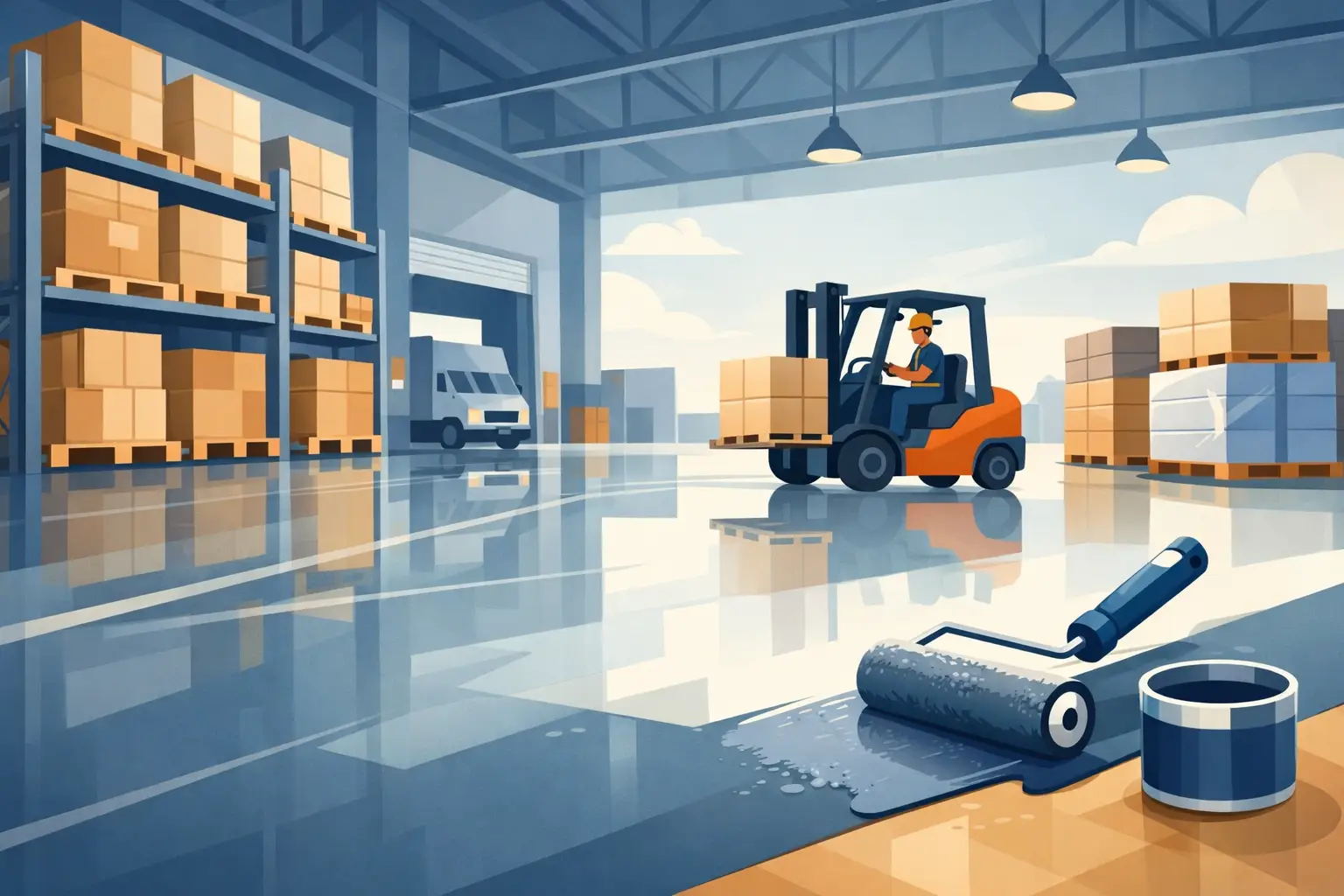
Warehouse Epoxy Flooring That Holds Up
Forklifts do not care about weak concrete. Pallet jacks, dropped loads, oil drips, tire marks, and constant foot traffic expose every flaw in a warehouse floor fast. That is why warehouse epoxy flooring is not just a cosmetic upgrade. It is a practical surface system designed to protect the slab, improve day-to-day cleaning, and keep the space working harder for longer.
For warehouse operators, facility managers, and property owners, the floor affects more than appearance. It influences maintenance costs, safety, dust control, cleanup time, and how well the building stands up to daily abuse. A properly installed epoxy floor can solve several of those problems at once, but only when the system is matched to the site and installed with the right prep.
Why warehouse epoxy flooring makes sense
Bare concrete looks tough, but in active warehouses it often becomes a source of recurring problems. It can dust, absorb spills, stain easily, crack under stress, and wear unevenly in traffic lanes. Once that starts, cleaning gets harder and the space can begin to look older than it is.
Warehouse epoxy flooring creates a sealed, non-porous wearing surface over concrete. That matters in real operating conditions. Instead of letting liquids soak in, the floor resists contamination at the surface. Instead of shedding dust as concrete wears down, it helps keep the environment cleaner. Instead of rough, patchy areas that make a facility look neglected, it provides a uniform finish built for heavy use.
The biggest benefit is long-term performance. A quality epoxy system improves abrasion resistance, supports easier maintenance, and helps protect the concrete underneath from avoidable damage. For facilities with forklifts, stock movement, washdowns, or spill risks, that protection can make a measurable difference over time.
What a warehouse floor needs to handle
Not every warehouse operates the same way, so the right flooring system depends on how the space is used. A storage facility with light traffic has different demands than a logistics center with constant forklift movement. A food or packaging warehouse may prioritize hygiene and cleanability, while a workshop-attached warehouse may need stronger chemical resistance.
That is where many flooring decisions go wrong. People hear “epoxy” and assume every system performs the same. It does not. Thickness, resin type, topcoat choice, slip resistance, and surface preparation all affect the result.
Traffic and load demands
If the floor sees repeated forklift traffic, point loading, and turning tires, it needs more than a thin coating. High-wear zones may call for a heavier-duty build designed to resist abrasion and surface breakdown. In lower-impact spaces, a simpler system may still perform well.
Spill and chemical exposure
Warehouses often deal with oils, cleaning chemicals, battery acids, lubricants, or packaged goods that leak in storage. Epoxy helps resist surface penetration, but the exact resistance level depends on the system selected. In harsher environments, a tailored resin solution gives better protection than a one-size-fits-all approach.
Cleanliness and dust control
Dust from deteriorating concrete is more than a housekeeping issue. It can affect stored goods, equipment, and overall presentation. A seamless epoxy finish reduces dusting and gives cleaning crews a smoother, more manageable surface to maintain.
Surface prep is where performance starts
The finish people see is only part of the job. The real performance of warehouse epoxy flooring starts below the surface, with concrete preparation and moisture control. This is the stage that separates a floor that lasts from one that starts peeling or failing early.
Concrete has to be properly assessed before any coating goes down. That includes checking for contamination, weak surface layers, existing coatings, cracks, and moisture issues. If the slab is not mechanically prepared to create the right profile, the epoxy cannot bond the way it should.
Moisture is another major factor. Warehouses built on slabs with vapor issues can experience coating failures if that moisture pressure is ignored. A professional installer looks at the slab condition first and recommends the right primer or moisture mitigation approach where needed. Skipping that step may save time at the start, but it usually costs more later.
This is one reason experienced installation matters so much. Good materials help, but materials alone do not fix poor prep.
The real advantages in daily operation
A warehouse floor should not create extra work. It should make the building easier to run.
That is where epoxy delivers value beyond durability alone. Because the surface is sealed and seamless, regular cleaning becomes more efficient. Dust, dirt, and spills stay on the surface instead of settling into porous concrete. That can reduce scrubbing time and improve overall presentation, which matters whether the facility is customer-facing or strictly operational.
Safety can improve too, though this depends on the right texture level. Smooth floors are easier to clean, but some environments need added slip resistance, especially where water or spills are common. The best result usually comes from balancing cleanability with practical traction for the specific use case.
There is also a professional image benefit. A clean, uniform floor makes the whole warehouse look better maintained and more organized. That may not be the first reason people invest in epoxy, but it often becomes one of the most noticeable outcomes.
When warehouse epoxy flooring is the right fit – and when it depends
Warehouse epoxy flooring is a strong choice for many industrial and commercial settings, but the right answer still depends on the building and its operations. If the slab is badly damaged, exposed to extreme thermal shock, or subject to conditions outside standard epoxy performance, another resin system or a more specialized build may be the better option.
That does not mean epoxy is limited. It means smart specification matters. In many warehouses, epoxy is ideal because it combines strength, stain resistance, chemical resistance, and straightforward maintenance in one system. But the details matter. A receiving area, a main traffic aisle, and a low-traffic storage section may not all need the same finish.
This is why a proper site assessment is worth it. A good contractor will ask how the floor is used, what equipment runs on it, what gets spilled, how often it is cleaned, and what condition the slab is already in. Those answers shape the system.
Installation timing and downtime
One of the first questions warehouse clients ask is how long the job will disrupt operations. That is a fair concern. Flooring work needs to fit the reality of inventory movement, staffing, and delivery schedules.
The answer depends on the floor size, slab condition, repair needs, and the coating system selected. Some projects can be staged in sections to reduce operational impact. Others make more sense during planned shutdown periods or slower production windows. What matters is having a realistic plan before work starts.
A professional installer should set clear expectations around prep, curing, return-to-service times, and any site requirements. Rushing the process can compromise adhesion and finish quality, so the goal is not simply fast installation. It is efficient delivery without cutting corners.
What to look for in a contractor
A warehouse floor is a performance surface, not a paint job. That means the contractor matters as much as the product.
Look for a specialist who understands concrete preparation, moisture management, and system selection for industrial use. Ask how they assess slabs, how they handle repairs, and what type of build they recommend for your traffic levels. If the conversation starts and ends with color choices, that is not enough.
It also helps to choose a contractor that stands behind the work. Confidence in workmanship, premium materials, and long-term durability should be backed by a clear guarantee. That signals a quality-first approach rather than a quick install designed to win on price alone.
For property owners and operators who want a floor built for real use, that level of care matters. Companies like Resin Masters focus on the details that affect long-term results – proper prep, tailored systems, and clean, durable finishes designed to perform under pressure.
Is the investment worth it?
For most active facilities, the better question is what failing concrete is already costing. Ongoing dust, harder cleanup, surface wear, stains, patch repairs, and a poor visual standard all add up. Those costs may not always sit on one line of a budget, but they affect operations all the same.
A professionally installed epoxy system helps shift the floor from a maintenance problem to a working asset. It gives the warehouse a tougher surface, cleaner finish, and more controlled environment. That payoff is strongest when the specification fits the space and the installation is done right from the start.
If your warehouse floor is already showing wear, absorbing spills, or creating more cleaning and repair work than it should, it may be time to stop treating the slab as “good enough.” The right floor system does more than cover concrete. It gives the entire facility a stronger foundation for the work ahead.
One Response