Servicing : Gold CoastBrisbaneSunshine CoastToowoomba

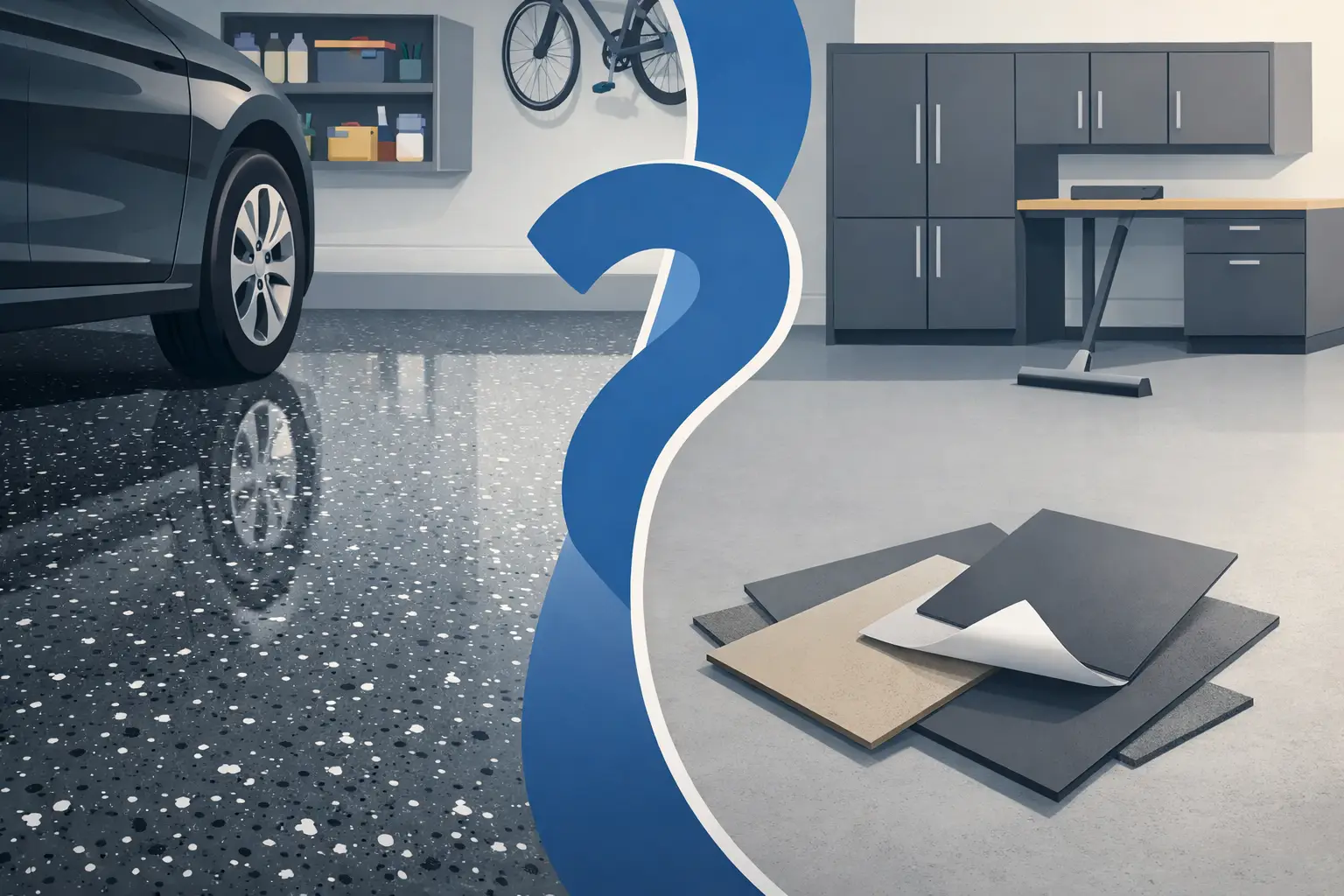
What Is Better Than Epoxy for Garage Floor?
A garage floor usually starts getting judged after the first hot-tire pickup, stain, or peeling patch. That is why so many property owners ask what is better than epoxy for garage floor performance before they commit to a coating system. The honest answer is not that epoxy is outdated – far from it. The right answer depends on how the garage is used, what condition the concrete is in, and whether you care most about impact resistance, UV stability, speed of installation, or long-term value.
What is better than epoxy for garage floor projects?
If you want the short version, polyaspartic and polyurea coatings are the most common alternatives that can outperform standard epoxy in specific conditions. Interlocking tiles and sealed concrete also come up often, but they solve a different problem. They are not direct replacements for a professionally installed resin system if your goal is a seamless, durable, easy-clean surface.
That distinction matters. People often compare products as if they all do the same job. They do not. A decorative tile floor, a basic concrete sealer, and a high-build resin coating each deliver a different level of protection and a different lifespan.
Why epoxy is still the benchmark
Before looking at alternatives, it helps to be clear about what epoxy already does well. A professionally installed epoxy floor creates a dense, bonded surface that improves stain resistance, chemical resistance, appearance, and cleanability. It can also carry decorative finishes such as flake or metallic effects while standing up to regular vehicle traffic.
Where epoxy earns its reputation is build quality. It forms a thicker film than many sealers, can hide minor imperfections better than bare concrete, and delivers strong adhesion when the slab is properly prepared. For many garages, especially residential spaces, epoxy remains a very strong option.
Its limitations are real, though. Standard epoxy can amber under UV exposure, takes longer to cure than faster-setting systems, and may not be the best fit where extreme temperature swings, rapid return-to-service, or heavy industrial wear are priorities. That is where alternatives can pull ahead.
Polyaspartic vs epoxy
If a customer asks what is better than epoxy for garage floor coating in terms of cure time and UV stability, polyaspartic is usually the first serious answer. Polyaspartic coatings cure much faster than epoxy, which means less downtime and a quicker return to vehicle traffic. They also offer excellent resistance to yellowing, which is a major benefit in garages with a lot of sun exposure.
Polyaspartic systems are also very hard-wearing. They handle abrasion well and can perform exceptionally in residential garages, workshops, and some commercial spaces. That said, faster cure times make installation less forgiving. Surface prep, moisture testing, and application timing need to be right. A rushed or poorly controlled install can create more problems than the product solves.
Cost is another factor. Polyaspartic systems are often priced above standard epoxy because the material and installation demands are higher. If budget is tight and UV exposure is limited, epoxy may still offer the better overall value.
Polyurea vs epoxy
Polyurea is another step up in performance for demanding environments. It is known for outstanding flexibility, strong adhesion, and excellent resistance to impact and thermal movement. In garages that see heavier use, workshop traffic, dropped tools, or more aggressive service conditions, polyurea can outperform standard epoxy.
Like polyaspartic, polyurea cures quickly. That is great for project speed but challenging during installation. It leaves less room for error, which is why contractor experience matters so much. The product is not a shortcut. In fact, high-performance coatings become more dependent on proper grinding, crack treatment, moisture control, and controlled application conditions.
For many homeowners, the practical choice is not epoxy or polyurea as isolated products. It is a system that uses different resin chemistries in layers – for example, one material for primer and repair work and another for topcoat performance. That is often where the best results come from.
Are garage floor tiles better than epoxy?
Tiles can be better than epoxy if your priority is a quick cosmetic change without coating the slab. Interlocking garage tiles are popular because they come in different colors, patterns, and layouts, and they can be installed without the same level of concrete preparation required for resin coatings.
But tiles have trade-offs. Dirt and liquids can work underneath them. Rolling loads, jack stands, and point impact can create wear issues depending on tile quality. They also do not give you the same seamless, hygienic surface as a properly installed resin floor. For homeowners who want the garage to function more like a showroom, tiles may appeal visually. For those who want easier cleaning and bonded protection, they are usually not the stronger long-term answer.
Is sealed concrete better than epoxy?
Usually, no – at least not if protection is the main goal. A penetrating sealer can reduce dusting and offer some stain resistance, but it will not give you the same film build, finish quality, or surface protection as epoxy, polyaspartic, or polyurea. It is the lightest-touch option.
That can make sense in low-demand spaces or when budget is the deciding factor. But in a working garage where oil drips, tire traffic, moisture, and regular cleaning are part of normal use, sealed concrete tends to fall short much sooner.
The real question is how you use the garage
A better coating is not just the one with the strongest spec sheet. It is the one that fits the space.
If you use your garage for standard vehicle storage, home projects, and general household use, a professionally installed epoxy or epoxy-based flake system often gives the right balance of durability, appearance, and cost. If the garage gets direct sun, faster turnaround matters, or you want a topcoat with stronger UV resistance, polyaspartic may be the better fit.
If the space functions more like a heavy-duty workshop, commercial service bay, or high-traffic operational area, polyurea or a hybrid resin system may be worth the extra investment. If appearance matters more than bonded protection, tiles can work. If you only want basic dust control, sealed concrete may be enough.
Surface prep matters more than the product name
This is the part many comparisons miss. The best coating in the world will fail on weak preparation. Peeling, bubbling, and delamination are often blamed on epoxy when the real problem was contamination in the concrete, moisture vapor, or inadequate mechanical grinding.
That is why professional installation matters. A quality system starts with assessing the slab, repairing cracks and damage where appropriate, testing for moisture issues, and mechanically preparing the surface to create a proper bond. Product choice matters, but workmanship decides whether the floor performs for years or starts failing early.
At Resin Masters, that is the difference we focus on most – matching the system to the job and building it on proper preparation rather than selling a one-size-fits-all answer.
What is better than epoxy for garage floor value?
If you define value as the lowest upfront price, epoxy may not always lose, and sometimes it wins comfortably. If you define value as fastest installation, polyaspartic and polyurea often come out ahead. If you define value as long-term appearance in sunlight, UV-stable topcoats make a strong case.
For most property owners, the best value comes from balancing three things: how long the floor needs to last, how hard the space is used, and how much downtime you can accept. That is why there is no universal winner.
A basic DIY kit is rarely better than a professionally installed epoxy floor. A premium polyaspartic system is not automatically better than epoxy if the garage barely sees sunlight and the slab needs significant repair work. And a high-end resin floor of any kind is only as good as the prep underneath it.
So, what should you choose?
If you want a reliable, attractive, high-performance garage floor, epoxy is still one of the strongest options available. If you need faster curing, better UV resistance, or added flexibility under demanding conditions, polyaspartic or polyurea may be better than epoxy for your garage floor.
The smartest way to decide is to stop asking which product sounds best in general and start asking which system fits your concrete, your traffic, and your expectations. A garage floor should not just look better for a few months. It should keep working long after the install crew leaves.