Servicing : Gold CoastBrisbaneSunshine CoastToowoomba

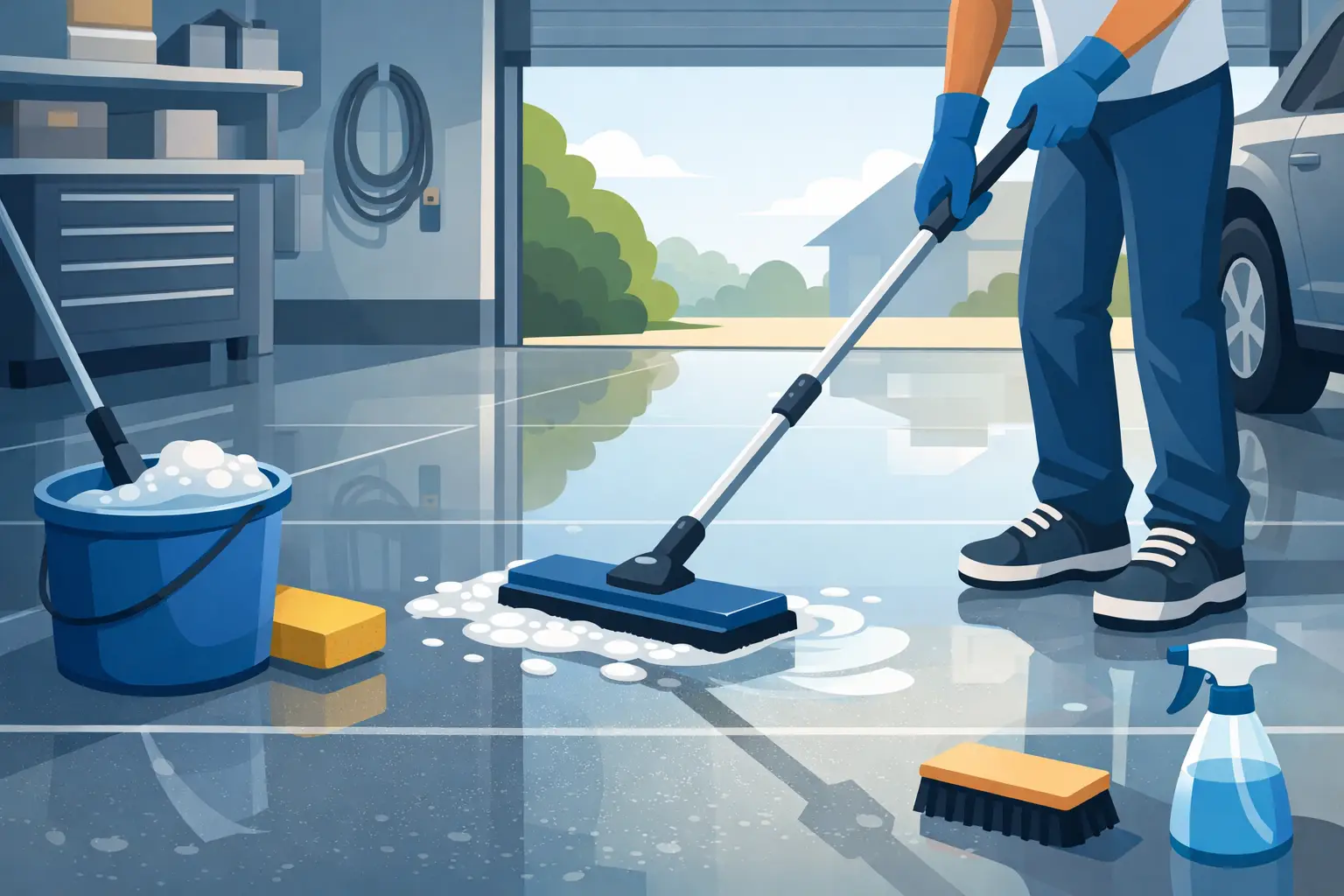
How to Clean Garage Epoxy Floors Right
That dusty film near the garage door, the tire marks under the car, and the oil drip you noticed too late – this is where many people start wondering how to clean garage epoxy floors without dulling the finish they paid for. The good news is that epoxy is designed to be low maintenance. The catch is that low maintenance does not mean no maintenance, and the wrong cleaner or cleaning method can shorten the floor’s best-looking years.
A properly installed epoxy floor should be easy to keep clean because the surface is sealed, non-porous, and far less likely to trap dirt than bare concrete. Most mess sits on top of the coating instead of soaking in. That gives you a real advantage, whether you are maintaining a home garage, a workshop bay, or a light commercial space. The goal is simple: remove grit before it scratches, clean spills before they stain, and use products that protect the coating instead of slowly wearing it down.
How to clean garage epoxy floors without damaging them
The safest approach is also the most consistent one. Start with dry cleaning, then move to gentle wet cleaning only when needed. Dirt, sand, and metal filings are more damaging than most people realize because they act like sandpaper under tires and foot traffic.
For regular upkeep, sweep with a soft-bristle broom or use a dust mop. A vacuum with a hard-floor setting also works well, especially along edges and control joints where debris tends to collect. If the floor only has light dust or everyday traffic marks, that may be enough.
When the floor needs a deeper clean, use warm water and a pH-neutral cleaner. Mop with a microfiber mop or a soft foam mop rather than anything abrasive. You want enough cleaning power to lift residue, not enough aggression to haze the gloss. Once the floor is clean, rinse with fresh water if there is any cleaner residue left behind. Then allow the surface to air dry or use a soft squeegee to speed things up.
That basic process handles most garage cleaning. It is simple, effective, and aligned with how epoxy floors are meant to perform.
What to use and what to avoid
The best cleaning products for epoxy are mild and non-acidic. A diluted pH-neutral floor cleaner is usually the safest choice for routine washing. In many residential garages, warm water with a small amount of gentle cleaner is enough to remove road grime, dust, and common marks.
What you should avoid matters just as much. Harsh degreasers, acidic cleaners, citrus-heavy solvents, and soap-based products that leave a film can all create problems over time. Some products strip shine. Others leave a residue that makes the floor look cloudy or feel slick. Steel wool, stiff scrub brushes, and abrasive pads are also a poor choice because they can scratch the coating.
If you are dealing with a professionally installed system, the finish may be highly chemical resistant, but chemical resistant does not mean indestructible. There is always a difference between occasional exposure and repeated cleaning with aggressive products. The more premium the floor system, the more sense it makes to protect that investment with the right maintenance routine.
The best tools for routine cleaning
Keep it practical. A soft broom, dust mop, microfiber mop, bucket, soft squeegee, and a vacuum designed for hard surfaces will cover nearly everything. For spot cleaning, use a soft cloth or non-abrasive sponge.
If you clean a larger garage or commercial bay, an auto-scrubber with the correct pad can be a smart option, but pad selection matters. Too aggressive, and you can wear the finish prematurely. In those spaces, cleaning efficiency should never come at the cost of surface protection.
How to deal with oil, tire marks, and stubborn stains
Most stains on epoxy are easier to remove than they are on raw concrete, but timing still matters. Wipe up oil, brake fluid, coolant, or chemical spills as soon as possible. The longer they sit, the more likely they are to leave discoloration, especially if the coating is older or already worn in high-traffic areas.
For fresh oil spots, use a soft cloth or paper towel first to absorb as much as possible. Then clean the area with warm water and a mild pH-neutral cleaner. Avoid the instinct to attack the stain with a harsh solvent. That can do more harm than the spill itself.
Tire marks are common, particularly in garages exposed to heat. In many cases, they can be reduced with gentle scrubbing using a microfiber mop or soft sponge and a mild cleaner. Some marks are not dirt in the usual sense. They are residue from hot tires transferring plasticizers onto the coating. That means full removal depends on the floor’s chemistry, age, and wear condition.
For tougher stains, let the cleaner sit briefly before wiping or mopping, but do not leave cleaning chemicals pooled on the floor for extended periods. If a mark does not come up with a mild method, test any stronger product in a small, low-visibility area first. This is especially important on decorative systems where gloss and color consistency matter.
When a stain points to a bigger issue
If stains are becoming harder to remove across the whole floor, the problem may not be your cleaning routine. It may be wear. A garage epoxy floor that was poorly prepared, installed over moisture issues, or simply pushed beyond its service life will not clean up the way a sound system does. Surface dullness, peeling, or persistent discoloration can signal that the coating needs professional attention rather than stronger chemicals.
How often should you clean an epoxy garage floor?
That depends on how the space is used. A residential garage used mainly for parking may only need sweeping once a week and mopping once or twice a month. A garage that doubles as a workshop, home gym, or storage area usually needs more frequent cleaning because sawdust, metal debris, dirt, and spills build up faster.
For commercial and industrial settings, the standard is higher. Heavy traffic, forklift movement, packaging dust, and stricter hygiene requirements often call for scheduled daily or weekly maintenance. In these environments, consistency protects both the appearance of the floor and the operational value of the coating.
The simplest rule is this: do not let grit sit. Regular light cleaning is better than infrequent aggressive cleaning. It protects the finish, keeps the space looking sharp, and makes deep cleaning easier when you need it.
Preventive care makes cleaning easier
The cleanest epoxy floors are usually the ones that are protected before dirt becomes a problem. Floor mats at entry points help reduce sand and grit. Cardboard should not be your long-term solution under vehicles or work benches because it traps moisture and debris. Use proper mats where needed, especially in areas prone to drips or repetitive tasks.
It also helps to place soft pads under heavy equipment or storage items that are moved occasionally. While epoxy is built for strength, dragging hard-edged objects across the surface can still leave scratches. In a garage used for tools, bikes, and machinery, small habits make a noticeable difference.
A professionally installed floor with strong surface preparation and moisture control will always be easier to maintain than a coating applied without the right groundwork. That is one reason quality installation matters so much. At Resin Masters, the focus is not just on how the floor looks on day one, but how it performs after years of traffic, cleaning, and real use.
Common mistakes people make when cleaning epoxy floors
The most common mistake is using cleaners that are too strong because the floor looks tough. Epoxy is durable, but durability is not a reason to treat it like bare industrial concrete. Another mistake is letting abrasive dirt build up and then grinding it around with traffic. That causes avoidable wear.
Too much water can also be a problem in some settings, especially if the floor has damaged edges, failed joints, or coating issues that allow moisture to get underneath. If the floor is intact, occasional wet cleaning is fine. If it is already compromised, more water may expose the problem faster.
People also tend to over-scrub isolated stains. Usually, patience and the right cleaner work better than force. If a mark will not move, there is a reason. It may be transfer, etching, coating wear, or a stain that has bonded to a damaged section of the floor.
A clean epoxy floor should not require complicated maintenance. It should respond well to steady, sensible care. Sweep often, wash gently, deal with spills early, and avoid harsh products unless you are certain they are compatible with the coating. That approach keeps the floor easier to clean next month, next year, and well beyond.
2 Responses