Servicing : Gold CoastBrisbaneSunshine CoastToowoomba

Menu
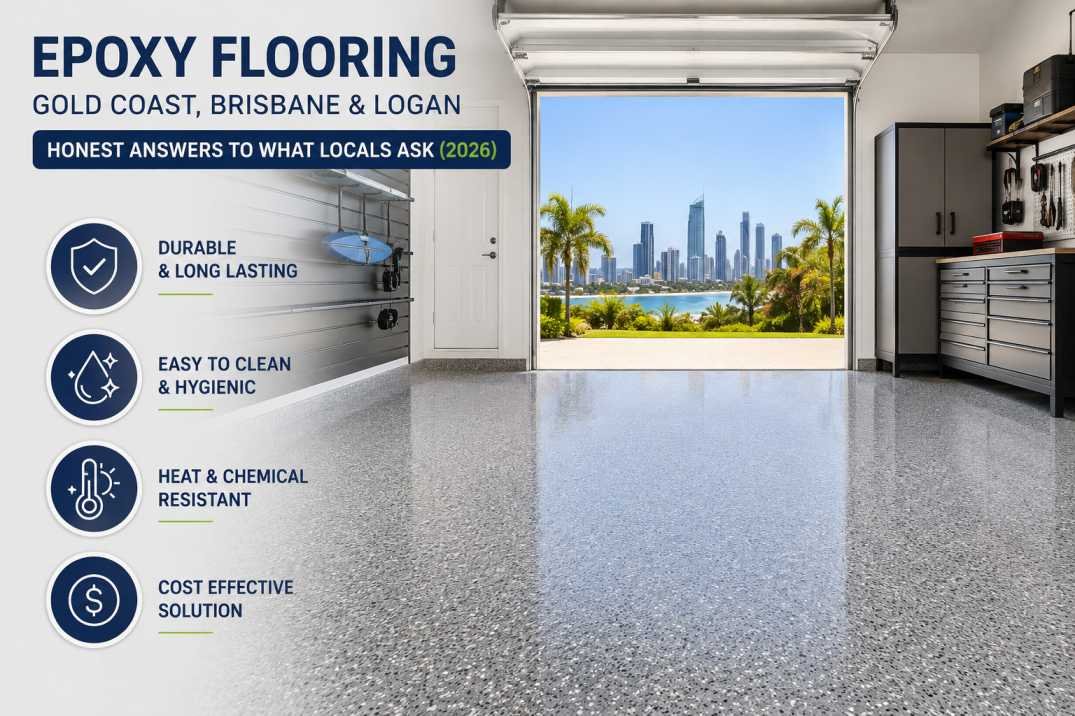
Epoxy Flooring Gold Coast, Brisbane & Logan: Honest Answers to What Locals Ask (2026)
October 15, 2026
Team
Prices come from Resin Masters’ own published 2026 cost pages (Gold Coast, Brisbane, Logan). Those pages don’t fully agree with each other: flake is 65–90/m² on the Gold Coast and Logan pages but 75–100/m² on the Brisbane page. Confirm the numbers with the client before publishing. Search volumes are SE Ranking AU data, October 2026.
A professionally installed epoxy garage floor in South East Queensland usually costs 50–100 per m² in 2026. That’s roughly 900–1,800 for a single garage. Whether it lasts 15 years or starts peeling in two comes down to one thing more than any other: what happens to the concrete before the first coat goes on.
If you’re searching “epoxy flooring near me” from the Gold Coast, Brisbane or Logan, you’ll find dozens of installers with five-star ratings and similar-looking photos. This guide answers the questions locals actually type into Google before they book:
- what it really costs
- why some floors fail in Queensland conditions
- how the three areas differ
- which warning signs mean you should walk away from a quote
We’re Resin Masters, an epoxy flooring company based in Pimpama, so we’ve said where we fit near the end. Everything before that is advice you can use whoever you hire.
Before you book: 6 things that decide whether an epoxy floor lasts
Most epoxy floors that fail in Queensland don’t fail because of the product. They fail because a step was skipped. Ask every installer about these six things before you accept a quote.
- Moisture testing. Concrete slabs release moisture vapour from below, and more of it in humid weather. Coat over a damp slab and the vapour gets trapped, causing bubbles and peeling. A good installer tests the slab with a meter before priming. If the reading is high, they use a moisture-tolerant primer or a vapour barrier.
- Diamond grinding, not just a wash. Epoxy needs a rough, open surface to grip. Diamond grinding (or shot blasting) removes old sealer, paint and oil and opens up the concrete. Acid etching or a pressure wash alone is the most common shortcut behind cheap quotes.
- The right product. Professional systems use 100% solids epoxy. Hardware-store kits are usually water-based and much thinner, which is why they tend to last years rather than decades.
- A UV-stable topcoat. Standard epoxy yellows in direct sun. For a garage that sits open to the afternoon sun, a patio or an outdoor area, ask for a UV-stable polyaspartic or polyurethane topcoat.
- A written warranty that says what it covers. “Lifetime” means little if the fine print excludes lifting and peeling. Look for a set number of years, in writing, covering workmanship.
- An itemised written quote. It should list preparation, crack repair, number of coats, the topcoat and GST. If grinding or moisture testing isn’t on the quote, assume it isn’t included.
Epoxy flooring on the Gold Coast
On the Gold Coast, humidity and sun matter most. Coastal humidity means more moisture in slabs, especially in the newer northern growth areas like Coomera, Helensvale, Pimpama and Ormeau. That makes a moisture test non-negotiable. Strong UV and garages left open toward the beach breeze make a UV-stable topcoat worth paying for.
The most common jobs here are:
- Residential garages: flake systems are the popular choice because they hide dust and tyre marks.
- Living areas and alfresco spaces: metallic and solid-colour finishes are increasingly used inside homes.
- Commercial kitchens and shopfronts: these need slip-resistant, food-safe systems.
Typical 2026 prices: flake 65–90/m², solid colour 50–75/m², and around 1,200–1,800 for a single flake garage. See our Gold Coast epoxy flooring cost guide for the full breakdown, or our Gold Coast garage floor epoxy page.
When checking “best epoxy flooring Gold Coast” reviews, look for photos of floors that are a year or more old, not just on handover day. Fresh epoxy always looks good. How it looks after a humid summer is the real test.
Epoxy flooring in Brisbane
Brisbane jobs vary more than anywhere else in the region. Northside and southside homes range from older slabs with decades of oil, paint and sealer to brand-new builds. Older garages often need heavier grinding and crack repair, which is where quotes differ the most.
Two Brisbane searches deserve a straight answer:
- “Outdoor epoxy flooring Brisbane.” Plain epoxy isn’t built for full sun. It yellows and chalks over time. For patios, pool surrounds and covered outdoor areas, the system needs a UV-stable topcoat, and the surface should be slip-resistant when wet. See patio epoxy flooring in Brisbane.
- “Cheap epoxy flooring Brisbane.” A professional quote well under about $50/m² for a garage usually means grinding, moisture testing or the topcoat has been left out. It’s cheaper on the day and more expensive when you pay to strip and redo it.
Typical 2026 prices: solid colour 60–80/m², flake 75–100/m², and around 2,700–3,600 for a double flake garage. Most installers set a minimum job charge of 1,200–1,500. See our Brisbane epoxy flooring cost guide and Brisbane garage floor epoxy page.
Epoxy flooring in Logan
In Logan, the big question is new slabs. Estates in Yarrabilba, Park Ridge, Greenbank, Jimboomba and Logan Reserve mean many garages are only months old. New concrete keeps drying out for weeks after it’s poured. The usual industry guidance is to wait at least 28 days before coating, and to test moisture even then.
Established suburbs such as Springwood, Shailer Park, Browns Plains, Loganholme, Daisy Hill and Beenleigh have the opposite problem: older slabs with oil stains, cracks and old paint that need proper grinding first.
Logan homeowners also ask about downtime. As a guide, most garage floors are walkable within 24 hours and ready for cars within 48–72 hours. Full chemical cure takes about 7 days, so hold off on hot tyres, heavy toolboxes and harsh chemicals until then.
Typical 2026 prices: solid colour 50–75/m², flake 65–90/m², and a polyaspartic full system 75–110/m². A single flake garage runs about 1,170–1,620. See our Logan garage floor epoxy page.
How much does epoxy flooring cost in 2026?
Expect 50–100/m² for a professional garage floor and 90–165/m² for metallic finishes. Prices include grinding, materials, labour and GST.
System | Gold Coast ($/m²) | Brisbane ($/m²) | Logan ($/m²) |
Solid colour | 50–75 | 60–80 | 50–75 |
Flake (most popular for garages) | 65–90 | 75–100 | 65–90 |
Metallic / marble effect | 90–150 | 90–150 | 90–165 |
DIY kit, double garage (total) | 400–900 | 300–800 | — |
What pushes a quote up:
- Floor condition: cracks, oil contamination and old coatings mean more grinding and repair.
- Moisture: a vapour barrier or moisture-tolerant primer adds to the per-m² rate.
- Topcoat: UV-stable polyaspartic costs more than standard polyurethane.
- Size: small jobs cost more per m², and most installers have a minimum charge.
- Access: steps, drains and tight spaces take longer.
What about Bunnings epoxy kits? “Epoxy flooring Bunnings” is one of the most common related searches in all three areas. A DIY kit can be fine for a low-use shed. Most kits are water-based and applied over a floor that hasn’t been diamond-ground, so expect 3–7 years rather than the 10–20 years a professional system is built for.
Red flags, and how to choose an installer
The fastest way to compare installers is to ask the same questions of each and compare the answers, not just the price.
Walk away if you hear:
- “We don’t need to grind, we’ll acid wash it.”
- A price over the phone without seeing the floor or photos and measurements.
- No mention of moisture, or “Queensland slabs are always fine.”
- A warranty that’s verbal only, or “lifetime” with no written terms.
- Pressure to book today for a discount.
Ask every installer:
- How will you prepare the slab: grinding, shot blasting or acid etching?
- Do you test for moisture, and what happens if the reading is high?
- Which product do you use, and is the topcoat UV-stable?
- How many coats, and how thick is the finished system?
- What does the warranty cover, for how long, and is it in writing?
- Can I see a floor you did at least a year ago, and speak to that customer?
- Are you licensed with the QBCC? In Queensland, building work over $3,300 generally requires a licensed contractor, and you can check any licence on the QBCC online register.
Get two or three written quotes. Compare them line by line, not just on total price.
Where Resin Masters fits
Resin Masters is based in Pimpama on the northern Gold Coast and installs epoxy floors across the Gold Coast, Brisbane and Logan. As of October 2026, we hold a 5.0 rating from 46 Google reviews. We’d rather you judge us against the checklist above than take our word for it. Here is how each job runs:
- Free on-site assessment: we inspect the slab, test moisture vapour emission and show colour samples.
- Diamond grinding: industrial grinding profiles the concrete and removes old paint, sealer and oil.
- Crack repair and primer: cracks are repaired, and the primer is matched to the slab’s moisture reading.
- Base coat: a 100% solids epoxy base in solid colour, flake or metallic.
- Topcoat: a UV-resistant polyaspartic topcoat seals the floor.
- Handover: written aftercare instructions and a 7-year written workmanship warranty.
Want a price for your floor? Request a free assessment, and we’ll give you an itemised written quote you can compare against anyone else’s.
Also Read:- Epoxy Flooring for Home Kitchens: Heat, Hygiene and Cost
Frequently asked questions
How much does it cost to epoxy a garage floor in South East Queensland?
Most professional garage floors cost 50–100 per m² in 2026. That works out to about 900–1,800 for a single garage and 2,000–3,600 for a double, depending on the system and the condition of the slab.
How long does epoxy flooring last?
A professionally installed system on a properly ground and moisture-tested slab is built to last 10–20 years in a home garage. DIY water-based kits typically last 3–7 years.
Is a Bunnings epoxy kit worth it?
For a low-traffic shed or workshop, it can be. For a garage you park in every day, the lack of diamond grinding and the thinner product usually mean peeling under hot tyres within a few years.
Can epoxy be used outdoors in Brisbane or on the Gold Coast?
Yes, with the right system. Standard epoxy yellows in direct sun, so outdoor areas need a UV-stable polyaspartic or polyurethane topcoat and a slip-resistant finish.
How soon can I park on a new epoxy floor?
Usually 48–72 hours after the final coat, and you can walk on it within about 24 hours. Full chemical cure takes around 7 days. Polyaspartic systems can be faster.
Can you epoxy a brand-new slab?
Wait at least 28 days after the concrete is poured. Even then, the installer should test moisture before coating, especially in new estates in Logan and on the northern Gold Coast.
Is epoxy only for garages?
No. Residential epoxy is increasingly used in living areas (often metallic finishes), laundries, alfresco areas and home gyms. Commercially, it’s used in kitchens, shops, salons and warehouses. See our metallic epoxy flooring page for indoor examples.
How do I clean an epoxy floor?
Sweep or dust-mop regularly, then mop with warm water and a pH-neutral cleaner. Avoid citrus or vinegar cleaners and abrasive pads, which can dull the topcoat over time.
How do I find the best epoxy flooring installer near me?
Read reviews on Google, but also ask for photos of floors that are a year or more old. Then use the checklist above to compare two or three written quotes line by line.