Servicing : Gold CoastBrisbaneSunshine CoastToowoomba

Is Flake Epoxy Slippery When Wet? The Facts
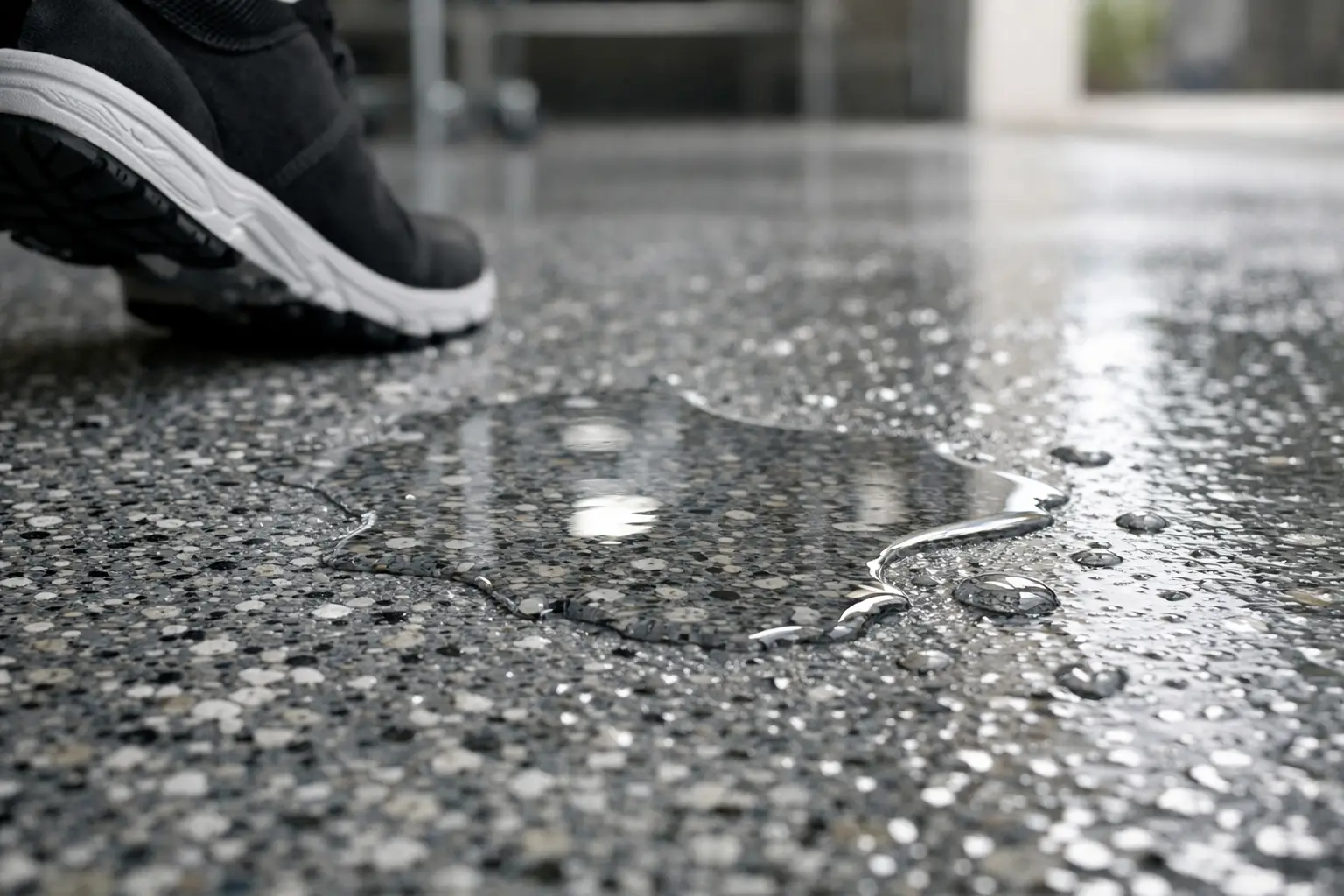
A wet garage floor after a summer storm is where flooring choices become real. So, is flake epoxy slippery when wet? It can be if it is finished too smooth, but a professionally specified flake epoxy system can be designed with effective slip resistance for its intended use.
The key point is that flake epoxy is not one fixed surface. Its wet grip depends on the coating build, decorative flake profile, clear topcoat, added anti-slip aggregate and, most importantly, how the system is installed. A high-gloss finish may look exceptional, but appearance should never be allowed to override safety in an entry, garage, workshop or commercial area exposed to water.
At Resin Masters, slip resistance is considered during system selection, not treated as an afterthought once the floor has been installed.
What makes flake epoxy slippery or safe?
Flake epoxy flooring combines a resin base coat with coloured vinyl flakes and a protective clear topcoat. The flakes create visual depth and help disguise dust, tyre marks and minor wear. They also add some surface variation, particularly in full-flake systems, but flakes alone do not guarantee safe footing when water is present.
The final topcoat has a major influence on how the floor feels underfoot. A smooth, glossy clear coat can reduce surface friction when water, detergent, oil or fine dust sits on top. This does not mean the coating has failed. It means the finish was specified for appearance and easy cleaning rather than a higher-slip-risk environment.
A properly selected anti-slip additive changes that surface profile. Fine polymer beads, aluminium oxide or other approved aggregates can be incorporated into the topcoat to provide more grip without turning a premium flake floor into a rough, difficult-to-clean surface. The right choice depends on where the floor is used and how it needs to perform.
Is flake epoxy slippery when wet in a garage?
For most residential garages, a flake epoxy floor with a correctly applied slip-resistant clear coat provides practical day-to-day traction. It is a strong choice for vehicles, foot traffic, tool storage and the occasional wet tyre from rain. It is also far easier to clean than bare concrete, which can hold dust and contaminants that make it unexpectedly slick.
That said, no hard flooring should be treated as non-slip in every condition. Water pooled near the garage door, a wet pair of thongs, oil leaks or a layer of tyre dressing can create a slip hazard on any sealed surface. The sensible aim is not to promise impossible grip. It is to install a floor with a suitable texture, then manage water and contaminants as part of normal maintenance.
Queensland garages face a particular mix of wet-season rain, humid air and vehicles tracking moisture inside. Good floor preparation and moisture control are essential for coating adhesion and long-term durability. They also support a cleaner finish that performs as intended rather than developing defects that trap water or dirt.
Gloss level and traction are a trade-off
A high-gloss flake floor offers a sharp, premium look and reflects more light around a garage or showroom. However, the smoother the topcoat, the more carefully its wet-use suitability must be assessed. A satin or lightly textured finish can offer a more forgiving surface while still delivering the seamless, polished appearance homeowners expect.
The best result is usually balance. A garage used mainly for cars and storage may suit a subtle anti-slip profile. A workshop where people regularly walk in with wet boots may need more texture. The surface should match the real use of the room, not simply the best-looking sample board.
Commercial and industrial floors need a different assessment
Commercial kitchens, loading areas, workshops, warehouse walkways and public-facing entrances may require a higher level of slip resistance than a domestic garage. Footwear, cleaning routines, pedestrian volume, ramps, spill risk and whether the area is exposed to weather all matter.
For these spaces, Resin Masters assesses the environment before recommending a flake or resin system. An office showroom and a wash-down area should not receive the same finishing specification. Where relevant, the floor system should be selected and tested with Australian slip-resistance requirements, including AS 4586, in mind.
This is particularly important where a facility manager has a duty to provide a safe workplace or where a builder needs a coating solution suited to the project specification. A decorative flake floor can still be a practical commercial surface, but it must be designed around use conditions, not only colour and finish.
How professionals add slip resistance without sacrificing the finish
A quality installer can control traction at several stages of the coating system. Surface preparation comes first. Concrete is mechanically prepared to create the right profile for bonding, while moisture is tested and managed before resin is applied. This prevents avoidable coating issues and provides the stable base a durable flooring system needs.
The flake application then creates the desired colour blend and texture. In a full-flake system, the floor is broadcast to refusal, scraped back and sealed beneath protective clear coats. The installer can select a topcoat and anti-slip additive appropriate to the space, applying it evenly so the floor feels consistent from wall to wall.
Too little aggregate may not provide enough grip. Too much can leave a harsh texture that catches mop fibres, holds grime and makes cleaning more difficult. Uneven application can create patches that look dull or feel abrasive. Precision matters because the floor must perform as one continuous surface.
Choosing the right finish for your space
Before choosing a flake blend or gloss level, consider how water reaches the area and who walks across it. A family garage may see rainwater, muddy sports shoes and the occasional wash-down. A coastal property may have more humidity and sand tracked in from outside. A warehouse may have forklifts, safety boots and cleaning equipment operating across the same floor.
Discuss these details before installation, including whether the floor has a slope, drain, roller door exposure or regular contact with oils and chemicals. A drainage issue cannot be solved by an anti-slip coating alone. If water persistently pools, improving drainage or correcting the slab profile may be necessary for a safer, longer-lasting result.
It also helps to be realistic about footwear. Smooth-soled dress shoes, wet thongs and heavily worn work boots all perform differently. Slip resistance is a relationship between the floor, the contaminant and the shoe, rather than a single property that applies equally in every circumstance.
Keeping a flake epoxy floor safer over time
The same characteristics that make flake epoxy appealing – its seamless finish and resistance to staining – also make it straightforward to maintain. Sweep away grit, dirt and leaves regularly, especially near doors. Fine debris can act like tiny rollers underfoot and may dull the clear coat over time.
Clean spills promptly using a suitable pH-neutral cleaner and avoid leaving soap, degreaser or oily residue on the floor. After washing, rinse where required and allow the surface to dry before regular foot traffic returns. Avoid aggressive cleaners or unapproved coatings that can alter the topcoat’s texture and appearance.
If the floor’s use changes, reassess it. A garage converted into a busy workshop, for example, may need a different maintenance plan or an additional slip-resistant topcoat. Addressing this early protects the floor, the people using it and the value of the original installation.
A flake epoxy floor does not need to be a slippery compromise. With rigorous concrete preparation, the right topcoat and a texture matched to the conditions, it can deliver the clean, durable finish Queensland properties need without overlooking everyday safety. The best time to make that decision is before the first coat goes down.