Servicing : Gold CoastBrisbaneSunshine CoastToowoomba

Menu
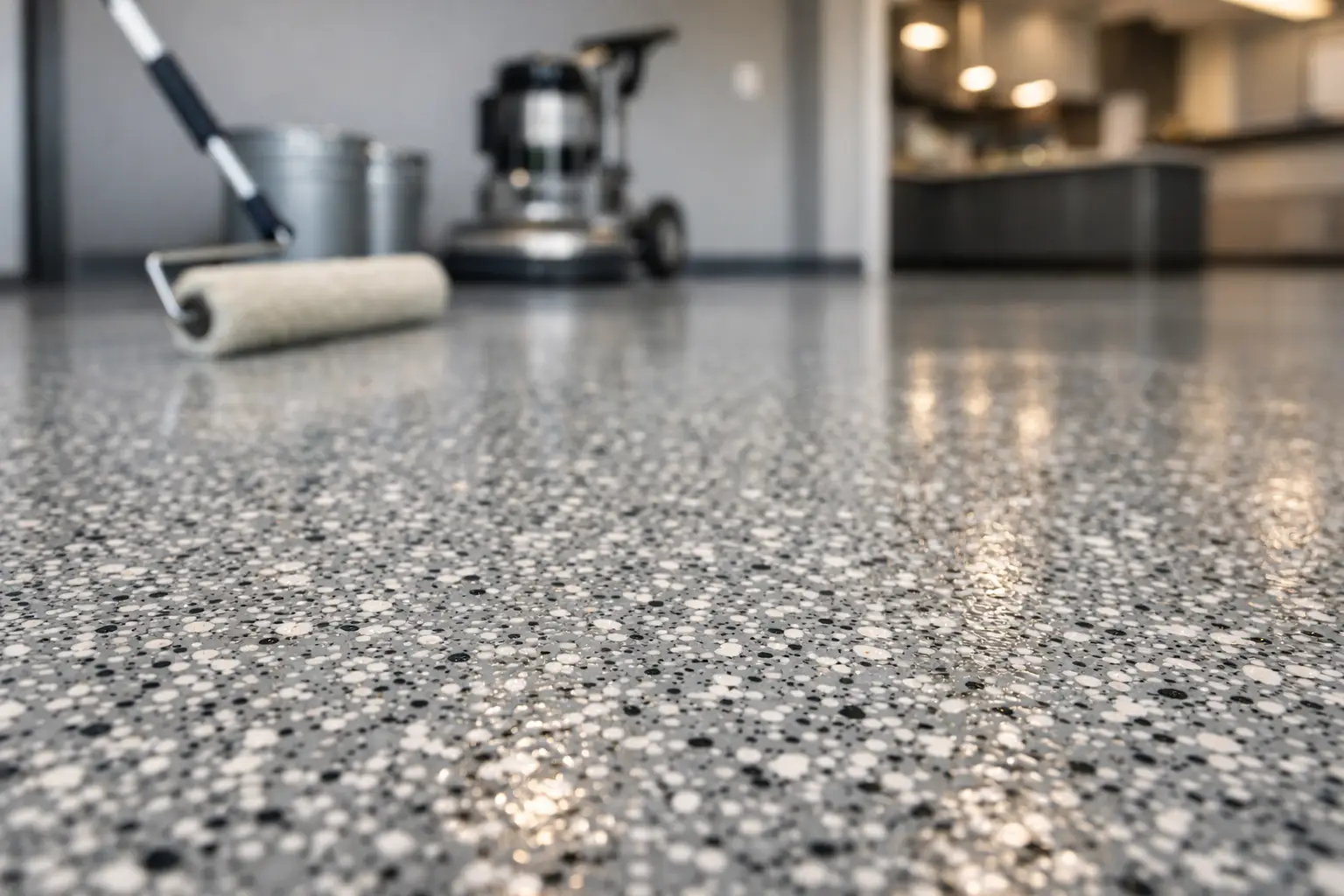
Seamless Flake Epoxy Flooring Benefits
July 25, 2026
A Queensland garage floor can cop a hard life. Hot tyres, sand, rainwater, oil drips, muddy boots and heavy storage quickly expose the limits of bare concrete or thin paint. The seamless flake epoxy flooring benefits that matter most are practical: a hard-wearing, easy-clean surface that looks finished, handles daily use and helps protect the concrete underneath.
For garages, workshops, retail spaces and industrial facilities, a professionally installed flake system offers far more than a visual upgrade. Its performance depends on the condition of the slab, correct moisture management and disciplined preparation before the first coat goes down.
Why seamless flake epoxy flooring benefits busy properties
A flake epoxy floor is built in layers. After the concrete is mechanically prepared, a quality resin base coat is applied and decorative vinyl flakes are broadcast across the surface. The system is then scraped, cleaned and sealed with a durable topcoat. The result is a continuous resin finish with texture, colour variation and a much more polished appearance than unfinished concrete.
The absence of grout lines, joins and absorbent pores is a major advantage. Dirt, dust and spills have fewer places to settle, so routine cleaning is straightforward. In a home garage, that may mean a sweep and occasional mop. In a commercial or warehouse setting, it can reduce the effort required to maintain a clean, presentable floor between deeper cleans.
Flake finishes also disguise everyday marks better than a plain, single-colour coating. The layered pattern can soften the appearance of tyre marks, dust and minor scuffs, which is particularly useful in high-traffic areas. That does not make the floor maintenance-free, but it does help it retain a tidy appearance with realistic upkeep.
Strong protection for concrete floors
Concrete is tough, but it is not invincible. It can dust, stain, absorb contaminants and gradually deteriorate under repeated vehicle traffic, dropped tools or chemical exposure. A professionally specified epoxy system creates a protective barrier over the slab, helping reduce wear caused by oils, fuels, household chemicals and general workshop spills.
For Queensland garages, resistance to hot-tyre pickup is a key consideration. Low-quality coatings and poorly prepared floors can soften or lose adhesion under heat and pressure. A properly prepared slab, compatible primer and premium topcoat give the coating the best chance of performing through hot summers and regular vehicle use.
Industrial sites may need more than a standard decorative system. Forklift traffic, pallet movement, chemical exposure and point loads can require a thicker build, a different resin chemistry or a specialised topcoat. The right floor is not simply the toughest product on paper. It is the system matched to the actual use of the space.
A cleaner finish for garages and workplaces
Bare concrete often creates a persistent dust problem. As its surface wears, fine particles can transfer to vehicles, stock, machinery and stored belongings. A resin coating seals the surface, making it easier to keep garages, workshops and light commercial areas cleaner.
This has a practical benefit for businesses where presentation influences customer confidence. A clean floor improves the feel of a showroom, reception area, workshop or service bay without requiring the daily attention of tiled surfaces with grout lines. In food-adjacent, healthcare-adjacent or high-cleanliness environments, the coating specification must still be assessed for the particular hygiene and chemical requirements of the site.
Safety, texture and slip resistance
A flake broadcast creates natural texture, which can improve underfoot grip compared with a smooth gloss resin finish. However, no flooring should be described as slip-proof. Slip resistance varies with the chosen flakes, topcoat, surface profile, footwear, contaminants and whether the floor is wet.
This distinction matters in commercial buildings, shared access areas and workplaces. Where compliance is required, the floor should be designed and tested against the relevant Australian slip-resistance requirements, including AS 4586 where applicable. A coating contractor should discuss how the area will be used, whether it will be exposed to water or oils, and what cleaning methods will be used before recommending a finish.
More texture can improve grip, but it can also make cleaning slightly more demanding. For a private garage, a moderate texture often provides a sensible balance between traction and easy maintenance. For wet work zones or external transition areas, the balance may need to shift towards a more aggressive profile.
The visual advantage without a fragile finish
Flake epoxy is a strong choice when the floor needs to look intentional rather than merely covered. Flakes are available in a wide range of colour blends, from understated grey and charcoal combinations to warmer tones that complement brick, render or timber cabinetry. The variation in the finish gives the floor depth while helping hide minor day-to-day debris.
For homeowners, this can turn a garage into a usable extension of the home – a clean storage zone, hobby space or organised workshop. For builders and property managers, it delivers a consistent finish that can lift the perceived quality of a completed space.
There are limits. A flake floor is not the right aesthetic for every project. If the goal is a high-gloss, flowing statement finish, a metallic epoxy system may be a better fit. If the area receives direct UV exposure, the topcoat must be selected carefully because some resin products can change colour over time. A professional recommendation should account for sunlight, traffic, moisture and the required appearance rather than relying on a showroom sample alone.
Preparation determines how well the floor lasts
The coating is only as reliable as the substrate beneath it. This is where cheap installations commonly fall short. Applying resin over a dusty, contaminated or inadequately profiled slab can lead to peeling, bubbling and premature wear, even if the coating itself is high quality.
Professional installation starts with an assessment of the concrete. Existing coatings, adhesives, oil contamination, cracks, weak surface layers and moisture all need attention. Mechanical grinding creates the profile required for adhesion, while repairs stabilise damaged areas before coating. In coastal and humid parts of South East Queensland, moisture control deserves particular attention. Vapour moving through a slab can compromise adhesion if it is not properly evaluated and managed.
Cracks also require realistic expectations. Static hairline cracks can often be repaired and blended into the coating system. Active structural movement may reappear over time because a hard resin surface cannot stop a moving slab from moving. A reliable contractor will explain that risk before work begins rather than promising an unrealistic permanent fix.
Is flake epoxy right for your space?
For most residential garages, workshops and many commercial back-of-house areas, flake epoxy provides an excellent mix of durability, appearance and practical maintenance. It is particularly suited to property owners who want a long-term improvement over concrete paint and do not want grout lines or an overly delicate finish.
The decision should come down to the floor’s real conditions. Consider vehicle and equipment loads, exposure to oils or chemicals, drainage, direct sun, existing slab condition and the safety requirements of people using the space. A warehouse aisle with forklifts has different demands from a family garage, and a coastal workshop may need a different moisture-control approach from an enclosed inland store room.
Resin Masters approaches each installation as a flooring system rather than a quick coating job. That means rigorous preparation, premium-grade materials, a finish suited to the site and workmanship backed by a 7-year warranty.
A site assessment is the sensible next step when concrete is dusty, stained, difficult to clean or starting to let down the rest of the property. The best result comes from specifying the floor for how it will be used every day, not simply choosing the colour that looks best in a sample.